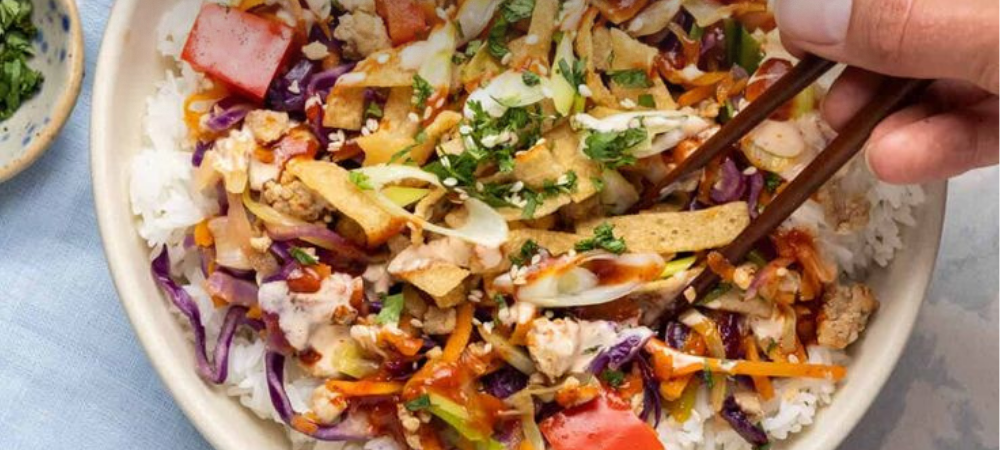
Every actual egg roll I’ve ever ordered comes deep-fried in a thick wrapper and gone in about 12 seconds. The ratio of satisfaction to effort doesn’t quite work out. So I stopped ordering them and started making this instead.
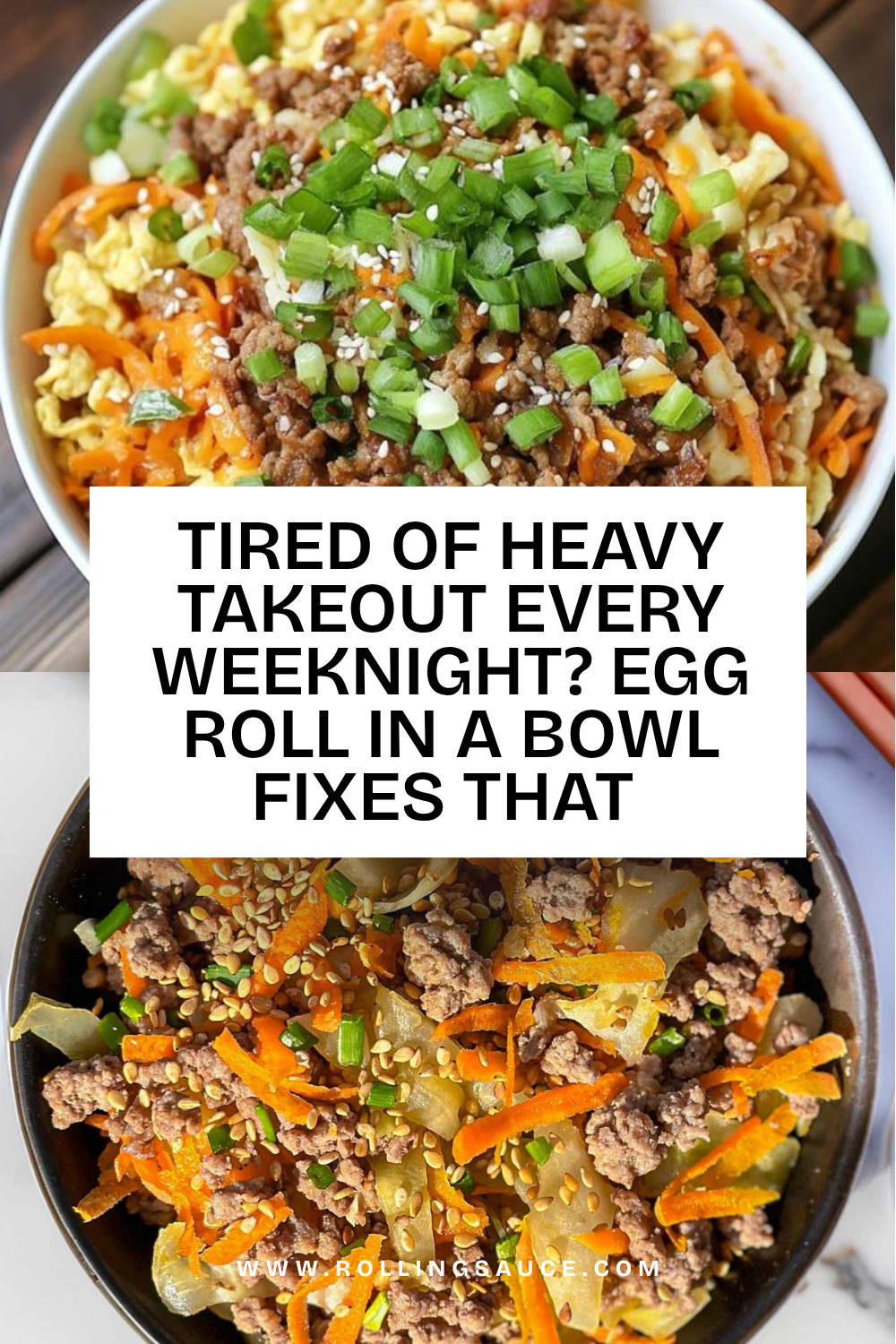
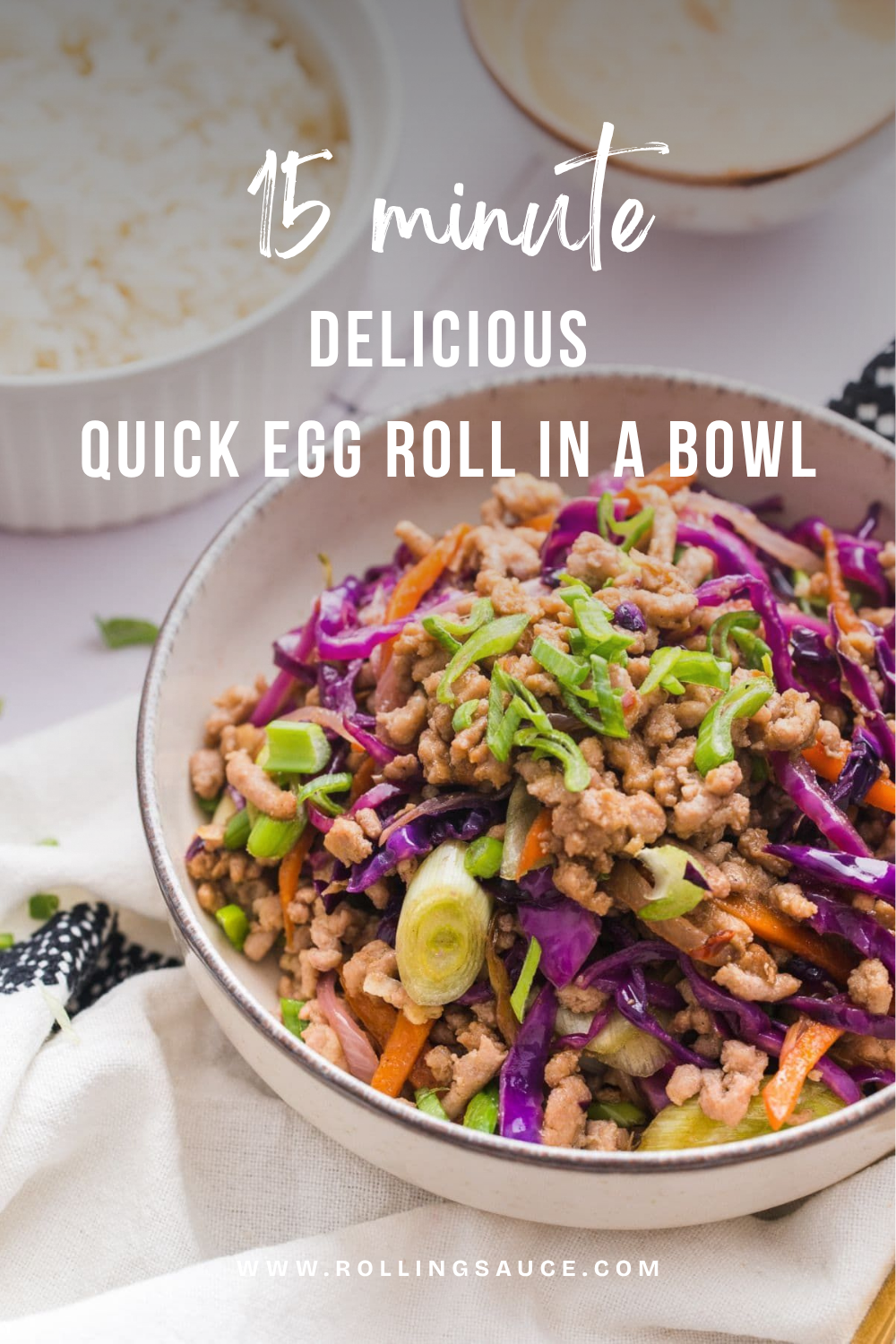
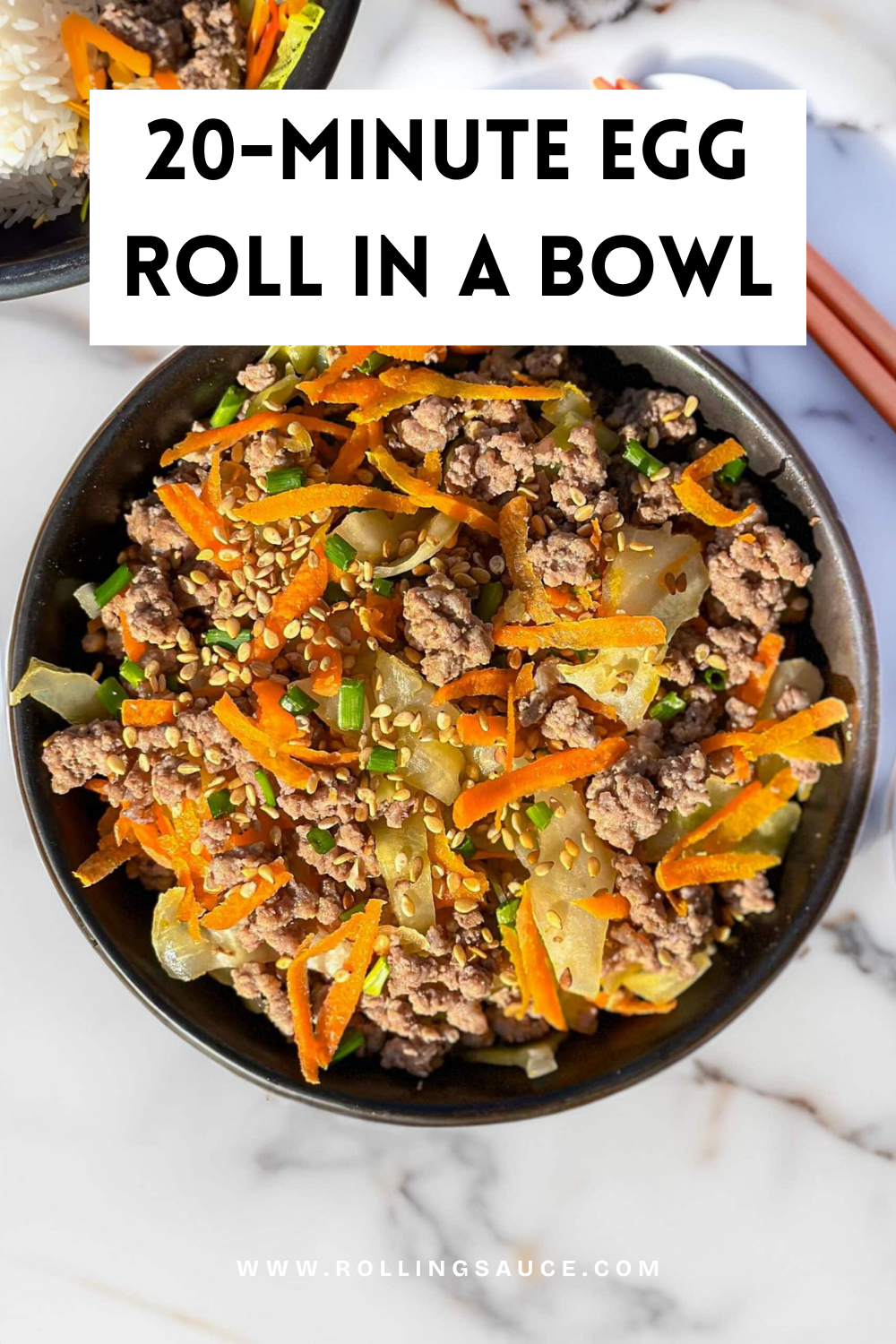
Egg roll in a bowl is everything that’s good about the inside of a classic egg roll — ground pork, shredded cabbage, carrots, garlic, ginger, and a savory soy-sesame sauce — cooked fast in one skillet and served in a bowl. No wrapper, no deep fryer, no delivery fee. It’s on the table in about 20 minutes, and it tastes exactly like that familiar garlicky filling you were reaching past the wrapper to get to anyway.
This has become my default when I want something with real flavor, fast. The pork gets a proper sear in the skillet, the cabbage wilts into the sauce without going soft and limp, and a drizzle of sriracha mayo on top brings the whole bowl together in a way that feels restaurant-worthy without the restaurant prices. I’ve made this with ground beef, ground turkey, and chicken too, and all of it works. But pork is the classic for a reason — the fat content keeps it juicy and the flavor carries the bowl.
Why This Bowl Belongs in Your Regular Weeknight Lineup
Three things make this dish work when the rest of the week isn’t cooperating.
First, it’s a true one-pan meal. The protein and the vegetables cook in the same skillet, in sequence, and they don’t compete. No juggling two burners. No timing the rice while watching the stir-fry. You cook the pork, add the aromatics, add the cabbage, hit it with sauce — that’s the entire sequence.
Second, the texture stays right if you don’t push it too far. A lot of quick stir-fry bowls go soft and watery from overcooking. This one stays satisfying because the cabbage goes in late, cooks for only a few minutes, and comes off the heat while it still has a little bite to it. Slightly wilted cabbage with some resistance is the goal. Fully soft and collapsed is what you get when you walk away from the pan.
Third, it uses pantry staples you already have. Soy sauce, sesame oil, rice vinegar, garlic, ginger — once you stock these, you can build this dinner without a grocery trip. A bag of pre-shredded coleslaw mix takes the already-minimal prep down to almost nothing, since the shredding and carrot-to-cabbage ratio are done for you.
The Building Blocks of the Bowl
This dish has four components, and knowing each one helps you adjust the recipe confidently.
The protein is traditionally ground pork — what goes into a classic egg roll filling. It has enough fat to stay juicy as it browns, and cabbage pairs beautifully with it at high heat, its natural sweetness mellowing as it wilts into the sauce. Ground beef, turkey, or chicken all work if that’s what you have.
The cabbage base is the bulk of the bowl. Green is the standard; purple adds color and a mild bitterness that plays well against the soy sauce. Pre-shredded coleslaw mix handles both and takes the prep down to almost nothing.
The aromatics are fresh garlic and fresh ginger — both worth using fresh rather than powdered. They hit the pan right after the pork and immediately announce what’s happening in the kitchen.
The sauce is a five-ingredient combination of soy sauce, rice vinegar, hoisin, chili garlic sauce, and toasted sesame oil. The balance it creates — salty, acidic, slightly sweet, warm — is what makes the whole bowl taste like something rather than just seasoned meat and vegetables.
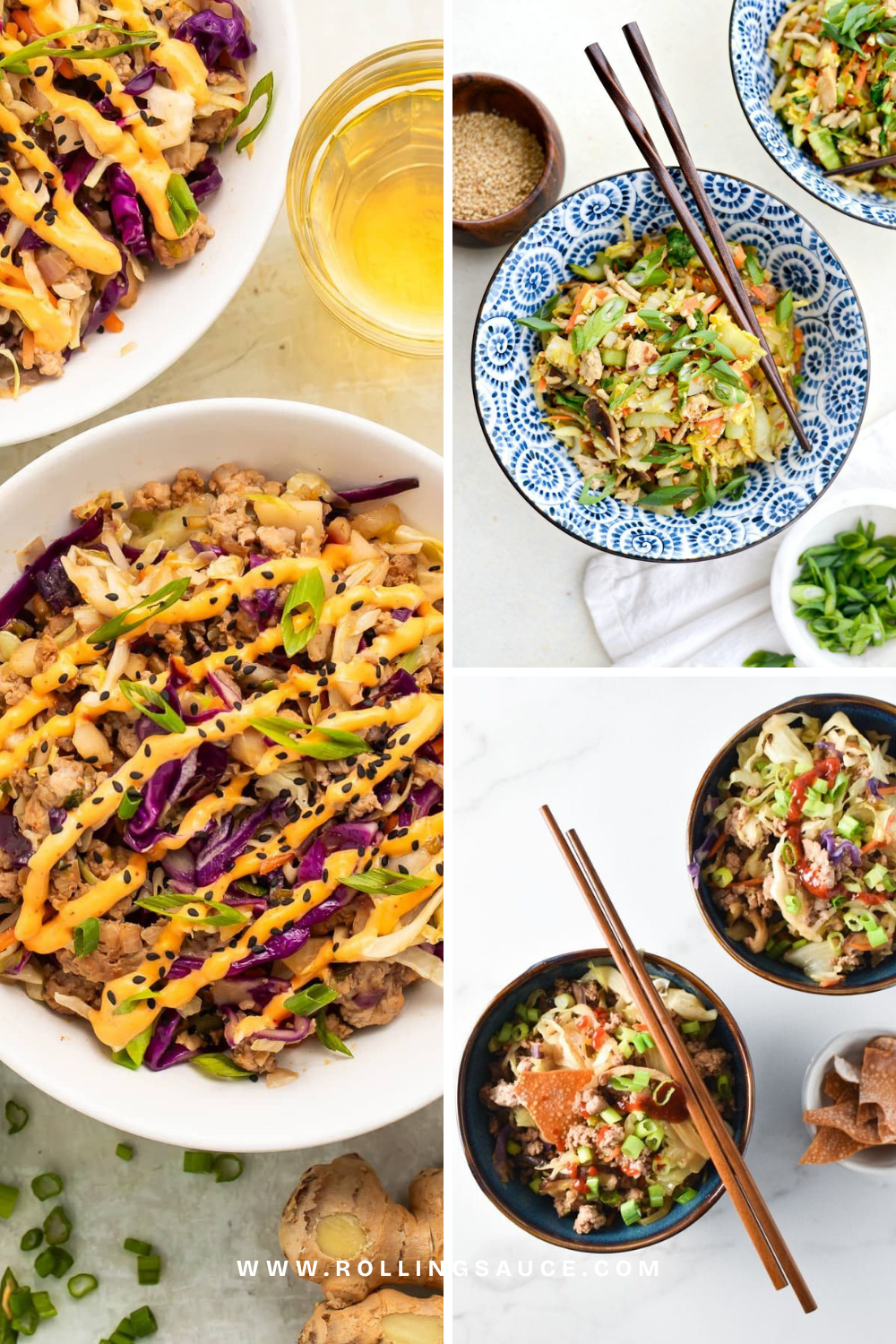
What You’ll Need
Here’s the full ingredient breakdown for four servings.
For the bowl:
- 1 tablespoon sesame oil
- 1 pound ground pork
- 1 small yellow onion, diced
- 4 cloves garlic, minced
- 1 tablespoon fresh ginger, grated (about a 1-inch knob)
- 1 bag (14 oz) coleslaw mix, or 5 cups shredded green cabbage + ½ cup shredded purple cabbage + ½ cup matchstick carrots
- 3 tablespoons low-sodium soy sauce
- 1 tablespoon rice wine vinegar
- 1 teaspoon hoisin sauce
- 1 teaspoon chili garlic sauce or sriracha, plus more to taste
- ½ teaspoon toasted sesame oil (finishing only — add after the heat is off)
- Black pepper, to taste
For serving:
- Sliced green onions
- Toasted sesame seeds
- Sriracha mayo: 2 tablespoons mayonnaise + 1 tablespoon sriracha, stirred (optional but worth it)
- Cooked rice, cauliflower rice, or wonton strips if you want to build it out
The coleslaw bag is the real shortcut here. If you want to use fresh cabbage and shred it yourself, that works too — you just need the same total volume. If you’re using a mix of purple and green, keep the green dominant (about 3:1 ratio) so the bitterness of the purple doesn’t take over.
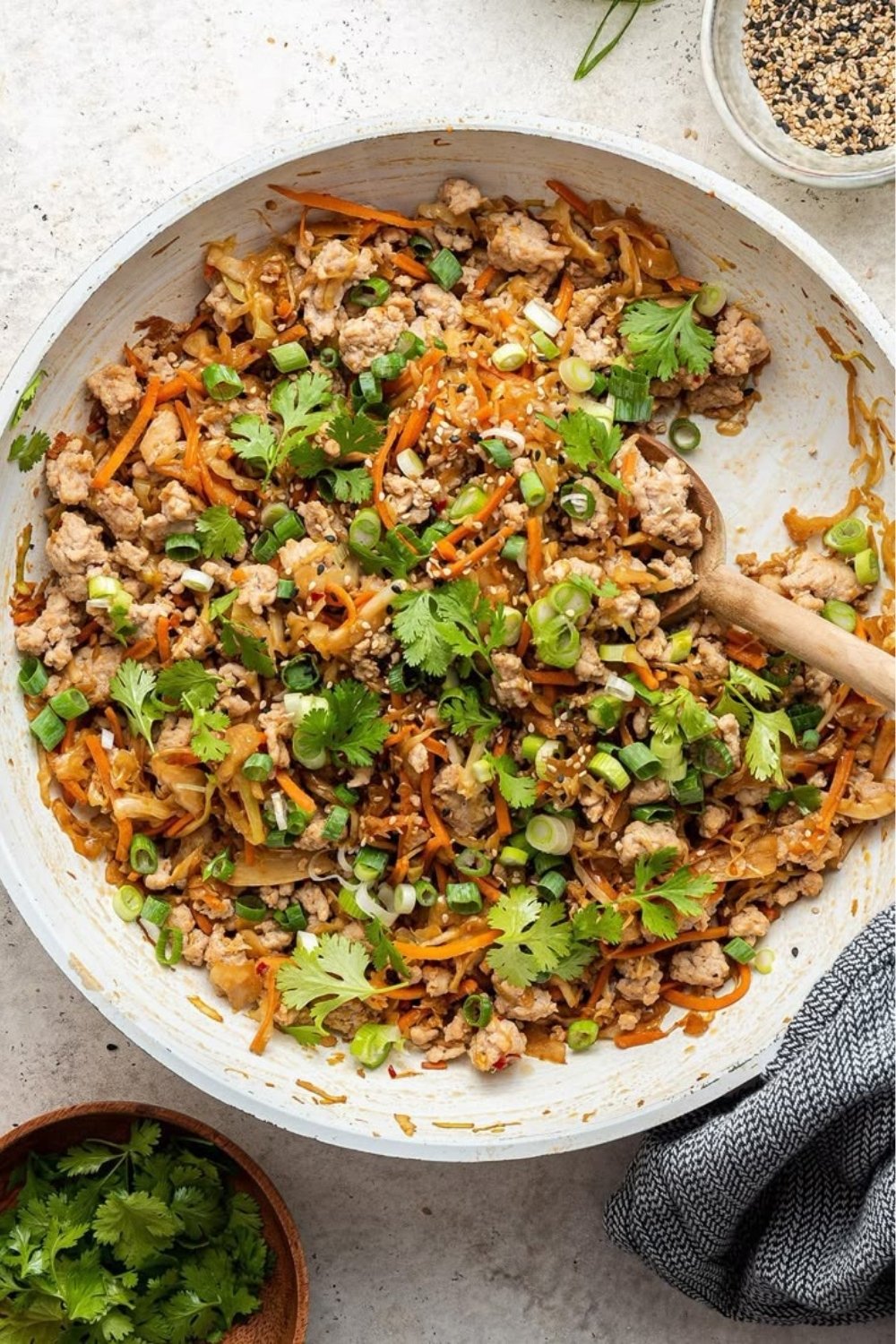

Egg Roll in a Bowl
Ingredients
Method
- Heat sesame oil in a large skillet or wok over medium-high heat. Add ground pork and let sit 1–2 minutes before breaking up. Cook 5–6 minutes until browned through. Drain most fat, leaving about 1 tablespoon.
- Push pork to one side. Add onion to empty side; cook 2 minutes. Add garlic and ginger; stir everything together and cook 30–60 seconds until fragrant.
- Add coleslaw mix and toss to combine. Cook 3–4 minutes, stirring occasionally, until cabbage is just wilted but still has texture.
- Pour in soy sauce, rice vinegar, hoisin, and chili garlic sauce. Toss to coat and cook 1 minute. Remove from heat and drizzle toasted sesame oil over the top. Taste and adjust seasoning.
- Divide into bowls. Top with green onions, sesame seeds, and sriracha mayo. Serve as-is or over rice.
Notes
- Storage: Refrigerate in an airtight container for up to 4 days. Reheat in a skillet or microwave.
- Make ahead: Brown pork up to 2 days ahead; cook fresh cabbage when ready to serve.
- Swap: Use coconut aminos instead of soy sauce for gluten-free. Ground beef, turkey, or chicken all work in place of pork.
How to Make It
Step 1: Brown the Pork
Heat the sesame oil in a large skillet or wok over medium-high heat. Add the ground pork and let it sit undisturbed for 1–2 minutes before breaking it up — this first contact with the hot pan is where the browning happens, and it’s worth protecting. Cook for 5–6 minutes total, breaking it into small crumbles, until browned through. If there’s a significant amount of fat in the pan, tilt the skillet and spoon out most of it, leaving about a tablespoon behind for flavor.
Step 2: Add the Aromatics
Push the browned pork to one side of the pan. Add the diced onion to the empty side and cook for 2 minutes, stirring occasionally, until it starts to soften. Add the garlic and ginger and stir everything together. Cook for 30–60 seconds until the garlic is fragrant and no longer raw-smelling. This window goes fast — don’t let the garlic brown.
Step 3: Wilt the Cabbage
Add the coleslaw mix (or shredded cabbage and carrots) directly to the pan and use tongs or a wooden spoon to toss it with the pork mixture. Cook for 3–4 minutes, stirring occasionally, until the cabbage is just wilted but still holds its shape. Don’t go past this point. The difference between perfectly textured and fully limp is about 90 seconds, and carryover heat will keep cooking it even once the pan is off the burner.
Step 4: Finish with Sauce
Pour the soy sauce, rice vinegar, hoisin, and chili garlic sauce over everything and toss to coat. Cook for 1 more minute until the sauce absorbs and just starts to caramelize at the edges of the pan. Remove from heat. Drizzle the toasted sesame oil over the top and stir once more — it goes in at the end because its aromatic compounds dissipate in high heat. Taste and adjust with more soy sauce, chili sauce, or a splash more rice vinegar.
Divide into bowls and top with green onions, sesame seeds, and sriracha mayo.
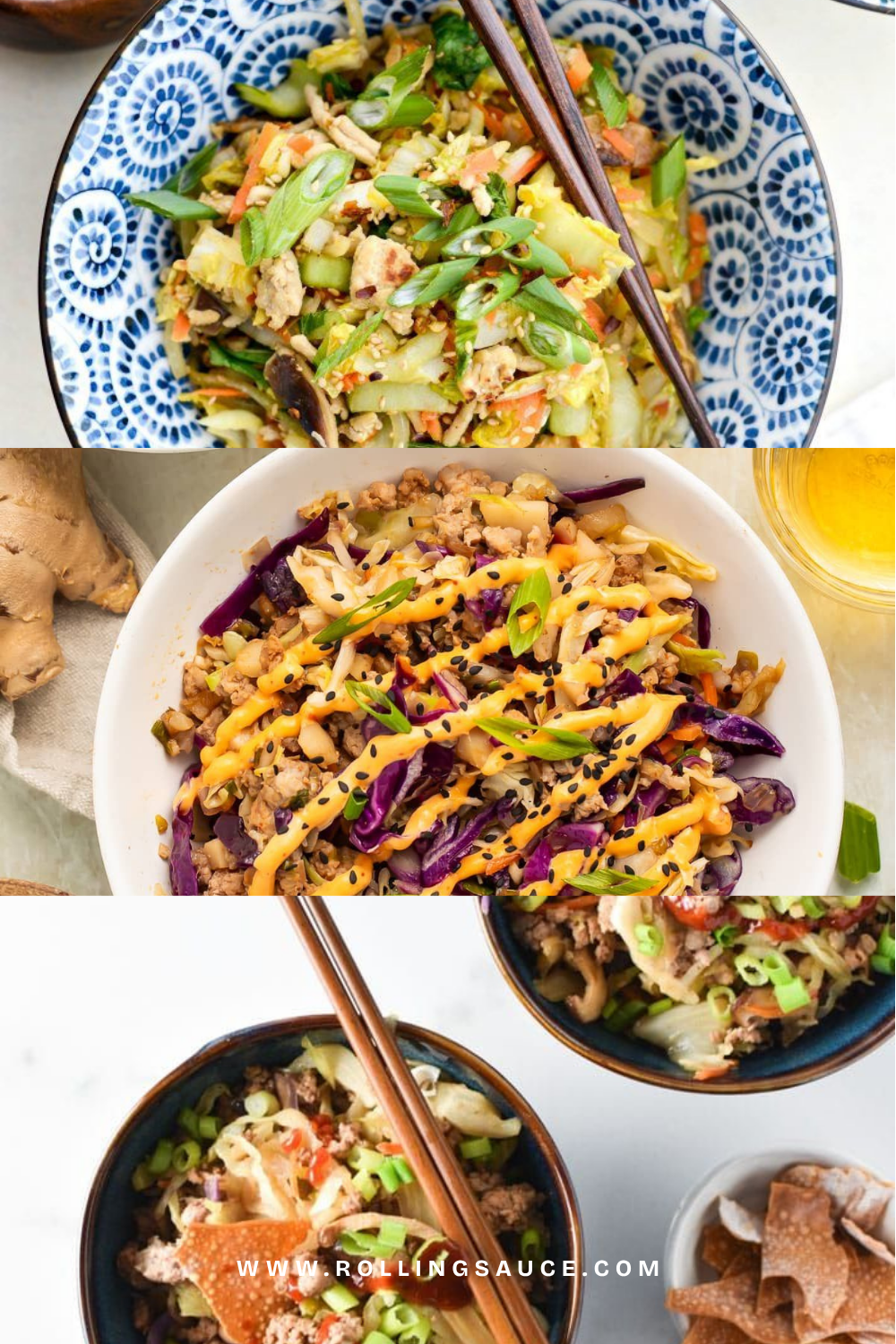
The Sauce: What Each Ingredient Does
This five-ingredient sauce is worth memorizing because the same logic applies to almost every quick Asian-inspired stir-fry you’ll ever make.
Soy sauce is the foundation — salty, savory, and loaded with umami, the deep background flavor that makes soy-based cooking taste like itself. Low-sodium gives you more control since you can always add salt, but you can’t take it away. The pork picks up the flavor from the sauce much more aggressively than vegetables do, so starting measured and adjusting at the end is the move.
Rice wine vinegar adds the brightness that stops this bowl from tasting flat and heavy. It’s mild and slightly sweet — not sharp like white vinegar or as assertive as apple cider vinegar. The dish genuinely suffers without it.
Hoisin sauce is the roundness. It thickens the sauce slightly, adds background sweetness, and has a fermented depth that ties the pork and cabbage together. A teaspoon is enough — more and it starts to dominate.
Chili garlic sauce is heat plus an additional hit of garlic. Use sriracha if that’s what you have, or leave it out entirely for a mild version. The amount in the recipe is what I consider medium heat; adjust it based on who’s eating.
Toasted sesame oil is the finishing note that makes the whole bowl smell like something worth pulling chairs up to. It’s added off the heat because it’s fragile — heat destroys the aroma quickly.
Tips for Getting the Texture and Flavor Right
The most common issue with this dish is the cabbage going too soft. A few things prevent it:
- Get the pan genuinely hot before anything goes in. Medium-high heat means hot enough that a drop of water skitters across the surface and evaporates in under a second. Anything cooler and the pork will steam in its own juices rather than sear.
- Don’t move the pork immediately. Let it sit for a full minute on the first side before breaking it up. That first contact with the hot pan is when the browning happens. Moving it too soon steals that moment.
- Add the cabbage after the aromatics. The garlic and ginger need direct contact with the hot fat to bloom, which can only happen before the cabbage releases its water and drops the pan temperature.
- Watch the cabbage — don’t trust the clock. Three to four minutes is a guideline, but pan size, heat level, and how much water your cabbage contains all affect timing. Look for the cabbage to be wilted and translucent at the edges but still have structure in the thicker pieces.
- Taste before you serve, not just before you plate. Hoisin and soy sauce vary in saltiness by brand. Every batch of this dish needs a final adjustment once everything’s combined.
Variations and Easy Swaps
The base recipe is flexible enough to take in a lot of directions:
- Ground beef makes the bowl heartier and gives it a slightly different, richer fat flavor. If you’re already building out a rotation of quick ground beef dinners, this fits right in alongside the classics.
- Ground turkey or ground chicken keeps the bowl leaner. The texture is slightly different — a little less rich, a little more delicate — but the sauce carries both proteins well. More ideas for both are in this ground turkey recipe roundup.
- Scrambled egg fold-in. Push everything to one side of the pan after the sauce step, crack 1–2 eggs into the empty space, scramble them quickly, then fold into the bowl. It’s a textural and protein boost without any extra ingredients.
- Coconut aminos instead of soy sauce makes this gluten-free and noticeably sweeter. If you go this route, reduce or skip the hoisin to keep the sweetness in check.
- Mushrooms or bok choy. Sliced shiitake mushrooms added with the aromatics, or baby bok choy added with the cabbage, both work well here and make the bowl more substantial without changing the overall character.
- Skip the rice and go low-carb. The base bowl is already low in carbohydrates. Cauliflower rice or a side of wonton strips for crunch are both smart ways to add volume without adding much.
Frequently Asked Questions
What’s the best cabbage to use? Green cabbage is the classic. I use a mix of green and purple because the colors look good in the bowl and the purple adds a mild bitterness that plays off the soy-hoisin sauce nicely. Pre-shredded coleslaw mix from the store is the easiest option and usually includes matchstick carrots, which saves a step.
Can I make egg roll in a bowl ahead of time? Yes. Leftovers keep in the fridge for up to 4 days in an airtight container. The flavors deepen overnight and the second-day version is genuinely better, which makes this one of the better weeknight meal-prep recipes I know of. Reheat it in a skillet (which firms the pork back up slightly) or the microwave.
Can I freeze this? Skip the freeze on this one. Cabbage softens and becomes watery when frozen and thawed, and the texture doesn’t recover. If you want to freeze something, cook and freeze just the browned pork, then make fresh cabbage when you’re ready to serve.
Is this the same as crack slaw? Essentially yes — both are deconstructed egg roll filling cooked in a skillet. “Crack slaw” has been floating around the low-carb internet since the early 2010s and refers to the same dish with slightly different sauce ratios depending on who made it popular.
What do I serve it over? Steamed jasmine rice is the classic pairing. Restaurant-style fried rice takes it somewhere special if you have an extra 15 minutes. Cauliflower rice keeps it light. Crunchy wonton strips scattered on top add texture contrast if you want to keep the bowl format and skip the base entirely.
What to Serve Alongside Egg Roll in a Bowl
This bowl is a complete meal on its own — protein, vegetables, and enough sauce that you won’t feel like anything’s missing. If you want to build it out, a simple cucumber salad with rice vinegar and sesame oil is the cleanest side. A bowl of miso soup if you have the packets. Plain steamed edamame if someone at the table wants more protein without more pork.
For the nights this isn’t enough on its own, it’s part of a much bigger rotation of quick dinners ready in 30 minutes or less — the kind of formula you build once and then use forever because it works every time you come back to it. This recipe is that formula, in bowl form, on a Tuesday night.