There’s a persistent idea that good fried rice requires a wok, a blazing-hot restaurant burner, and probably a few years of training — and that anything made at home is destined to be a sad, clumpy stir-fry that tastes like reheated leftovers. None of that is true. The dish that lands on your table from a takeout container and the version you can make in a regular skillet are closer than you’d think, and the gap between them comes down to a handful of small, fixable habits rather than equipment you don’t own.
This version gets you there in about fifteen minutes, using rice you probably already have sitting in the fridge.
If you’ve tried making fried rice at home before and ended up with a soft, slightly soggy mound instead of the separate, glossy grains you remember from takeout, you’re not doing anything wrong, exactly — you’re just missing a couple of small steps that restaurants do without thinking. Once you know what they are, this becomes one of those recipes that’s genuinely faster than ordering, and a lot more flexible about what goes in it.
Why Restaurant Fried Rice Tastes Different
The single biggest factor isn’t the wok — it’s the rice itself. Freshly cooked rice is soft, sticky, and full of surface moisture, which means it steams and clumps the moment it hits a hot pan instead of frying. Restaurant kitchens get around this by using rice that’s been cooked and chilled, often a full day ahead, so the grains have had time to firm up and dry out slightly on the outside. That’s the real secret behind “restaurant-style” — not a special ingredient, just rice that’s in the right condition before it ever touches the pan.
Heat matters too, but maybe not in the way people assume. You don’t need your stove to put out restaurant-burner BTUs. What you do need is to avoid overcrowding the pan, since a pile of cold ingredients dropped into a skillet drops the pan’s temperature fast, and a cool pan is what causes steaming instead of frying. Smaller batches, kept moving, get you most of the way to that toasty, slightly charred flavor people associate with takeout — what’s often called wok hei, or “breath of the wok.”
According to chefs who write about the science behind restaurant-style fried rice, getting the pan surface hot enough to brown food quickly — rather than just warm enough to cook it — is really the whole game. A regular skillet that’s been properly preheated can get surprisingly close to that effect, especially in the smaller batches a home stove can actually keep hot.
The last piece is sauce placement. Restaurant fried rice isn’t really “sauced” so much as seasoned — soy sauce and a touch of sugar go in around the edges of the hot pan first, where they sizzle slightly before being tossed through, rather than being poured directly over a pile of rice and stirred. It’s a small thing, but it’s part of why restaurant fried rice tastes seasoned all the way through instead of just on the outside.
The Ingredients You Need
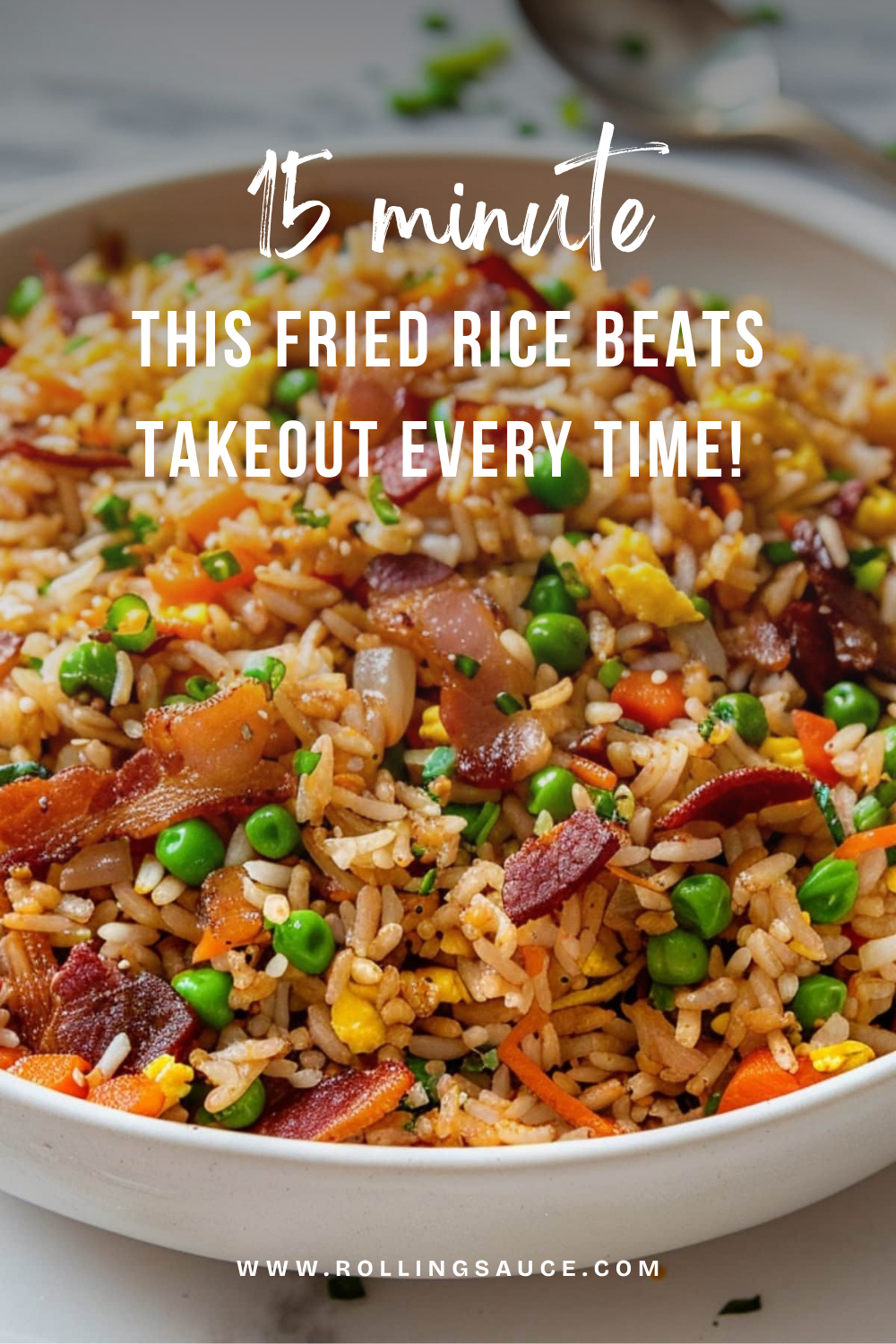
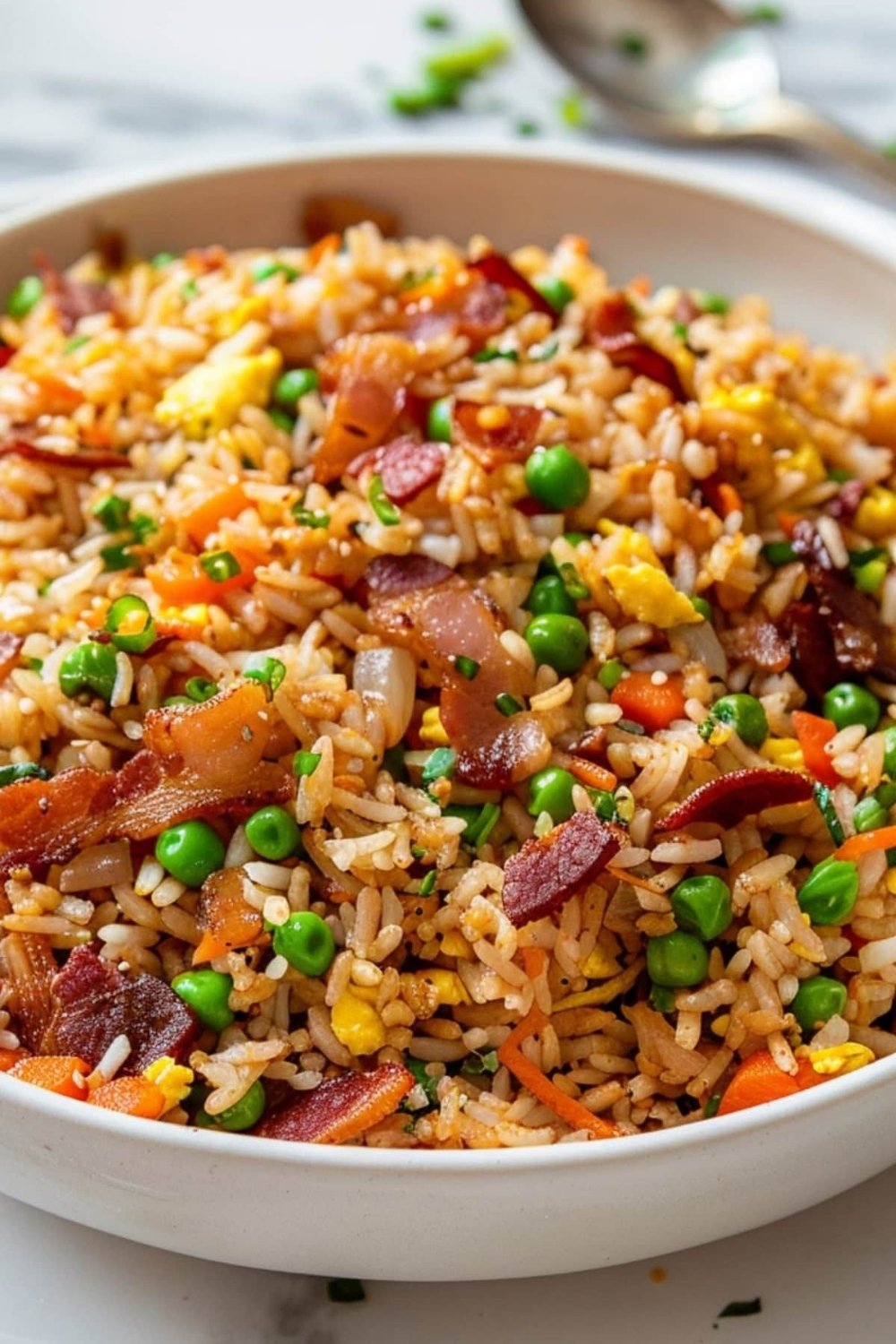
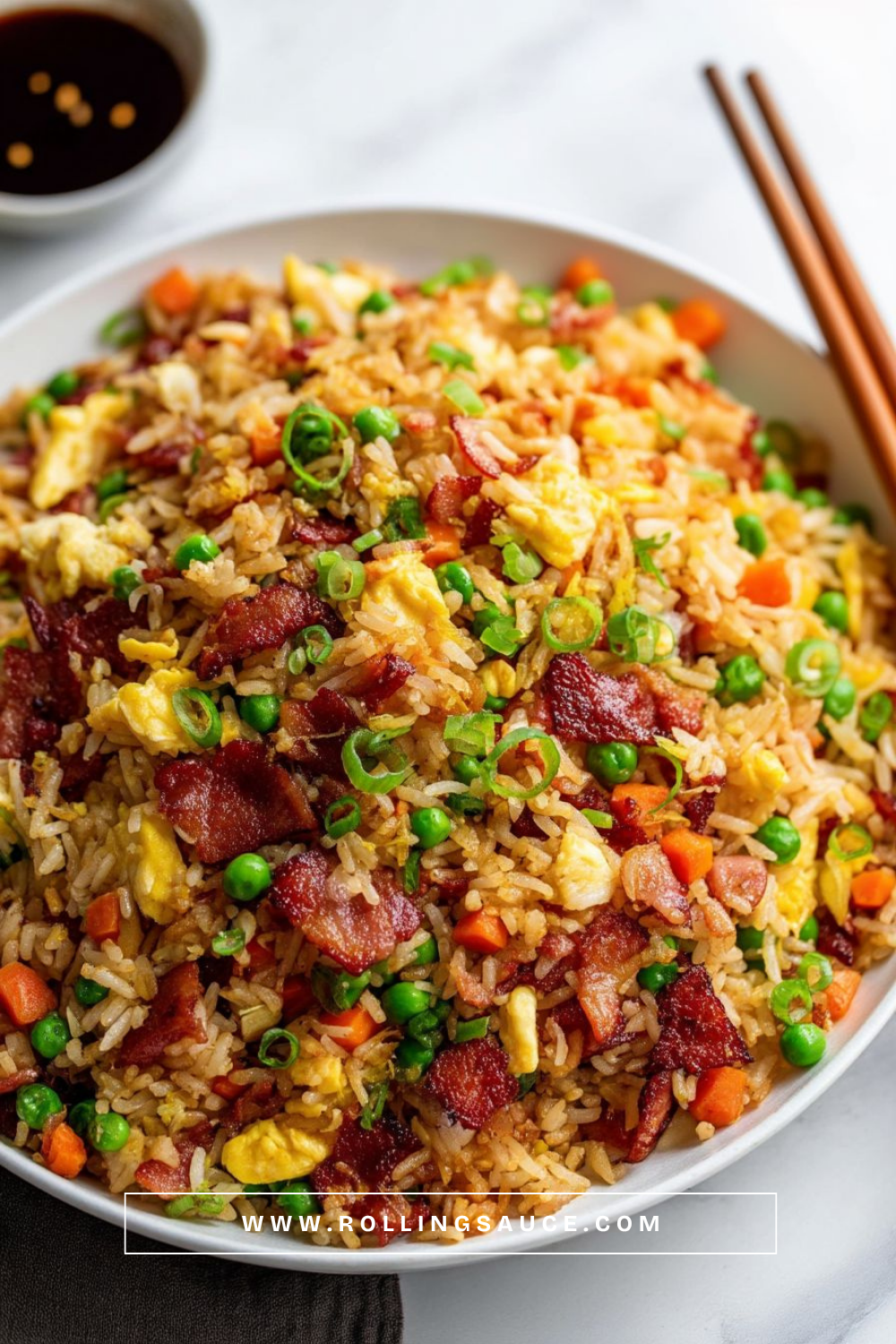
This recipe leans into the version with bacon and eggs, which turns it from a side dish into something that can carry an entire dinner on its own.
- Day-old cooked rice — the most important ingredient on this list. Long-grain white rice like jasmine works best; short-grain rice can turn gummy.
- Bacon — provides both the protein and the fat the rice fries in, which means more flavor with one less pan to wash.
- Eggs — scrambled separately and folded back in, so they stay in distinct soft curds instead of disappearing into the rice.
- Carrots and peas — the classic combination, adding color, sweetness, and a little crunch. Frozen peas work fine here.
- Garlic — a small amount goes a long way, especially when it hits hot fat early in the cooking process.
- Soy sauce — the main seasoning. Low-sodium gives you more control over the final saltiness.
- A pinch of sugar — balances the soy sauce and helps everything brown slightly as it hits the hot pan.
- Sesame oil and green onions — added at the very end, off the heat, so their flavor and color stay bright instead of cooking away.
- White pepper, if you have it — it’s the seasoning that makes a lot of restaurant fried rice taste subtly different from homemade, with a sharper, slightly earthier heat than black pepper.
How to Make Restaurant-Style Fried Rice
Start With the Bacon
Cook the chopped bacon in a large skillet or wok over medium heat until crisp, then remove it with a slotted spoon and set it aside, leaving the rendered fat in the pan. This fat is doing double duty — it’s the cooking oil for the rest of the dish, and it carries bacon flavor into every other ingredient that follows.
If you don’t have day-old rice on hand, cook a fresh batch, spread it out on a baking sheet in a thin layer, and let it cool uncovered for about thirty minutes before you start the bacon. It won’t be quite as dry as truly day-old rice, but it’s a big improvement over using rice straight from a hot pot.
Scramble the Eggs Separately
Pour the beaten eggs into the same pan with the bacon fat, over medium heat, and scramble them gently until just set — don’t overcook them, since they’ll get a little more heat later. Remove them to the same plate as the bacon. Cooking the eggs first and setting them aside is what keeps them as distinct, fluffy curds in the finished dish, rather than scrambled bits lost in the rice.
Stir-Fry the Vegetables and Garlic
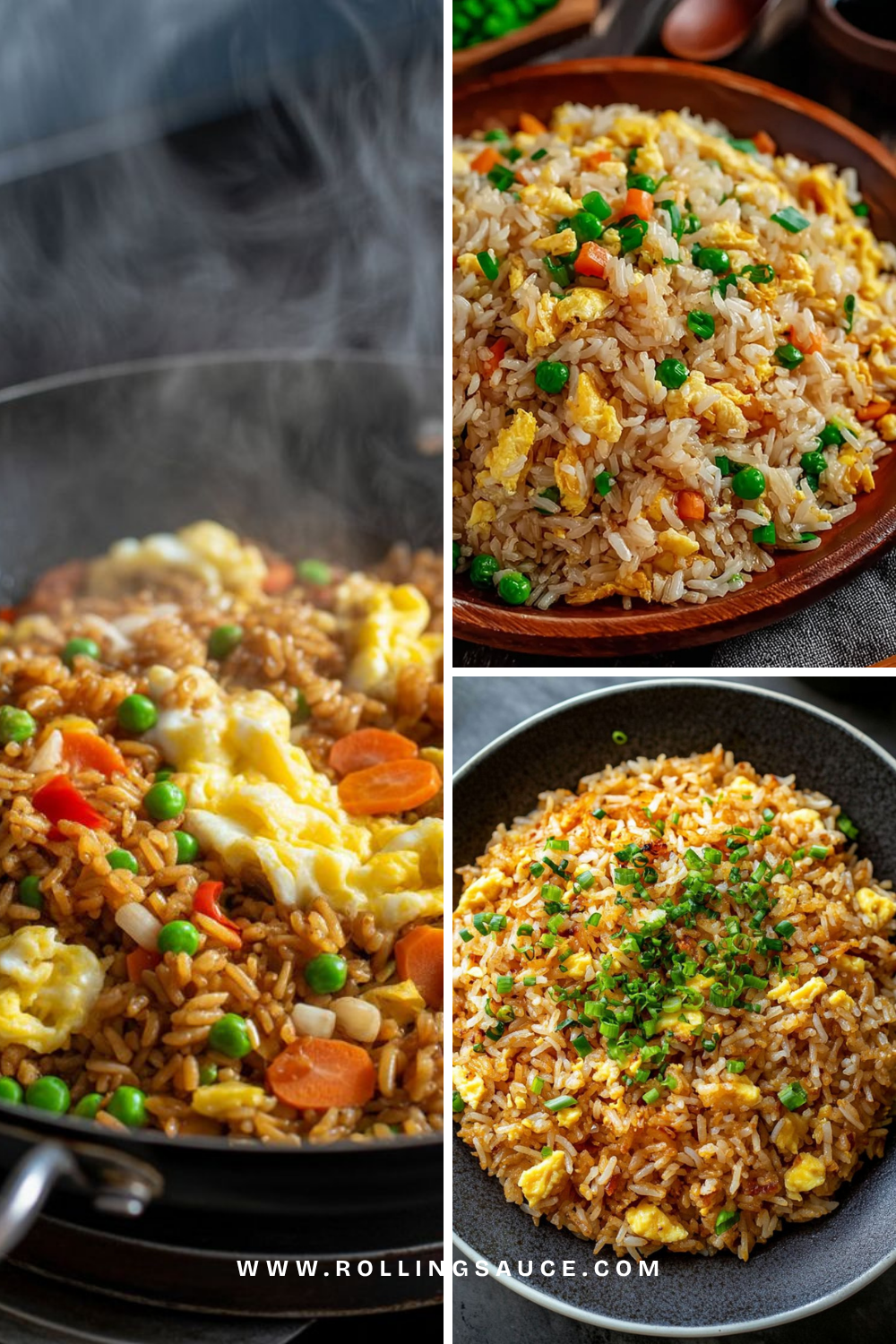
Turn the heat up to medium-high. Add a little more oil if the pan looks dry, then add the carrots and cook for a minute or two until they start to soften. Add the garlic and peas and cook for another thirty seconds, just until the garlic is fragrant — any longer and it can turn bitter.
Add the Rice and Break It Up
Add the cold rice to the pan, breaking up any clumps with the back of a spatula as you go. Spread it out as much as the pan allows and let it sit for a minute before stirring — this is the point where the grains actually start to fry rather than just warm through. Keep tossing every minute or so rather than constantly, giving the rice contact time with the hot pan surface.
Season Around the Edges
Push the rice to one side of the pan, exposing some of the hot surface, and pour the soy sauce and sugar directly onto that hot spot. Let it sizzle for a few seconds before tossing it through the rice — this is the step that gives restaurant fried rice its deeper, more even seasoning instead of a sauce that just sits on top.
Fold Everything Back Together
Add the cooked bacon and scrambled eggs back into the pan, along with the sliced green onions, and toss everything together until evenly distributed and heated through. Turn off the heat, drizzle with sesame oil, and give it one final toss — the sesame oil goes in last so its flavor stays fresh instead of cooking off.

Restaurant-Style Bacon Fried Rice
Ingredients
Method
- Cook the chopped bacon in a large skillet or wok over medium heat until crisp. Remove with a slotted spoon and set aside, leaving the fat in the pan.
- Pour the beaten eggs into the same pan and scramble gently until just set. Remove to the plate with the bacon.
- Increase heat to medium-high. Add the carrots and cook 1-2 minutes until starting to soften, then add the garlic and peas and cook 30 seconds until fragrant.
- Add the cold rice, breaking up clumps with a spatula. Spread it out and let it sit briefly before tossing, repeating every minute or so.
- Push the rice to one side, pour the soy sauce and sugar onto the hot, exposed pan surface, let it sizzle a few seconds, then toss through the rice.
- Add the bacon, eggs, and green onions back to the pan. Toss until evenly combined and heated through.
- Turn off the heat, drizzle with sesame oil, sprinkle with white pepper, and toss once more before serving.
Notes
- Storage: Keeps in the fridge for up to 4 days in an airtight container.
- Reheat: Reheat in a hot skillet with a splash of water to loosen the rice; microwave works in a pinch but the texture is best from the stove.
- Make ahead: Cook fresh rice a day ahead and refrigerate uncovered, or spread on a baking sheet and cool for 30 minutes if using same-day.
Build Your Own: Mix-In and Protein Ideas
Once you’ve got the base technique down, fried rice becomes less of a recipe and more of a formula — rice, fat, aromatics, sauce, and whatever you have on hand.
Protein swaps: Diced chicken, shrimp, or leftover pork all work in place of (or alongside) the bacon — just cook them through first and set them aside the same way. If you’ve got extra cooked ground beef from quick ground beef recipes in the fridge, that works here too; it just needs reheating in the pan rather than cooking from raw.
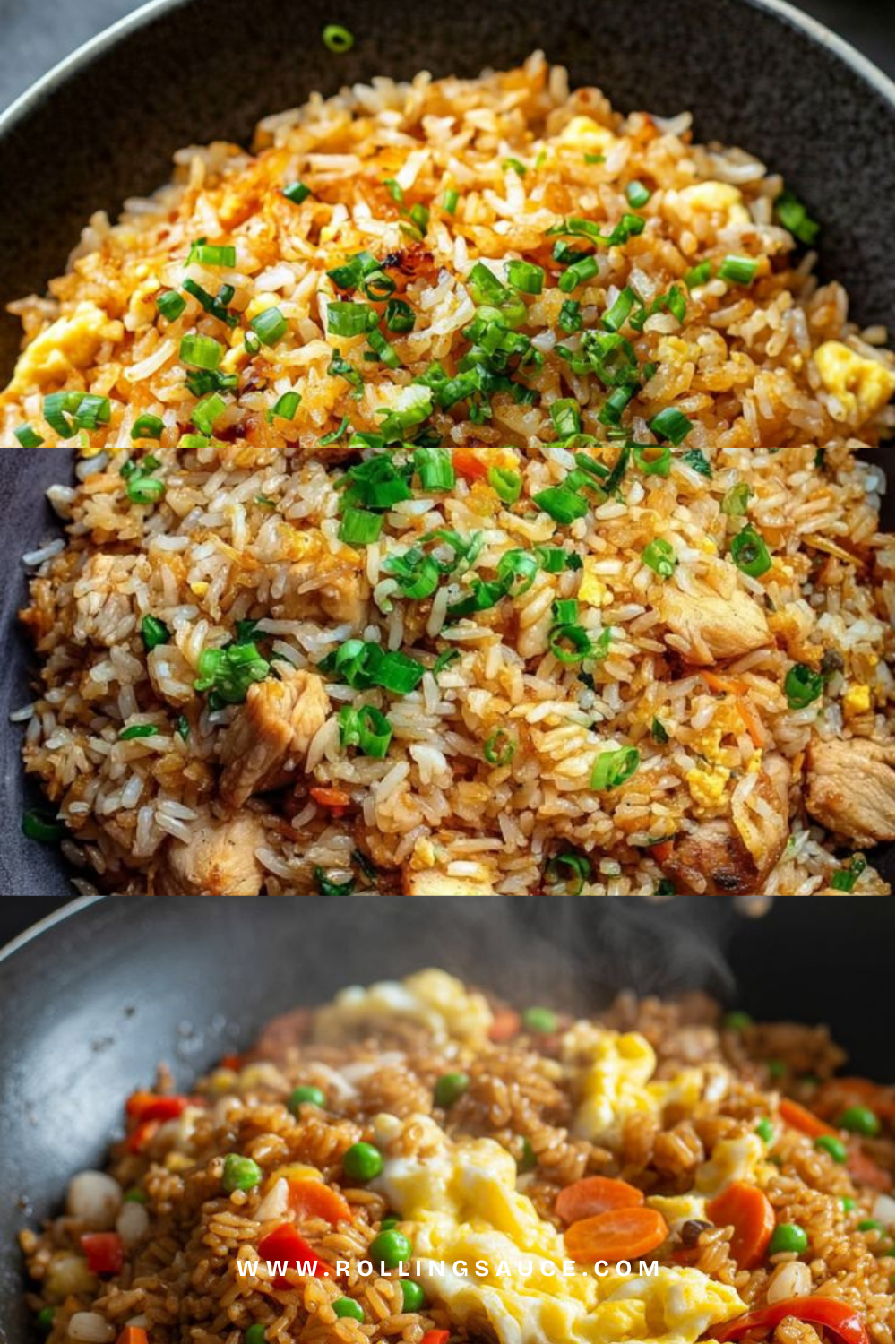
Vegetable swaps: Diced bell pepper, corn, edamame, or shredded cabbage all hold up well to the high heat and add their own texture. Leafy greens like spinach can go in at the very end, since they wilt almost instantly.
Make it spicy: A spoonful of chili crisp or a drizzle of chili oil stirred in at the end adds heat without changing the technique at all.
Make it a full meal: Pile the finished fried rice into bowls and top with a fried egg, sunny-side up, for a version that’s closer to a rice bowl than a side dish — if you like the format, this egg roll in a bowl is built around the same kind of pantry-clean-out logic.
Go vegetarian: Skip the bacon, use a neutral oil instead of bacon fat, and add a splash of extra soy sauce to make up for the flavor the fat would have carried.
Plan it as a meal-prep base: Fried rice reheats better than most stir-fries — a quick toss in a hot pan with a splash of water brings the texture right back. Making a double batch on a Sunday and portioning it into containers means lunches are sorted for several days, especially if you’re already cooking ground turkey recipes or another protein in bulk that week — fried rice is a natural landing spot for whatever’s left over.
Tips for Fried Rice That Doesn’t Clump
Use rice that’s been refrigerated for at least a few hours, ideally overnight — the surface moisture needs time to evaporate.
If you only have freshly cooked rice, spread it out on a baking sheet in a thin layer and let it cool completely, uncovered, for about thirty minutes before using it.
Don’t add oil and rice to a cold pan — get the pan properly hot first, or the rice will steam instead of fry.
Resist the urge to stir constantly. Letting the rice sit against the hot pan for short stretches is what creates those slightly crisp, toasty bits.
Add liquid seasonings like soy sauce directly onto the hot pan surface rather than pouring them over the rice — it seasons more evenly and avoids a soggy finish.
Keep delicate ingredients like green onions and sesame oil for the very end, off the heat, so they stay bright rather than cooking down.
Make It Your Own Every Time
The version here — bacon, eggs, carrots, and peas — is the classic for a reason, but it’s really just a template. Once the rice-fat-aromatics-sauce sequence becomes second nature, you’ll find yourself making a different version almost every time based on whatever’s in the fridge that needs using up.
That’s really the appeal of fried rice as a regular weeknight option: it scales to whatever you have, comes together faster than ordering delivery, and turns leftover rice from “something to use up” into the best part of dinner. Keep this one in regular rotation, and don’t be surprised if it becomes the dish you reach for whenever there’s a half-container of rice sitting in the fridge with nowhere to go.