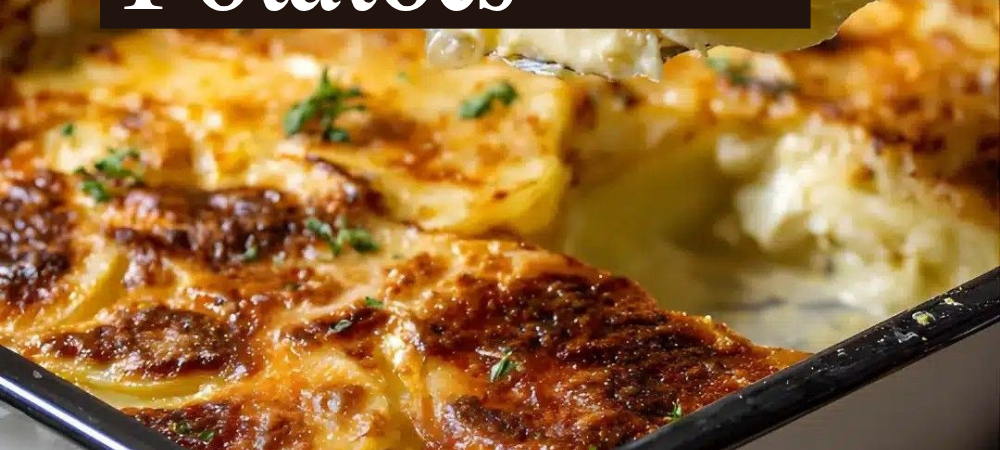
If you’ve ever cut into a pan of scalloped potatoes only to find the top layer golden and caramelized while everything underneath is still crunchy and raw, you already know the problem. Scalloped potatoes are more unpredictable than they should be — underdone in the center, or with a sauce that’s broken into something greasy and grainy.
None of those outcomes are inevitable. They all have specific causes, and once you know what they are, this dish stops being a gamble.
The fix comes down to three things: the right potato sliced at the right thickness, a cream sauce built on a proper roux, and a two-stage bake that steams the layers through before browning the top. That’s it. Everything else — cheese or no cheese, thyme or Gruyère or cheddar — is variation. The foundation is those three things, and this recipe gets all three right.
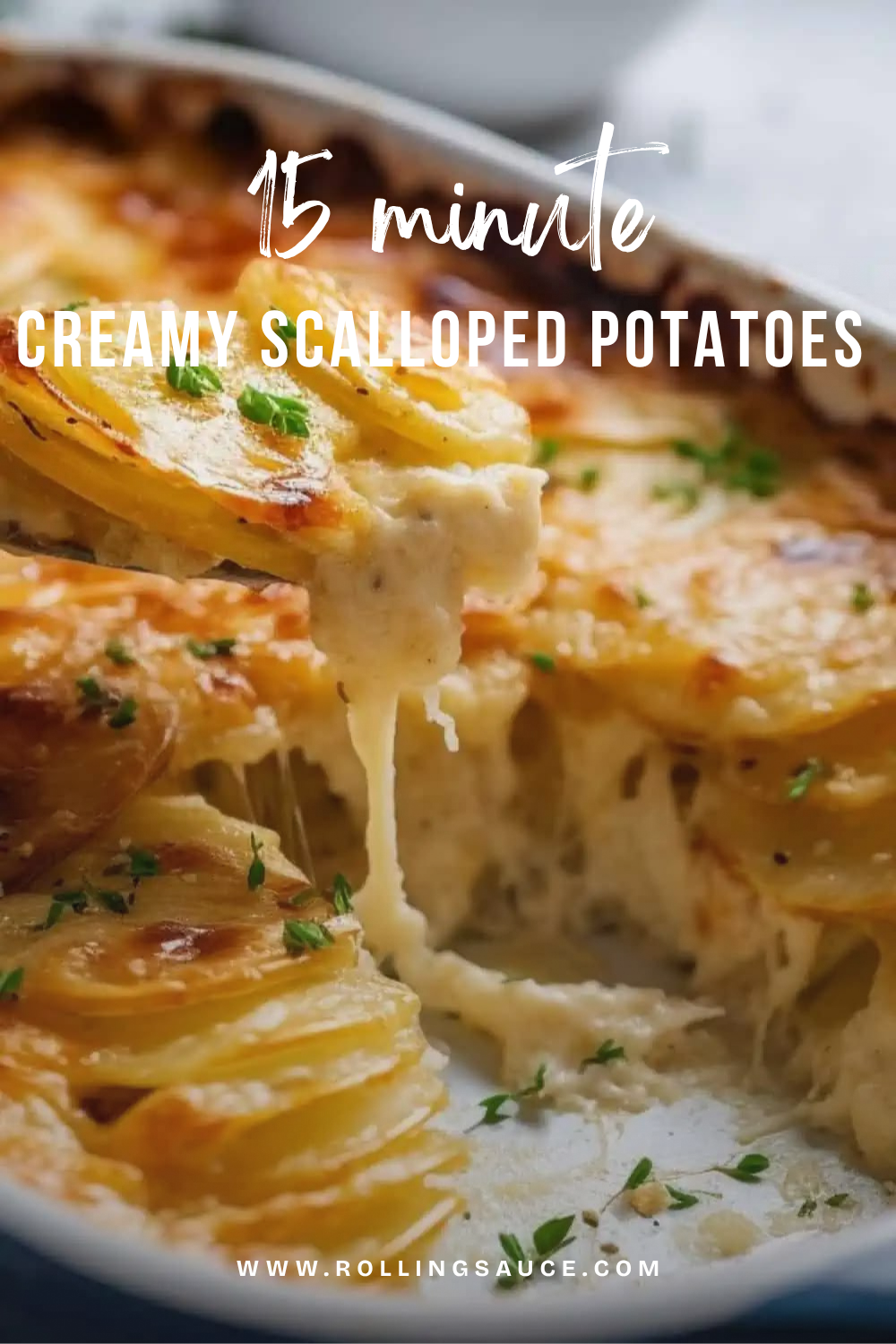
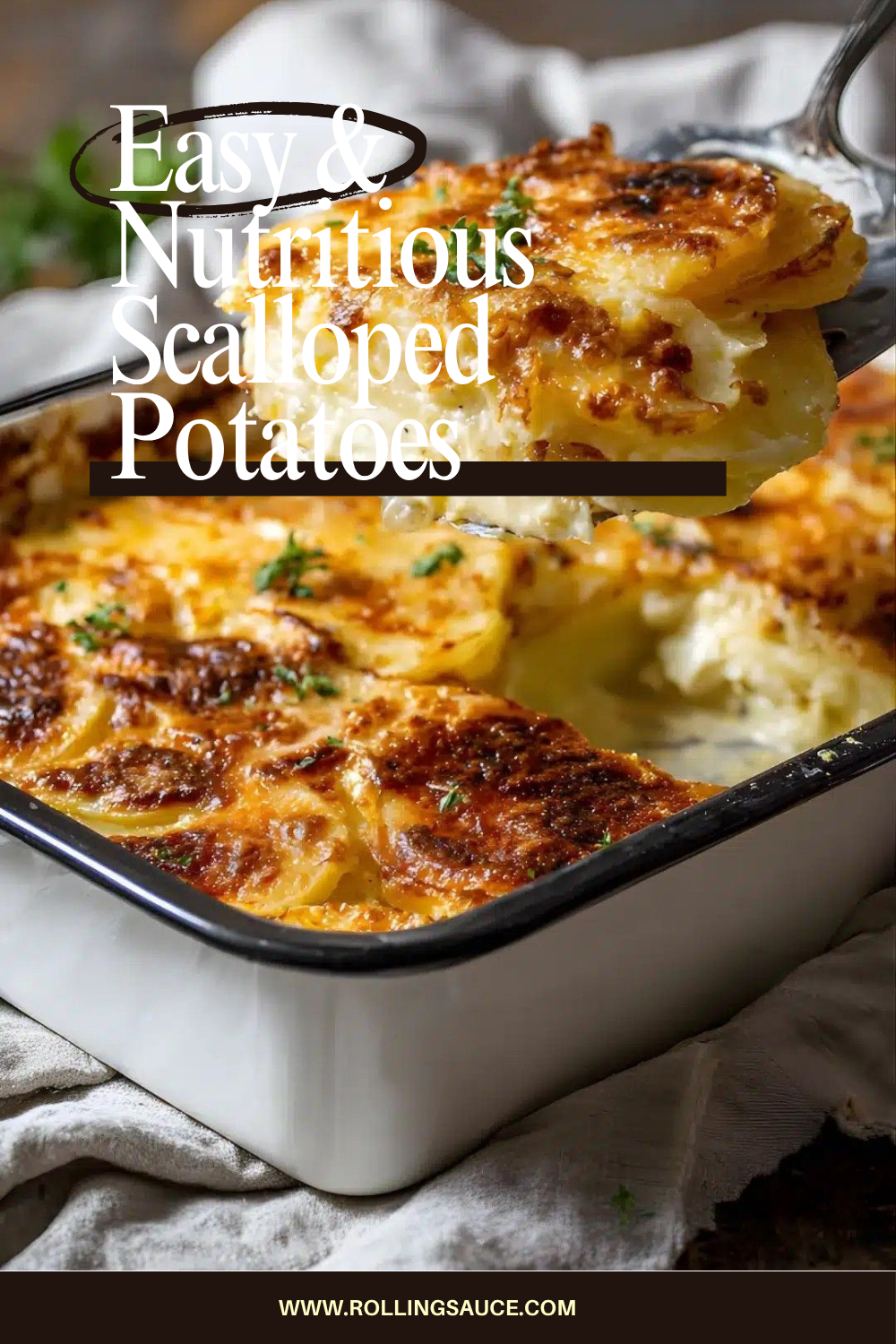
The result: uniformly tender layers, a sauce that hasn’t split, and a deeply golden top with crisped edges.
Why Scalloped Potatoes Go Wrong
Most problems trace back to one of three things.
The potatoes are sliced too thick. A 9×13 pan bakes for 60–90 minutes. At that time, ¼-inch slices cook through. Thicker than that and the center layers get left behind while the edges soften and brown. The fix is consistency: every slice the same thickness, so everything cooks at the same rate. ⅛ inch is the target.
The cream sauce breaks. When dairy is exposed to direct high heat for too long, the fat separates from the liquid and you get a greasy pool instead of a silky coating. This happens when the dish is baked uncovered the entire time. Building the sauce on a roux first, and baking covered for the first portion of the cook time, prevents both problems.
The sauce starts too thin. Raw milk poured over potato slices thins further as the potatoes release steam. A roux-thickened sauce starts with body already built in.
The Right Potato for the Job
Yukon Gold potatoes are the right call here. Their flesh is naturally buttery and slightly waxy, which means they hold their shape through the long bake without disintegrating into mush. They don’t need to be peeled, though I peel them for this recipe — the texture is cleaner. Their flavor works with the cream sauce rather than fighting it.
Russet potatoes work if that’s what you have. Their flesh is drier and higher in starch, which means they absorb the sauce more aggressively. The result is a slightly denser, starchier layer. If russets are your only option, peel them and proceed — just expect a different texture.
Red potatoes are too waxy and don’t carry the sauce as well as Yukon Golds.
One thing that catches people off guard: don’t rinse your potato slices after cutting them. That white surface coating you see on freshly cut potato is pure starch, and it helps the cream sauce thicken as everything bakes. Rinsing it away is counterproductive. Cut them, lay them out, and layer them straight into the dish.
The Two-Stage Bake That Changes Everything
The most reliable technique for uniformly cooked scalloped potatoes is baking in two stages: covered tightly for the first portion, uncovered for the second.
Covered with foil, the dish traps steam. That steam penetrates the potato layers from the inside and cooks them evenly, without the top drying out or the edges overcooking while the center is still firm. The foil essentially turns the baking dish into a low-pressure environment that steams and braises the potatoes through.
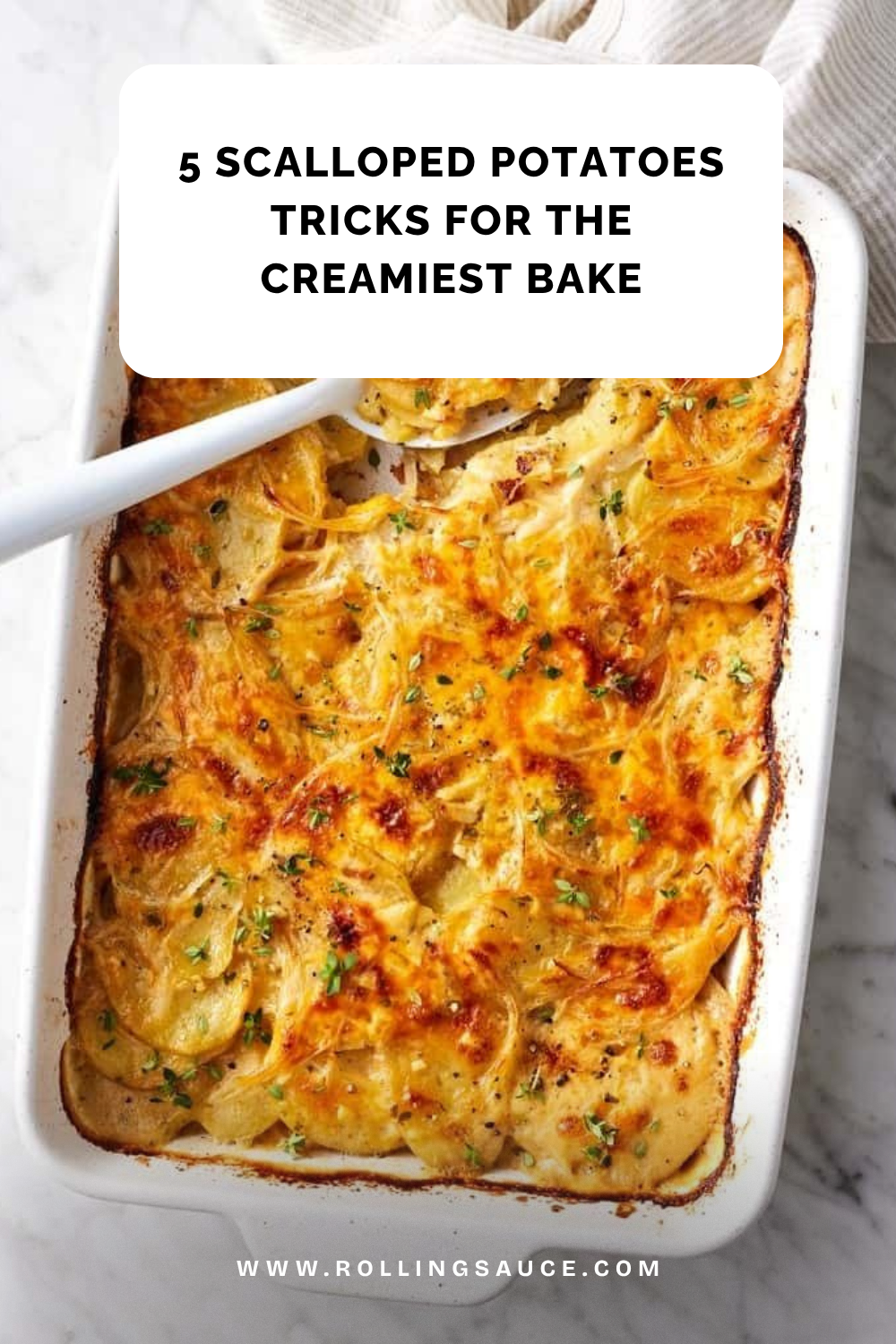
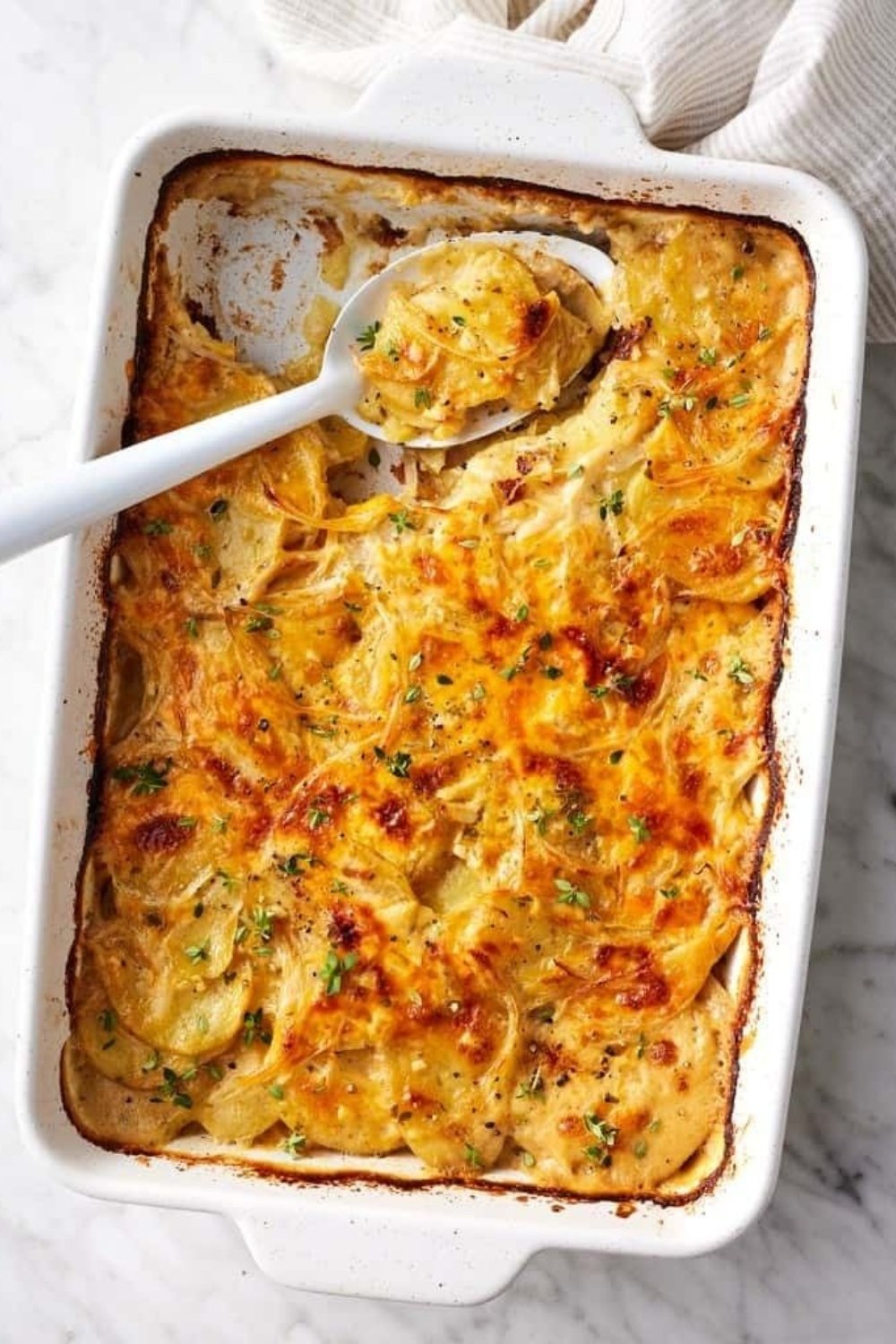
Once the potatoes are fully cooked through — and this is critical — you remove the cover and let the top surface brown and bubble. The cheese crisps at the edges, the sauce caramelizes slightly around the perimeter, and the whole surface takes on that deep amber-gold color that makes this dish look the way it’s supposed to.
At 375°F, the covered phase takes about 45 minutes and the uncovered phase takes another 40–45 minutes. Check doneness with a thin-bladed knife or metal skewer inserted into the center of the dish. If it slides through with no resistance at all, the potatoes are done. If you feel the slightest drag or catch, cover the pan back up and return it to the oven for another 10–15 minutes. Do not skip this check — it’s the most important step in the whole recipe.
What You’ll Need
Here’s everything for a 9×13-inch pan that serves eight.
For the potatoes and layers:
- 3 pounds Yukon Gold potatoes, peeled, sliced ⅛ inch thick
- 1 medium yellow onion, halved and very thinly sliced
- 1½ teaspoons kosher salt, divided between layers
- ½ teaspoon freshly cracked black pepper, divided
For the cream sauce:
- 3 tablespoons unsalted butter
- 3 cloves garlic, minced
- 3 tablespoons all-purpose flour
- 2 cups whole milk, warmed
- 1 cup low-sodium chicken or vegetable broth
- 1 teaspoon fresh thyme leaves (or ½ teaspoon dried)
- ¼ teaspoon freshly grated nutmeg
- 1 teaspoon kosher salt
- ½ teaspoon black pepper
For the topping:
- 1½ cups shredded sharp cheddar cheese, divided
- Fresh chives or flat-leaf parsley for garnish (optional)
A mandoline is genuinely helpful here — it produces consistent ⅛-inch slices quickly and accurately. A sharp chef’s knife and a steady hand work just as well; it just takes more time and attention. Either way, go slowly and aim for uniformity over speed.

Classic Scalloped Potatoes
Ingredients
Method
- Preheat oven to 375°F. Butter or spray a 9×13-inch baking dish. Peel and slice potatoes ⅛ inch thick using a mandoline or sharp knife. Do not rinse the slices. Thinly slice the onion.
- Make the cream sauce: Melt butter in a medium saucepan over medium heat. Add garlic and cook for 30 seconds. Whisk in flour and cook, stirring constantly, for 1 minute. Pour in warm milk gradually, whisking to prevent lumps. Add broth, thyme, nutmeg, salt, and pepper. Cook over medium heat, stirring often, until the sauce coats the back of a spoon, about 4–5 minutes. Do not let it boil.
- Layer half the potato slices in the baking dish. Scatter half the onion over the top. Season with half the divided salt and pepper. Pour half the cream sauce over and spread to the edges. Sprinkle with ¾ cup cheese. Repeat layers: remaining potatoes, onion, seasoning, sauce, and top with remaining ¾ cup cheese.
- Cover tightly with aluminum foil. Bake for 45 minutes. Remove foil and bake for 40–45 more minutes, until deeply golden and bubbling. Test doneness by inserting a thin knife in the center — it should slide through with zero resistance. If there’s any drag, cover and bake 10 more minutes, then test again.
- Rest uncovered for 15 minutes before serving.
Notes
- Storage: Refrigerate covered for up to 4 days. Reheat covered at 325°F for 20–25 minutes.
- Make ahead: Assemble up to 24 hours ahead and refrigerate covered. Add 15 minutes to the covered bake time (bake covered 60 min instead of 45).
- Swap: Gruyère or fontina work in place of cheddar. For a richer sauce, replace 1 cup broth with ½ cup heavy cream.
How to Make It
Step 1: Prep the Potatoes
Preheat your oven to 375°F and butter or lightly spray a 9×13-inch baking dish. Peel and slice the potatoes ⅛ inch thick. Keep the slices in a single pile as you work — do not rinse them. Halve the onion and slice it as thin as you can.
Step 2: Build the Cream Sauce
Melt the butter in a medium saucepan over medium heat. Add the garlic and cook, stirring, for 30 seconds until fragrant. Whisk in the flour and cook for 1 full minute, stirring constantly — this is the roux, and it needs that minute to cook off the raw flour taste. Pour in the warm milk gradually, whisking continuously to prevent lumps. Add the broth, thyme, nutmeg, salt, and pepper. Cook over medium heat, stirring often, until the sauce thickens enough to coat the back of a spoon, about 4–5 minutes. Keep the heat at medium or just below — do not let it come to a boil.
Step 3: Layer the Dish
Arrange half the potato slices in an overlapping layer across the bottom of the prepared baking dish. Scatter half the sliced onion evenly over the top. Season with half the divided salt and pepper. Pour half the warm cream sauce over the layer and spread it all the way to the edges. Sprinkle with ¾ cup of the shredded cheese. Repeat with the remaining potatoes, onion, salt, pepper, sauce, and the final ¾ cup of cheese on top.
Step 4: Bake Covered, Then Uncovered
Cover the dish tightly with aluminum foil. Bake for 45 minutes. Remove the foil and bake for an additional 40–45 minutes, until the top is deeply golden and the sauce is bubbling actively around the edges. Insert a thin-bladed knife into the center — it should meet absolutely no resistance. If you feel any drag, cover the pan and bake for 10 more minutes, then test again.
Let the dish rest, uncovered, for 15 minutes before serving. The sauce continues to thicken as it cools slightly, and the layers hold together much better once rested.
Understanding the Cream Sauce
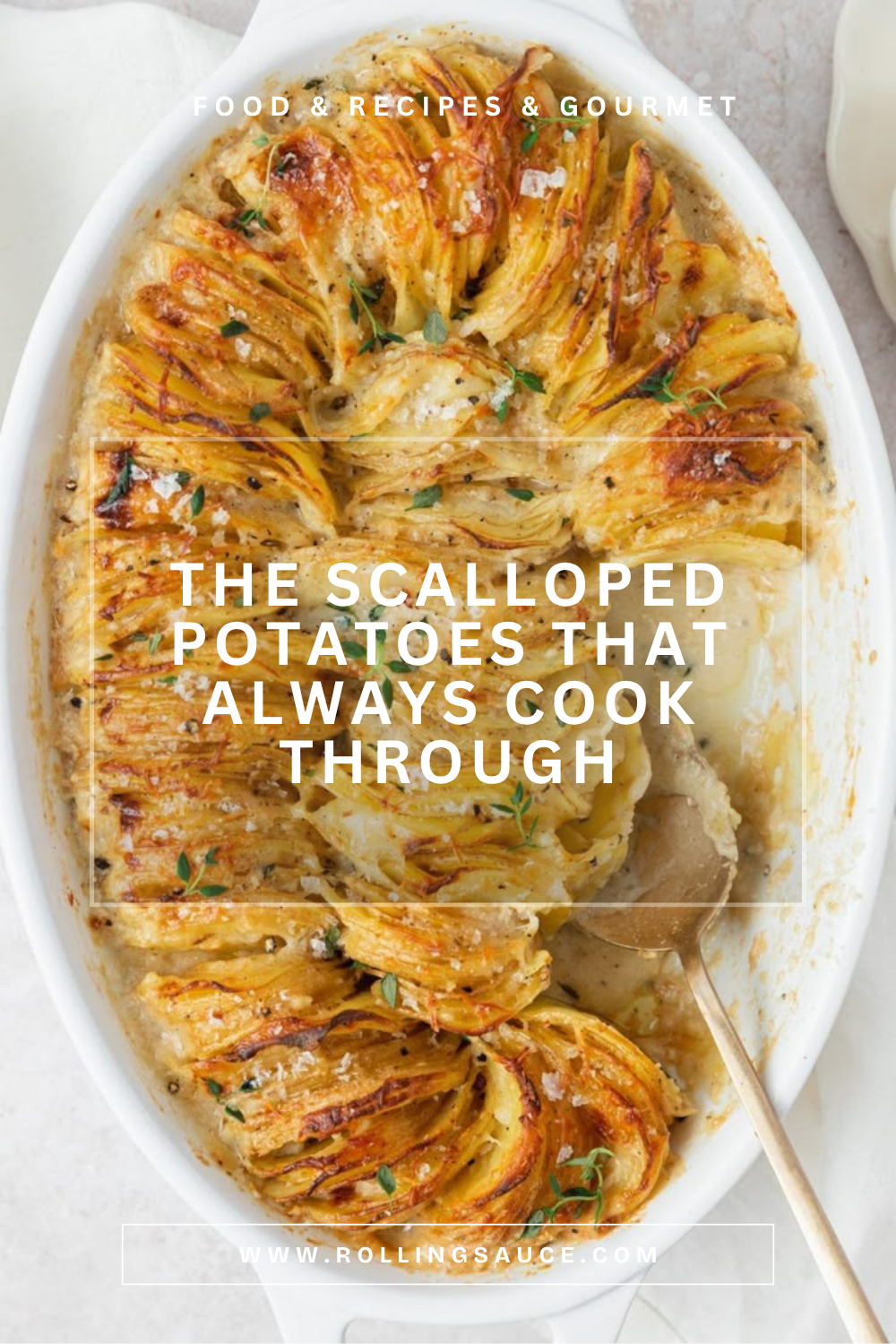
The cream sauce here is a roux-based béchamel — butter and flour cooked together first, then milk and broth added gradually. This makes the sauce significantly more stable than straight cream poured over potatoes.
Without a roux, raw dairy combines with potato moisture during baking, thins out, and often breaks into a greasy film. With a roux, the flour starch disperses through the fat before any liquid goes in. When the milk is added slowly with constant whisking, it incorporates into that starch matrix smoothly. The resulting sauce holds together through 90 minutes of baking.
Warming the milk before adding it to the roux matters more than it seems — cold milk hits the hot roux and causes lumping. Warm milk incorporates without any friction.
As Serious Eats notes in their coverage of potato gratins, a béchamel-style base is the standard for cream-baked potato dishes precisely because it stabilizes the dairy and prevents the breaking that plagued older recipes using straight cream.
The nutmeg is subtle. Include it anyway — its warmth is hard to identify but obvious when it’s missing.
Tips for Getting It Right Every Time
- Uniform slices are everything. A thick slice next to a thin one means one will be overcooked by the time the other finishes. A mandoline set to ⅛ inch takes the guesswork out entirely.
- Season each layer. The cream sauce carries salt, but potato layers can absorb a lot. A pinch between layers means the interior is as well-seasoned as the top.
- Don’t let the sauce boil. Boiling breaks the emulsion. Medium heat, active stirring, and pulling the pan before you see anything more than a gentle simmer.
- Rest before serving. Fifteen minutes minimum. If you cut straight from the oven, the sauce will run. After a rest, it holds. The difference on the plate is significant.
- The knife test tells the truth. A fork can push through slightly undercooked starch with enough pressure. A thin-bladed knife inserted with light, honest pressure is accurate. Zero resistance means done.
- If the top browns before the potatoes are tender: Re-cover with foil and lower the oven to 350°F. Let the steam finish the job.
Variations and Swaps Worth Making
- Swap the cheese. Gruyère is the most classic alternative — nutty and melts into smooth layers. Fontina is milder and produces a creamy, gooey interior. A mix of Gruyère and Parmesan on top creates a deeply savory crust.
- Add Dijon mustard. A teaspoon stirred into the finished sauce adds a background sharpness that plays off sharp cheddar particularly well.
- Add ham. Thin slices of deli ham or diced leftover ham layered with the potatoes makes this close to a full meal. Classic pairing, very simple addition.
- Richer version. Replace 1 cup of broth with ½ cup heavy cream. The sauce gets more indulgent and takes on a thicker, glossier texture after baking.
- Lighter version. Replace whole milk with 2% and reduce the cheese to 1 cup. The roux still holds the sauce together, just with less richness.
- Caramelized onions. Swap raw onion for deeply caramelized onion for a sweeter, more complex background flavor.
If you’re building a holiday table, this dish assembles up to 24 hours in advance. A make-ahead sweet potato casserole works the same way — both can be prepped the day before and baked while other things are happening on the stovetop.
Frequently Asked Questions
What’s the difference between scalloped potatoes and au gratin? Traditional scalloped potatoes are baked in cream or milk without cheese. Au gratin always includes cheese. In practice, the two have merged significantly and most recipes labeled “scalloped potatoes” include cheese. This one does — call it what you like, it’s the same dish either way.
Why won’t my scalloped potatoes cook through? Most likely causes: slices were too thick, the dish was baked uncovered the whole time, or they were taken out before they were actually done. Use the knife test. If there’s any resistance, cover with foil and return to the oven at 350°F. The clock is only a guideline — the knife is the real test.
Can I make scalloped potatoes the day before? Yes. Assemble the unbaked dish, cover tightly with foil, and refrigerate for up to 24 hours. Add 15 minutes to the covered bake time (bake covered for 60 minutes instead of 45) to account for the cold start. The uncovered portion stays the same.
How do I store and reheat leftovers? Refrigerate in an airtight container for up to 4 days. Reheat covered at 325°F for 20–25 minutes. Individual portions reheat in the microwave with a damp paper towel over the top to prevent the surface from drying out.
What to Serve With Scalloped Potatoes
This dish is a substantial side — it doesn’t need much company, but it pairs especially well with proteins that can hold their own against a cream-based potato casserole.
Honey mustard pork tenderloin is the pairing I come back to most — the tangy glaze cuts through the richness without competing with it. Mississippi pot roast is another natural match: the braising liquid from the roast and the cream sauce play off each other in a way that makes both taste better on the same plate.
For a holiday spread, scalloped potatoes hold well in a warm oven and look as good coming out of the oven as they do on the table. If you want another potato dish in your back pocket, fluffy mashed potatoes are the other one worth knowing by heart — different enough from scalloped that you can serve both at the same table without any overlap.