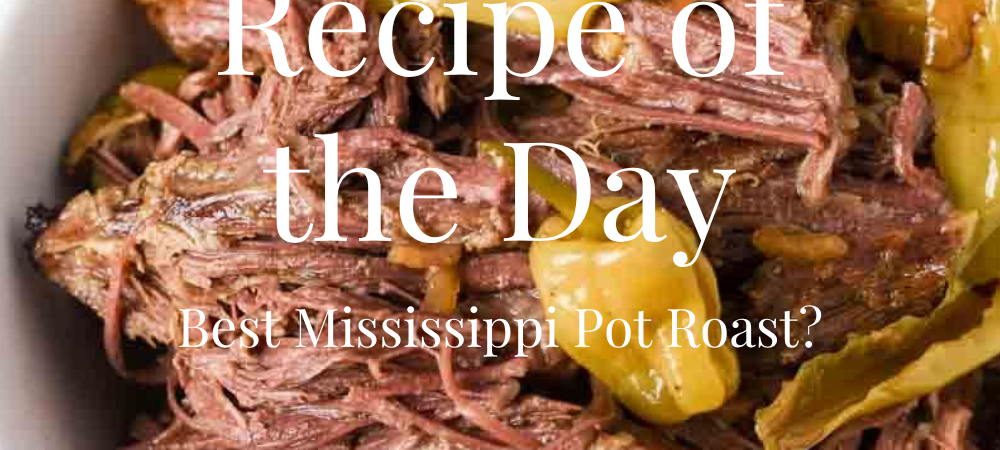
There’s a specific kind of recipe that gets shared person to person, written on index cards, requested at potlucks for years before it ever shows up on the internet. Mississippi Pot Roast is that recipe. It started as a home cook’s accidental improvisation in the Mississippi Delta, and at some point it hit the internet and never stopped moving. There are now tens of millions of versions made every year, and the core recipe hasn’t changed: five ingredients, a crockpot, and time.
The claim sounds implausible: five grocery store ingredients, a slow cooker, no browning required, no added liquid, no monitoring, and the result is a deeply flavored, pull-apart beef in a glossy, tangy, butter-enriched gravy. It sounds like the kind of thing that only works in food writing and not in the actual kitchen. It works.
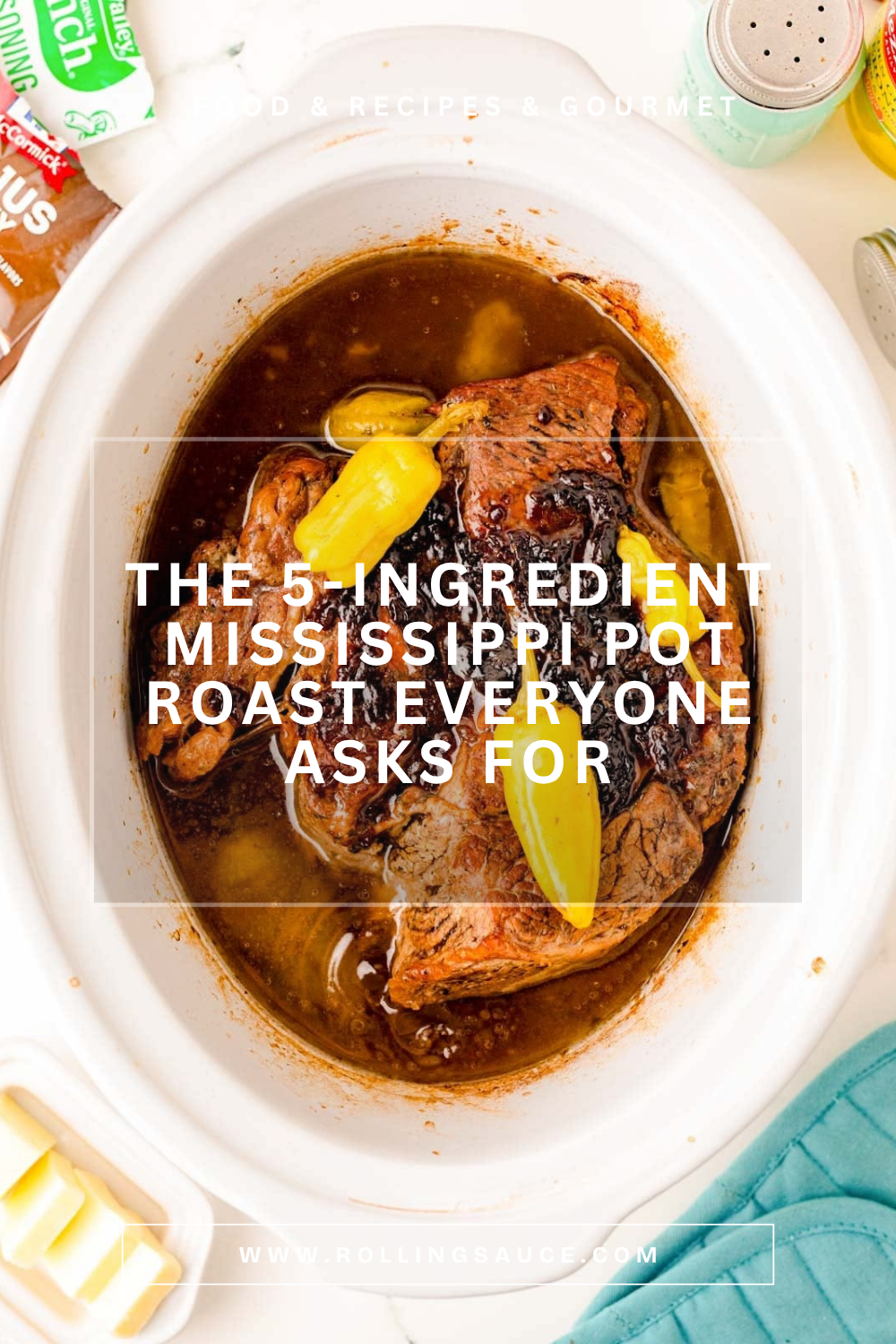
The five ingredients are a chuck roast, a packet of ranch dressing seasoning, a packet of au jus gravy mix, a stick of butter, and a jar of pepperoncini peppers. You put the roast in the crockpot, sprinkle both packets over it, lay the butter on top, add the peppers with a splash of their brine, and close the lid for eight to ten hours. That’s the full extent of the effort.
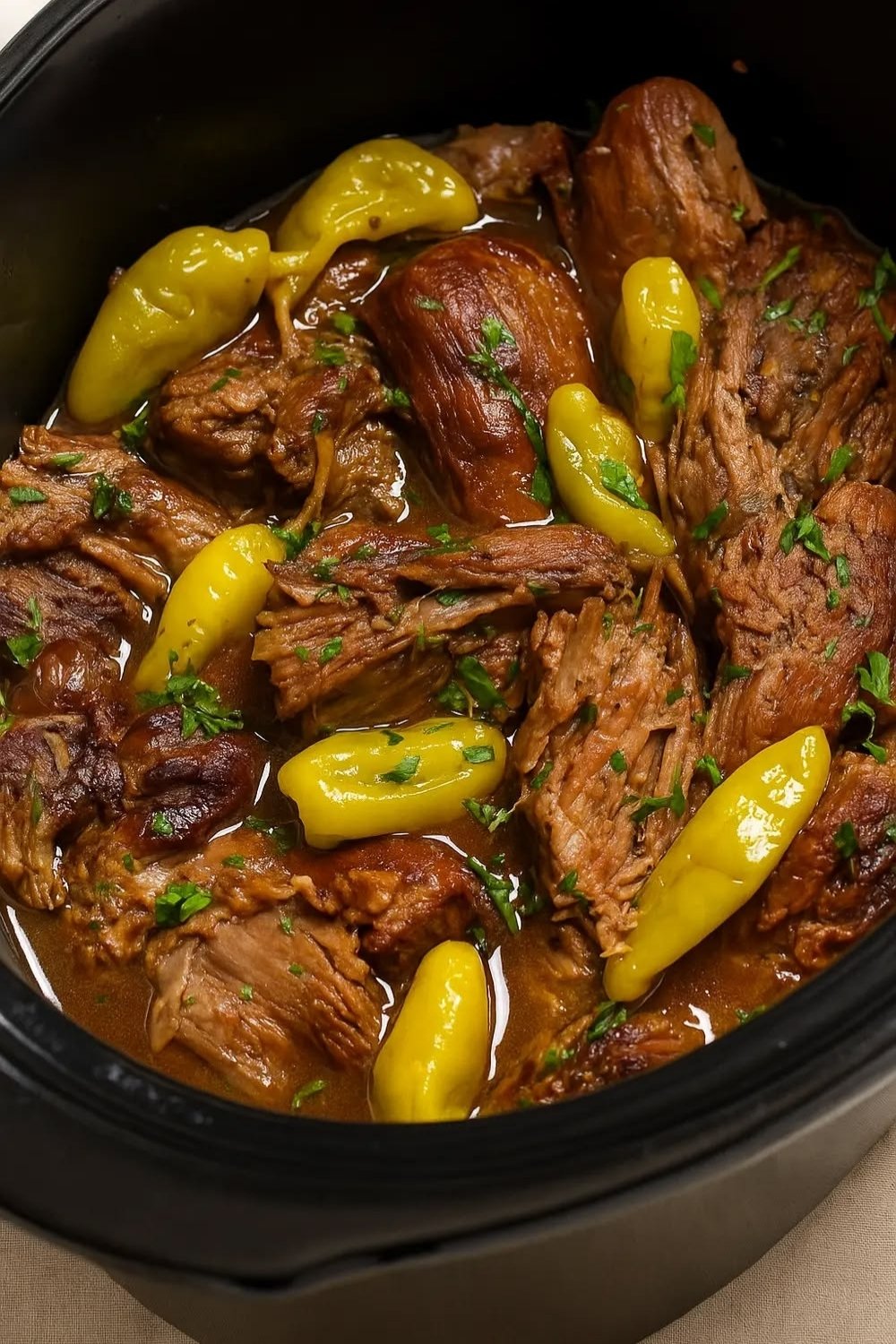
What comes out is something that tastes like it took actual skill: deeply savory from the beef and the seasoning packets, tangy and bright from the peppers, rich and silky from the butter that slowly renders into the cooking juices. The gravy that forms at the bottom of the pot is the kind of thing people drink straight from the bowl. It requires no explanation and no defense.
Why 5 Ingredients Produce Something This Complex
The flavor logic here is counterintuitive for anyone who thinks about cooking in terms of the effort going in. Most deeply flavored braises require browning, aromatics, wine, stock, and several hours of attention. Mississippi Pot Roast skips all of that and still arrives at something that tastes like it was made by someone who knew what they were doing.
There are two things happening that explain it. First, chuck roast cooked on low for eight or more hours releases enormous amounts of collagen, gelatin, and beefy fat into the cooking liquid — that’s what gives the gravy its body and richness without any thickening agent. The slow cooker does the same work a Dutch oven would over a longer time, but with less evaporation, which means more concentrated liquid stays in the pot.
Second, the combination of the ranch and au jus packets is doing flavor work that would take a long list of aromatics to replicate from scratch. Ranch mix brings dried garlic, dried onion, dried herbs, and buttermilk powder. Au jus mix brings beef flavoring, salt, and a small amount of starch that thickens the cooking liquid. Together they create a seasoning base with depth, salt, and herby complexity — all without a cutting board.
The pepperoncini peppers are the last piece. They introduce vinegar and mild pepper heat that cuts through all the fat and richness, keeping the dish from feeling heavy despite the stick of butter. Their brine also adds another layer of tangy acidity that balances everything. Without the peppers, this would be a good pot roast. With them, it’s the one people ask for.
What Each of the 5 Ingredients Actually Does
Understanding what’s in the pot matters for when you need to troubleshoot or substitute.
Chuck roast is the non-negotiable. It’s a heavily exercised shoulder muscle with a high ratio of connective tissue (collagen) relative to most beef cuts. That collagen breaks down into gelatin after hours of low, moist heat, which is exactly what gives the finished beef its silky, slightly sticky texture and what gives the cooking liquid its body. A leaner cut — round roast, sirloin — doesn’t have enough collagen to produce the same result. It cooks through fine but the liquid stays thin and the meat can dry out. Use chuck.
Ranch dressing seasoning packet provides the aromatic base: dried garlic, onion, dill, parsley, and a small amount of buttermilk powder that rounds out the savory flavors. Using a whole packet is standard in every version of this recipe, but if you’re sensitive to sodium, a half-packet still gets you there.
Au jus gravy mix packet is the savory amplifier. It adds beef flavor, a touch of caramel color, and a small amount of starch that thickens the cooking liquid into something that behaves like a proper gravy. If you can’t find au jus mix, brown gravy mix or dry onion soup mix both work as substitutes — the flavor shifts slightly but the result is still good.
Butter melts into the cooking liquid over the long cook and makes the gravy rich and silky in a way that nothing else does. A full stick is traditional. You can reduce it to half a stick without major loss. Don’t skip it entirely — the dish loses something noticeable without it.
Pepperoncini peppers are pickled Italian peppers that are mild in heat (nothing like jalapeños) but tangy and briny. After eight hours in a slow cooker, they soften completely and their flavor diffuses into the gravy. Include a splash of the brine from the jar — that liquid adds extra acidity that helps cut the fat. The peppers won’t make the finished dish spicy; they make it balanced.
How to Make Mississippi Pot Roast
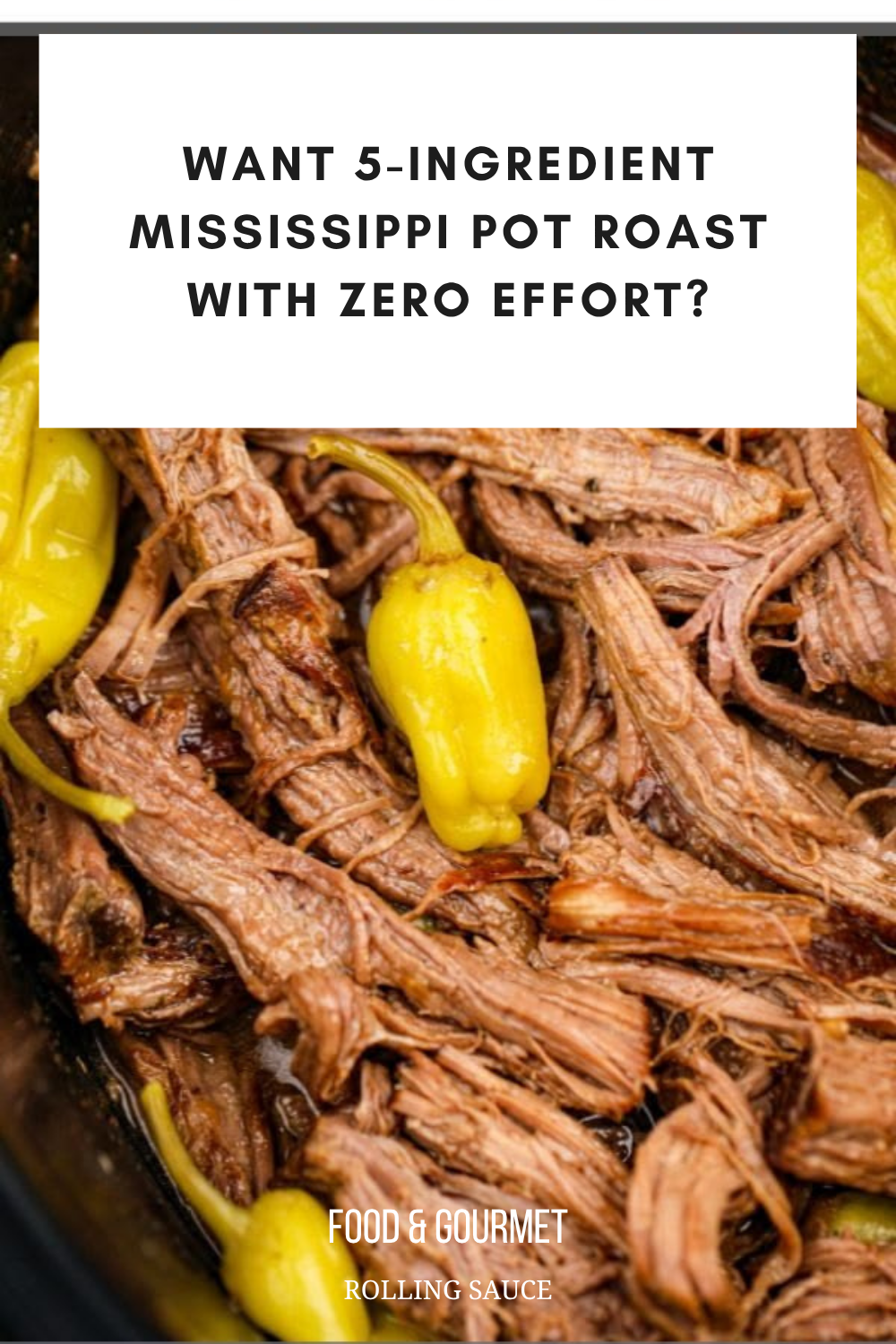
No searing, no liquid, no prep beyond opening packets. The full process from fridge to crockpot takes five minutes.

Mississippi Pot Roast
Ingredients
Method
- Place the chuck roast into the bottom of a 5- or 6-quart slow cooker. Do not add any water or broth.
- Sprinkle the ranch seasoning packet evenly over the top of the roast, then sprinkle the au jus packet on top.
- Lay the butter pats over the seasoning. Add the whole pepperoncini peppers around and on top of the roast. Pour the 2 tablespoons of pepperoncini brine over everything.
- Cover and cook on LOW for 8–10 hours or HIGH for 5–6 hours. Do not open the lid during cooking.
- When the beef is completely fall-apart tender, shred it right in the slow cooker using two forks. Toss the shredded meat with the cooking juices.
- Taste the gravy before serving. Adjust salt only if needed.
- Serve over mashed potatoes, egg noodles, rice, or on crusty rolls with a spoonful of the cooking juices.
Notes
- Storage: Refrigerate in a sealed container for up to 4 days. Freeze for
up to 3 months. Reheat on the stovetop over low heat with a
splash of beef broth if the liquid has thickened. - Thicker gravy: Whisk 1 tbsp cornstarch into 2 tbsp cold water. Stir into
cooking juices. Cook on HIGH with lid off 15 minutes, stirring
occasionally. - Swap: Rump roast works in place of chuck. For packet-free: use
homemade ranch seasoning (dill, parsley, garlic powder, onion
powder) + 2 tsp beef bouillon + 1 tsp Worcestershire sauce.
Banana peppers can substitute for pepperoncini. - Salt: Both packets contain sodium. Do not add extra salt going in —
taste at the end before adjusting
One note worth repeating from the recipe card: do not open the lid during cooking. Every time the lid comes off, the slow cooker loses heat and adds twenty to thirty minutes to the cook time. Mississippi Pot Roast doesn’t need to be basted, stirred, or checked. Leave it alone and it will take care of itself.
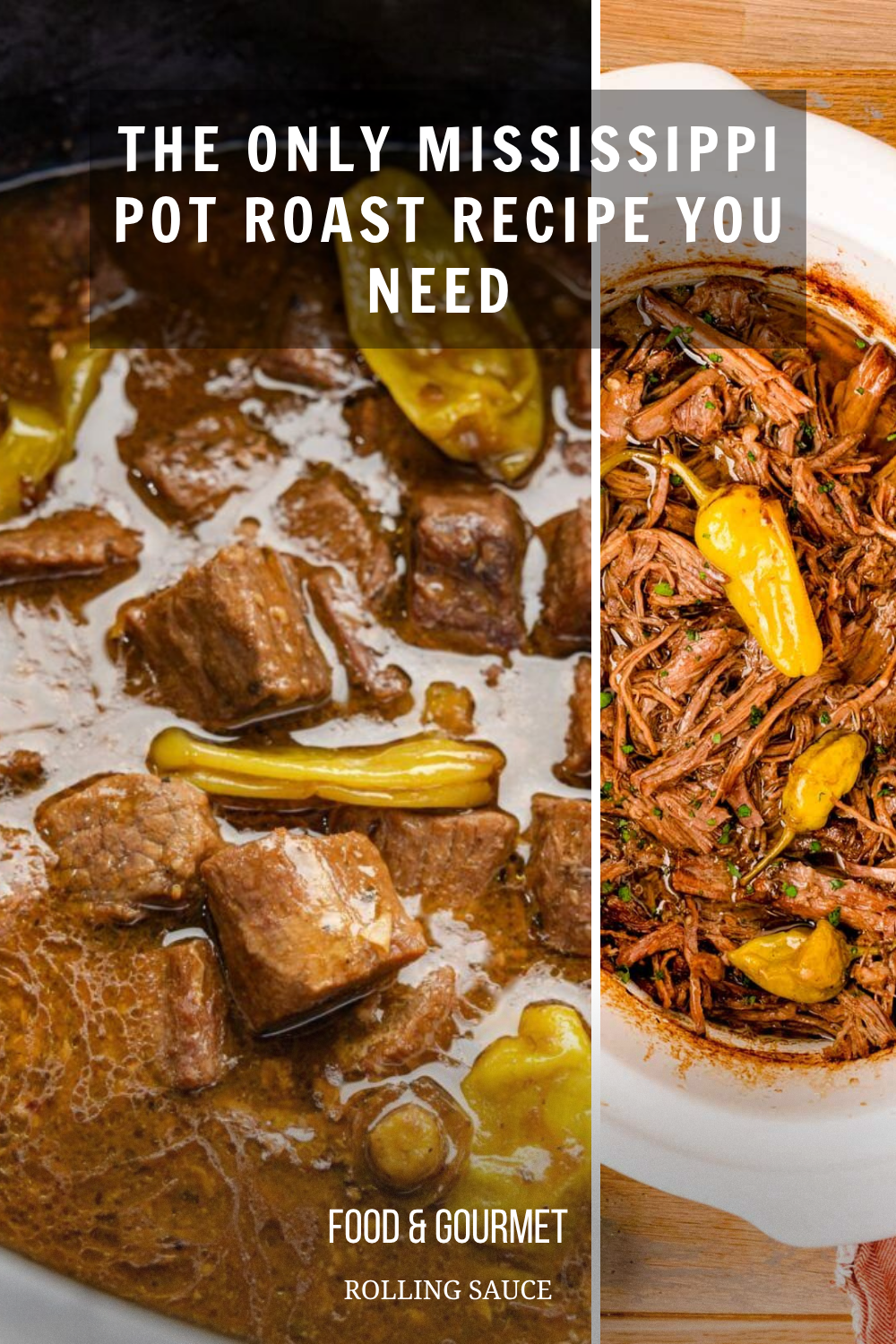
The Chuck Roast: Why the Cut Matters More Than You Think
Mississippi Pot Roast works specifically because of the cut of beef, not in spite of its simplicity. Chuck roast comes from the shoulder of the animal — a heavily worked muscle group with significant amounts of connective tissue woven through the meat. When that connective tissue breaks down over eight to ten hours of low, moist heat, it transforms into gelatin, which is what makes the meat pull-apart tender and what gives the braising liquid its thick, glossy consistency.
A three-pound roast feeds four to five people comfortably. A four-pound roast feeds six with enough left over for sandwiches the next day. Both fit in a standard five- or six-quart slow cooker. If you’re scaling up, two smaller roasts work better than one very large one — they cook more evenly and shred more easily.
Trim visible exterior fat if you want a cleaner gravy, but don’t trim the fat marbled through the muscle itself. That intramuscular fat renders during the long cook and bastes the meat from the inside. Lean chuck roast produces a noticeably drier result.
A note on salt: both the ranch packet and the au jus packet contain significant sodium. This is one of the reasons the recipe doesn’t need any additional salt going into the crockpot. Taste the gravy before serving, and add salt only if it’s genuinely needed. Most versions come out well-seasoned already. If your previous attempts were too salty, check your packet brands — some are saltier than others, and switching to low-sodium versions of either packet resolves it.
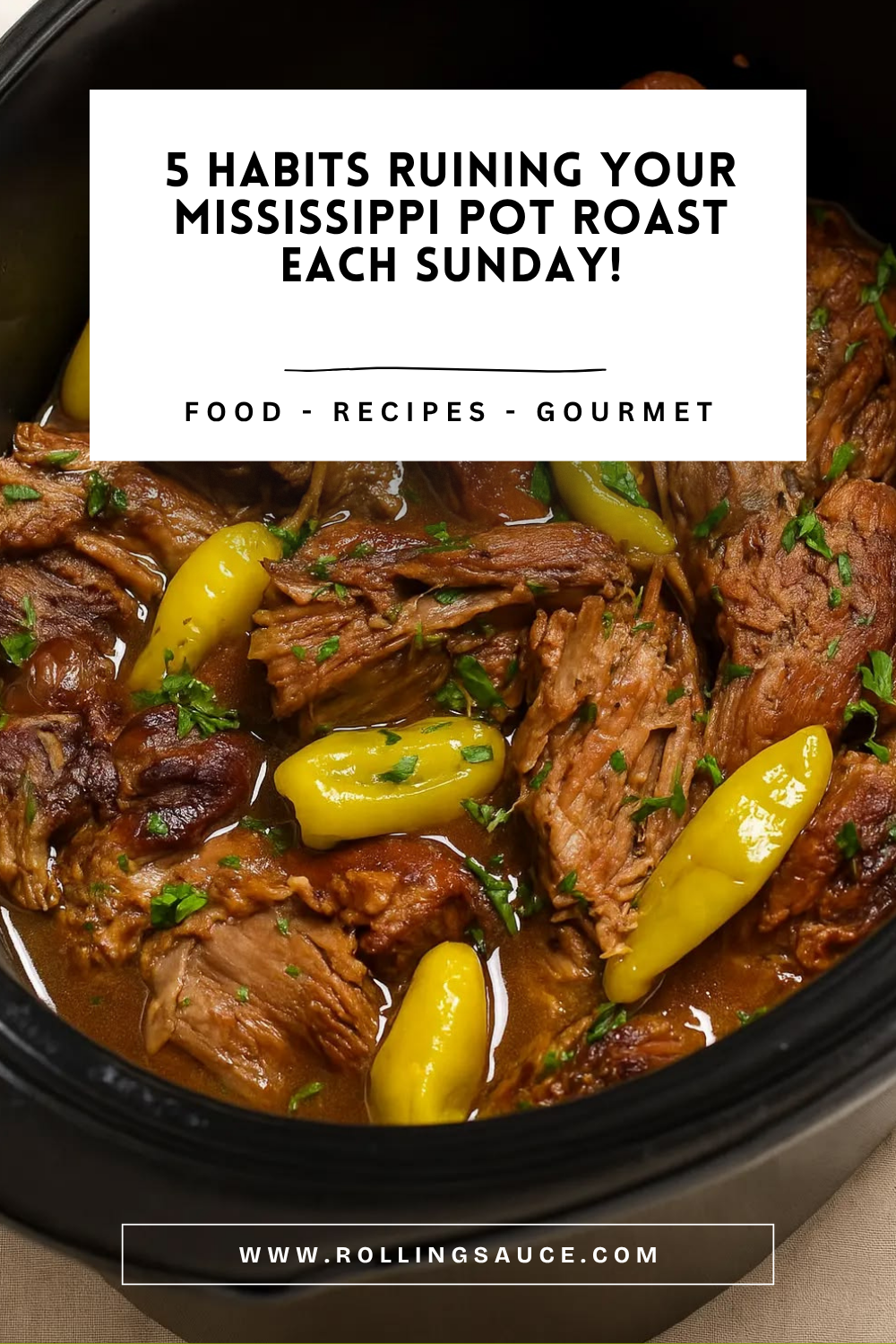
How to Serve It and What to Do With Leftovers
The default serving is over mashed potatoes, and there’s a reason that combination has become standard. My fluffy mashed potatoes pair exactly right — the gravy pools into the potatoes and the whole plate becomes a cohesive thing. Egg noodles work equally well if you want something that absorbs a lot of sauce. Rice is a solid choice for a lighter base.
The sandwich version is outstanding: pull the shredded beef onto a crusty roll with a spoonful of the cooking juices and nothing else. The beef already has enough flavor that it doesn’t need condiments, though a smear of horseradish or a few extra pepperoncini slices on top is a worthwhile addition.
For the gravy: if you want it thicker than what naturally forms, whisk one tablespoon of cornstarch into two tablespoons of cold water and stir the slurry into the cooking liquid. Cook on HIGH with the lid off for about fifteen minutes, stirring occasionally, until the gravy reaches the consistency you want.
Leftovers are genuinely one of the better arguments for making this recipe. The beef keeps in the refrigerator for four days and freezes well for up to three months. Reheat on the stovetop over low heat with a splash of beef broth if the liquid has thickened too much in the fridge. The flavor only gets better as it sits. Leftover pot roast reheated the next day is barely a leftover — it’s just dinner again.
If you want another crockpot dinner that follows the same set-and-forget logic, my easy crockpot white chicken chili runs the same format. And for a beef comfort dinner that comes together faster on the stovetop, my beef stroganoff that tastes like it simmered for hours is a good weeknight companion to this one.
Frequently Asked Questions
Do I need to add water or broth to the slow cooker? No. This is one of the most important things to know about this recipe. The butter, the pepperoncini brine, and the moisture released naturally by the beef all combine to create enough liquid. Adding water or broth dilutes the gravy and makes it thin and flat-tasting. Trust the process.
Can I make this without the seasoning packets? Yes, if you want to go from-scratch. For the ranch, combine: 1 tsp dried dill, 1 tsp dried parsley, 1 tsp dried chives, 1/2 tsp garlic powder, 1/2 tsp onion powder, 1/2 tsp salt. For the au jus, use 2 tsp beef bouillon powder or paste plus 1 tsp Worcestershire sauce. The from-scratch version gives you more control over sodium and is the better choice if the packet version has been too salty for you.
How do I know when the pot roast is done? It’s done when the beef shreds easily with two forks and the meat pulls apart without resistance. At eight hours on low, a three-to-four-pound chuck roast will almost always be there. If it’s still stiff and resists shredding, give it another hour. Some chuck roasts cook faster than others depending on their fat content and starting temperature. The goal is fall-apart tender, not just cooked through.
Is this spicy from the pepperoncini? Not meaningfully. Pepperoncini peppers are very mild — they rank between 100 and 500 Scoville units, far below jalapeños and most hot sauces. After eight hours of slow cooking, even that mild heat dissipates almost entirely into the gravy. What’s left is tanginess and brine, not heat. Even picky eaters and children generally like this dish without any complaints about spice.
Can I cook this on HIGH instead of LOW? Yes, but the result is slightly less good. HIGH for 5 to 6 hours produces tender beef, but the texture is a little less silky and the gravy is a little thinner than the LOW version. If you have time, LOW is worth it. If you need dinner in five hours and forgot to start it this morning, HIGH works fine.
Can I make this in a Dutch oven instead of a slow cooker? Yes. Preheat your oven to 300°F. Assemble all the ingredients in the Dutch oven the same way, put the lid on, and roast for 3.5 to 4 hours until the beef is fork-tender. Check it at 3 hours — the oven method cooks slightly faster than the crockpot due to the more even heat distribution.
Five ingredients, a slow cooker, and enough time for the collagen in the chuck roast to do its work. That’s the whole recipe. It doesn’t overcomplicate itself, which is exactly why it keeps getting made.
Save this post for the next time you need a dinner that runs itself.