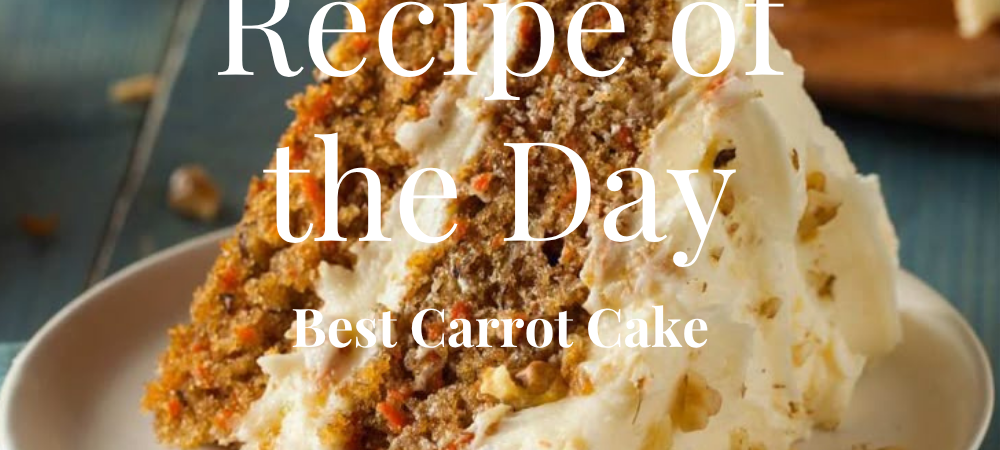
Layer cakes are beautiful. They’re also a two-to-three-hour commitment — two separate cakes to bake, a cooling window long enough to test anyone’s patience, a frosting session that requires technique, and a refrigerated rest before the whole thing is stable enough to slice cleanly. For a Tuesday when you want something sweet, or a gathering where you’d rather be talking to people than standing in the kitchen with an offset spatula, that’s simply too much.
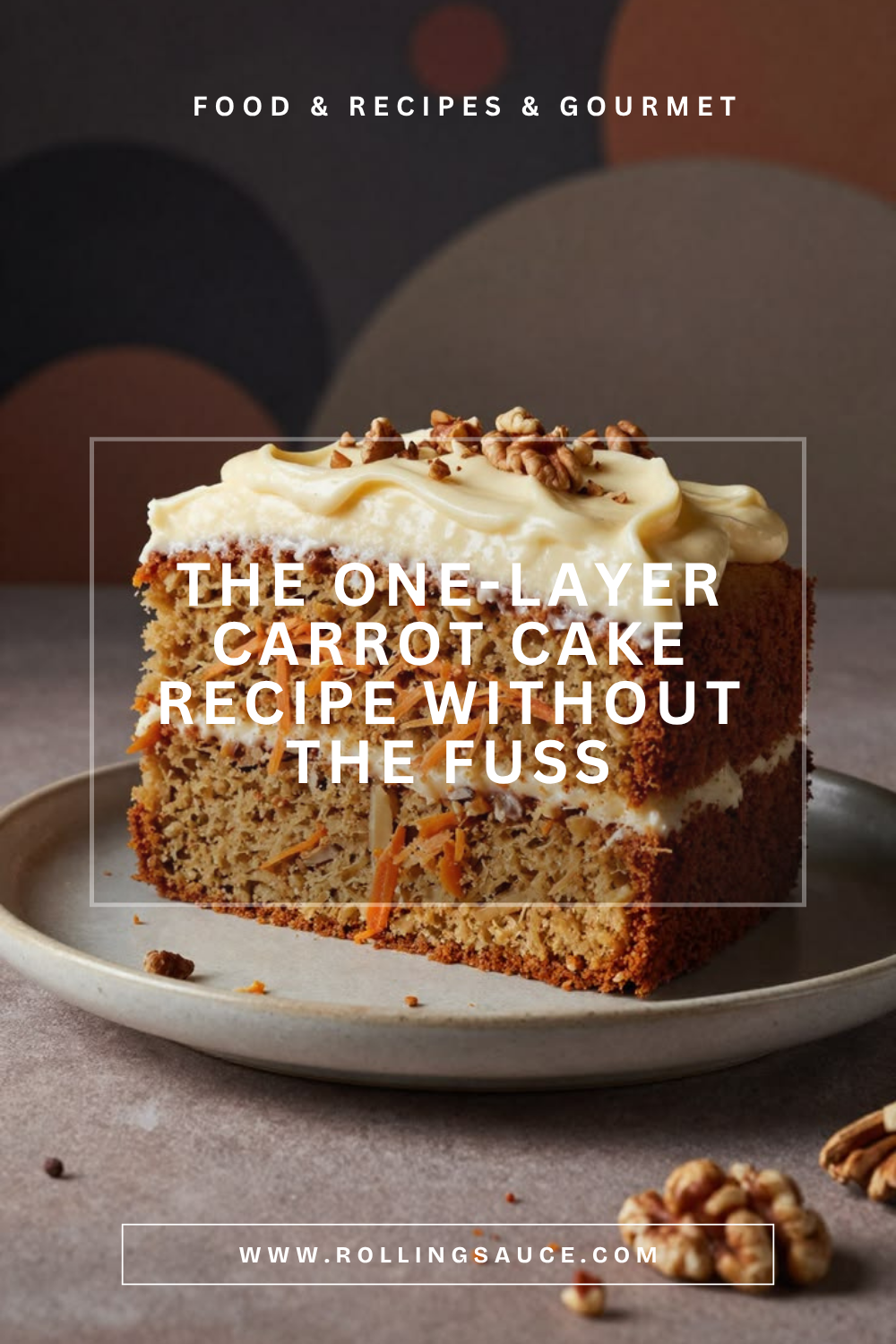
This is the version for those situations. One round or square pan. One batter mixed by hand in two bowls. No stacking, no crumb coat, no architecture. The cake bakes in about 35 minutes, and once it’s cool you spread the cream cheese frosting directly on top and call it done. A carrot cake that looks effortless and tastes like it wasn’t.
The cake itself is properly good — not “good for a simple cake” — with grated carrots, warm spices, Greek yogurt for tenderness, and oil rather than butter for the kind of moisture that stays through day two and day three. The cream cheese frosting has a little lemon in it that cuts through the richness. If you’ve only ever made the big version, this one might become the one you actually make regularly.
Why One Layer Is the Right Choice
A single-layer carrot cake produces the same crumb, the same spice, and the same cream cheese frosting as the layered version. What it doesn’t produce is the anxiety.
Cream cheese frosting is a famously difficult frosting to work with for layered cakes. It’s softer than buttercream, prone to sliding when the cake isn’t cold, and unforgiving if the layers aren’t level. Every step of the assembly process requires either cold cake, cold frosting, or careful technique — sometimes all three. It’s manageable, but it’s not casual.
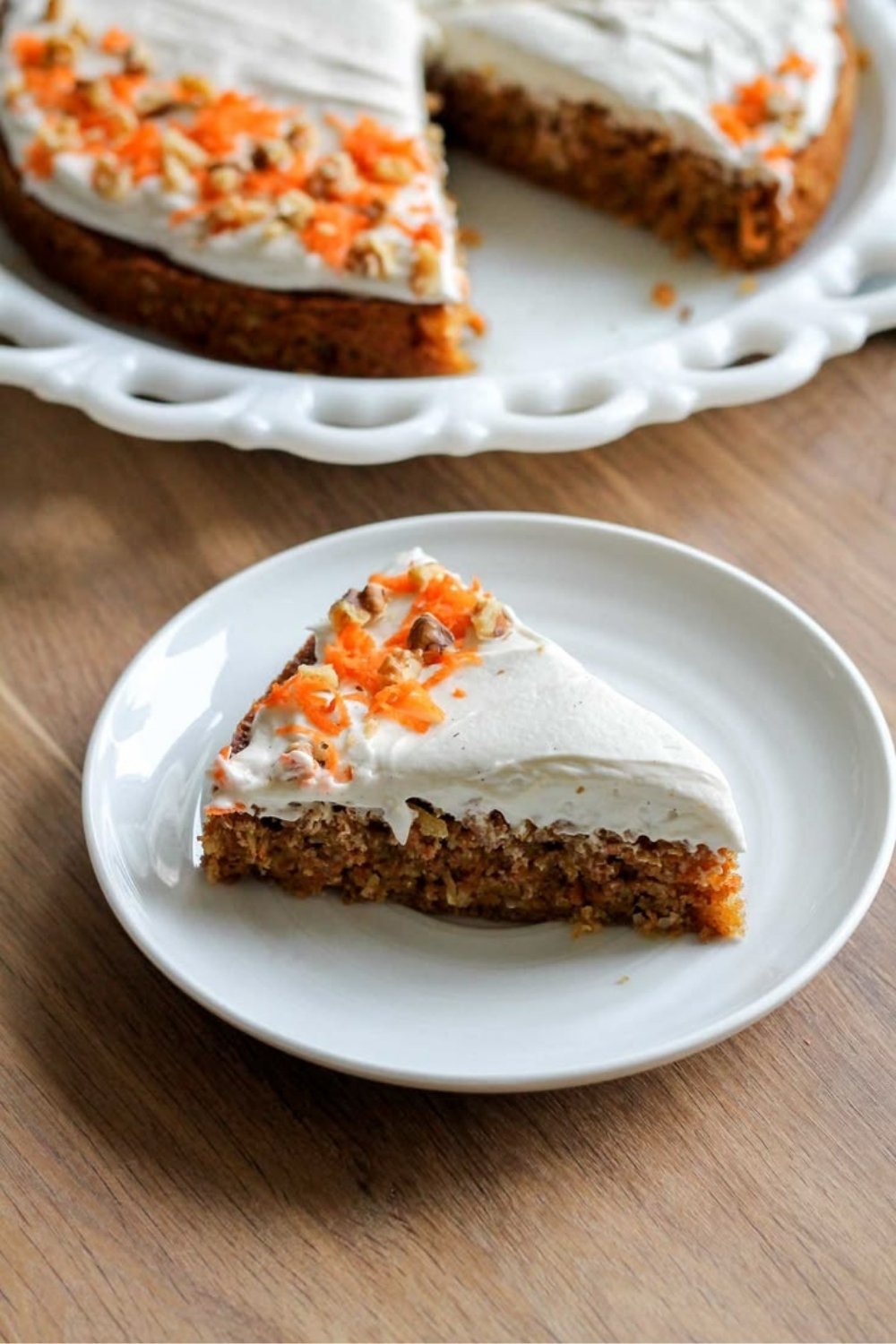
A one-layer cake sidesteps all of that. The frosting goes on a single flat surface. There’s no filling layer to stay put, no sides to coat evenly, no crumb coat to apply and chill. You spread it with the back of a spoon or an offset spatula and you’re done in about three minutes. Garnish with a handful of chopped walnuts and it looks intentional.
It also fits better in a home kitchen practically. It stores in the fridge in its pan. It travels without drama. It serves a table of 8–10 without the formality that a tiered layer cake brings. It’s the right dessert for a dinner party, a birthday without ceremony, or the Sunday when you want to bake something and eat it within a reasonable timeframe.
What Makes This Carrot Cake Exceptionally Good
A few deliberate decisions in this recipe separate it from an average carrot cake.
Oil, not butter. Butter-based cakes are delicious, but they firm up when cold because saturated fat is solid at refrigerator temperature. Oil stays liquid even cold, which means this carrot cake stays soft and moist straight from the fridge — no warming up needed before serving.
Greek yogurt in the batter. A quarter cup of plain Greek yogurt adds moisture and a subtle tang that makes the cake taste more complex without changing the texture. It also provides the acidity that reacts with the baking soda, which is part of what makes the crumb tender and fine.
Two sugars. Granulated sugar provides sweetness and structure. Brown sugar adds a background molasses note that deepens the spice flavor. Together they make a better cake than either one alone.
Finely grated carrots. This is the most important technique note in the whole recipe. Coarsely grated carrots produce visible, textural strands in the finished cake — not necessarily bad, but not what produces the soft, even crumb this recipe is going for. Use the fine side of a box grater, not the coarse side. Three medium carrots yield about two cups of finely grated carrot.
Cinnamon, nutmeg, and ginger. As King Arthur Baking notes in their carrot cake guidance, a proper spice blend is what differentiates a good carrot cake from a bland one. These three together give the cake warmth without any one flavor dominating.
What You’ll Need
Here’s everything for one 9-inch round or 9×9-inch square carrot cake serving 9–12.
For the cake:
- 1½ cups (190g) all-purpose flour
- 1 teaspoon baking powder
- 1 teaspoon baking soda
- 1½ teaspoons ground cinnamon
- ½ teaspoon ground nutmeg
- ¼ teaspoon ground ginger
- ½ teaspoon kosher salt
- 2 large eggs, at room temperature
- ¾ cup (150g) granulated sugar
- ¼ cup (50g) light brown sugar, packed
- ½ cup (120ml) neutral vegetable or canola oil
- ¼ cup (60g) plain full-fat Greek yogurt or sour cream
- 1 teaspoon pure vanilla extract
- 2 cups (220g) finely grated carrots (about 3 medium carrots)
- ½ cup (55g) chopped walnuts or pecans (optional)
For the cream cheese frosting:
- 8 oz (225g) full-fat cream cheese, softened to room temperature
- 4 tablespoons (55g) unsalted butter, softened to room temperature
- 1½–2 cups (180–240g) powdered sugar, sifted
- 1 teaspoon pure vanilla extract
- 1 teaspoon fresh lemon juice
- Pinch of salt
Bring eggs, Greek yogurt, cream cheese, and butter to room temperature before starting. Cold dairy goes into the batter and frosting with friction — it doesn’t combine smoothly. Room temperature ingredients produce a more uniform batter and a significantly smoother frosting.

One-Layer Carrot Cake With Cream Cheese Frosting
Ingredients
Method
- Preheat oven to 350°F. Grease a 9-inch round or 9×9-inch square pan and line the bottom with parchment paper.
- Whisk flour, baking powder, baking soda, cinnamon, nutmeg, ginger, and salt together in a medium bowl.
- In a large bowl, whisk eggs, both sugars, oil, Greek yogurt, and vanilla until smooth.
- Add dry ingredients to wet; stir gently until just combined. Fold in grated carrots and nuts.
- Pour into prepared pan and bake 30–35 minutes until a toothpick comes out clean. Cool in pan 15 minutes, then turn out and cool completely on a wire rack.
- Beat softened cream cheese and butter on high speed for 2–3 minutes until pale and fluffy. Add vanilla, lemon juice, and salt. Add powdered sugar gradually and beat until smooth.
- Frost the completely cooled cake. Top with chopped walnuts and a dusting of cinnamon if desired.
Notes
- Storage: Refrigerate covered for up to 4 days. Bring to room temperature 20–30 min before serving.
- Make ahead: Bake and cool the unfrosted cake, wrap tightly, and refrigerate up to 2 days. Frost on day of serving.
- Freeze: Wrap the unfrosted cake tightly and freeze for up to 1 month. Thaw overnight in the fridge, then frost.
- Grating tip: Use the fine side of a box grater, not coarse — it produces the best crumb texture.
How to Make It
Step 1: Prep the Pan and Preheat
Preheat the oven to 350°F. Grease a 9-inch round cake pan or a 9×9-inch square pan. Line the bottom with a round or square of parchment paper, then grease the parchment. This guarantees the cake will release cleanly.
Step 2: Mix the Dry Ingredients
In a medium bowl, whisk together the flour, baking powder, baking soda, cinnamon, nutmeg, ginger, and salt. Set aside.
Step 3: Mix the Wet Ingredients
In a large bowl, whisk together the eggs, granulated sugar, brown sugar, oil, Greek yogurt, and vanilla until smooth and fully combined. It should look glossy and uniform.
Step 4: Combine and Add Carrots
Pour the dry ingredients into the wet ingredients and stir gently with a spatula until just combined — stop when no dry streaks remain. Do not overmix. Fold in the grated carrots and chopped walnuts if using. The batter will be thick.
Step 5: Bake
Pour the batter into the prepared pan and spread evenly. Bake for 30–35 minutes, until a toothpick inserted in the center comes out clean or with a few moist crumbs. The edges will pull slightly away from the sides of the pan. Cool in the pan for 15 minutes, then turn out onto a wire rack and cool completely before frosting — at least 1 hour, preferably longer.
The Cream Cheese Frosting
The frosting is where a carrot cake either delivers or disappoints, and a few details make the difference.
Beat the cream cheese and butter together first, before any powdered sugar goes in. Both need to be genuinely room temperature — not microwave-softened, actually at room temperature. Beat on high speed for 2–3 full minutes until the mixture is pale, airy, and completely smooth. If you add powdered sugar to under-beaten cream cheese and butter, you get a dense, slightly grainy frosting that doesn’t spread cleanly.
Sift the powdered sugar. Lumps in powdered sugar become lumps in frosting. Sift it before adding.
Add powdered sugar gradually. Start with 1½ cups, then add more if you want it stiffer or sweeter. The full 2 cups gives you a classic sweet, pipeable frosting. The lower end gives you something slightly softer and less sweet, which I prefer on this particular cake.
The lemon juice is small and important. A teaspoon of fresh lemon juice adds a brightness that cuts through the richness of the cream cheese and butter. The frosting shouldn’t taste lemony — it should taste tangy and complex rather than like a sugary blank slate.
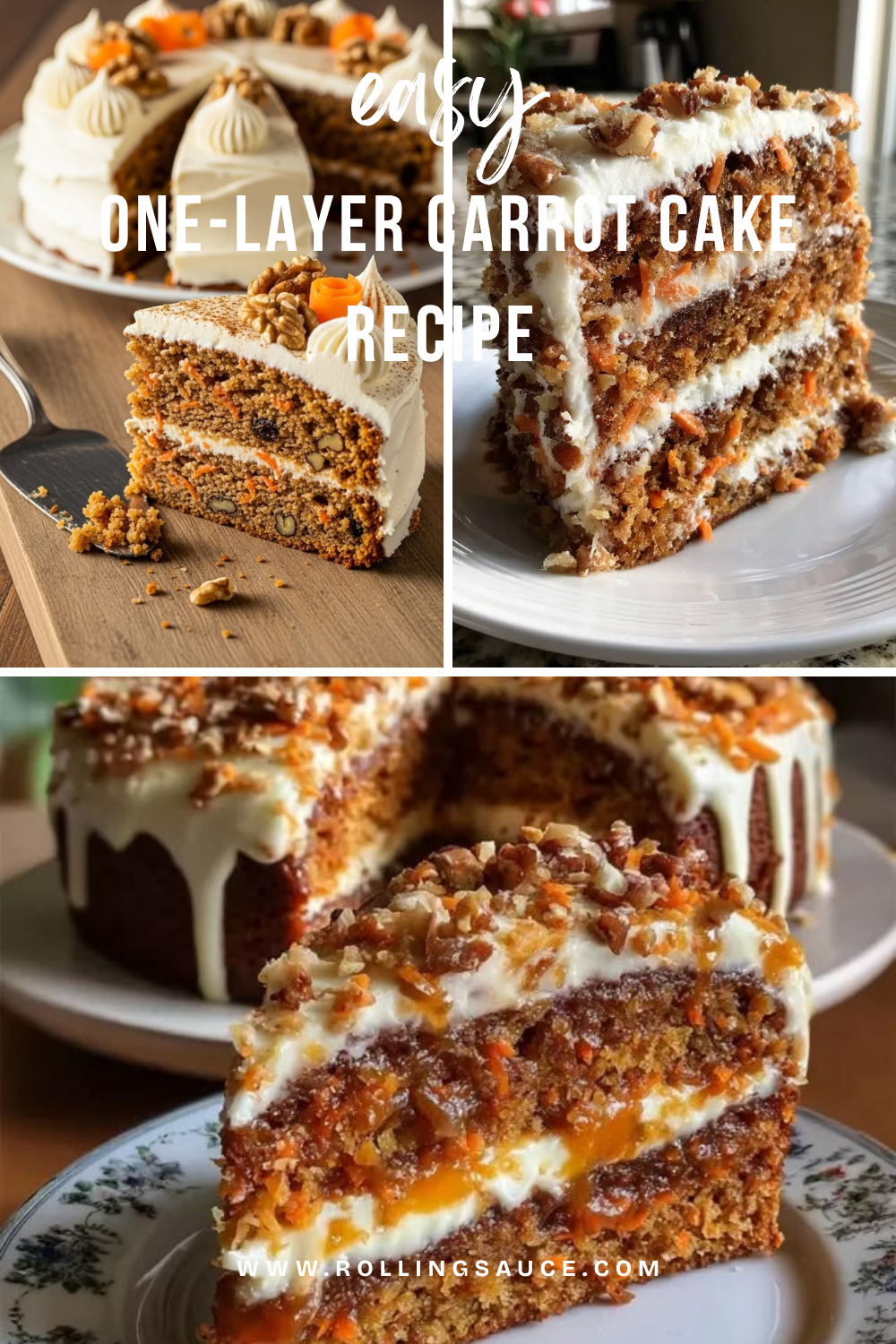
Spread the frosting over the completely cooled cake using an offset spatula or the back of a large spoon. It doesn’t need to be perfect — swirls and ridges look intentional. Top with roughly chopped walnuts or pecans, a dusting of cinnamon, or nothing at all.
Tips for a Moist, Even Crumb
- Don’t overmix the batter. Overmixing develops gluten and produces a tough, chewy cake instead of a tender one. Stir only until no dry streaks remain and then stop immediately.
- Fine-grate the carrots. This is the most commonly skipped step. Pre-shredded carrots are too coarse. Use the small holes on a box grater for a texture that integrates into the crumb rather than creating visible fibrous strands.
- Measure flour by spooning. Scooping the measuring cup directly into the flour bag compacts it and leads to excess flour, which makes the cake dry and dense. Spoon the flour into the cup and level off with a straight edge.
- Cool completely before frosting. Warm cake melts cream cheese frosting. The frosting will run, puddle, and look like something went wrong. Let the cake cool for at least an hour, or wrap it and refrigerate overnight and frost it the next day.
- Taste the frosting before it goes on. Powdered sugar levels vary by preference. If it’s too sweet, a squeeze more lemon juice helps. If it’s too soft, add another ¼ cup powdered sugar and beat again.
Variations and Add-Ins Worth Knowing
This recipe is flexible:
- Add crushed pineapple. Drain a ½ cup of crushed pineapple very well and fold it into the batter with the carrots. It adds moisture and a subtle tropical sweetness that’s a classic pairing in American carrot cake.
- Add coconut. A handful of sweetened shredded coconut folded into the batter adds chew and a different kind of sweetness.
- Use pecans instead of walnuts. Pecans are slightly sweeter and less bitter than walnuts, and work equally well in the batter and as a topping.
- Make it a 9×13 sheet cake. Double the batter, spread into a greased 9×13-inch pan, and bake at 350°F for 38–42 minutes. This version feeds a crowd with even less fuss — frost it right in the pan and slice at the table.
- Make it into cupcakes. Divide the batter among 12 lined muffin cups and bake at 350°F for 18–22 minutes. The frosting recipe as written is enough for a generous swirl on each.
- Skip the walnuts entirely. For a nut-free version (especially useful for serving to mixed groups), the batter works just as well without them. The texture is slightly less complex but nobody will miss what they can’t see.
For other simple, no-fuss bakes in the same spirit, one-bowl banana bread uses the same minimal-equipment approach and is equally reliable.
Frequently Asked Questions
Can I make this carrot cake ahead of time? Yes, and it actually improves overnight. The flavors deepen and the crumb gets even more moist after a day in the refrigerator. Bake the cake, cool completely, wrap tightly in plastic wrap (unfrosted), and refrigerate for up to 2 days. Frost on the day of serving, or frost and refrigerate — both work.
How do I store leftover carrot cake? Because of the cream cheese frosting, the frosted cake needs to be refrigerated. Cover loosely with plastic wrap or keep in an airtight container for up to 4 days. Bring slices to room temperature for 20–30 minutes before serving — cream cheese frosting is noticeably better at room temperature than straight from the fridge.
Can I freeze carrot cake? The unfrosted cake freezes beautifully — wrap individual layers in plastic wrap and then foil for up to 2 months. Thaw in the fridge overnight, then frost and serve. Frosted slices can be frozen wrapped tightly, but the texture of the frosting changes slightly after thawing.
Why is my carrot cake dense? Most likely causes: too much flour (from scooping rather than spooning), overmixing the batter after adding the flour, or the baking powder and soda being past their prime. Test your leaveners by dropping a teaspoon of baking powder into hot water — if it bubbles vigorously, it’s active.
Storing and Serving
Keep the frosted cake covered in the refrigerator. Remove it from the fridge 20–30 minutes before serving so the frosting has time to soften. Cold cream cheese frosting is stiff and waxy; room-temperature cream cheese frosting is the right kind of soft and tangy.
If dessert is the focus of the evening, this cake pairs naturally with a cup of coffee or spiced tea — the cinnamon in the cake ties nicely to both. For a complete dessert rotation worth having in your back pocket, Southern peach cobbler is the other one worth knowing — simpler in technique, different season, just as satisfying to pull off without much effort.