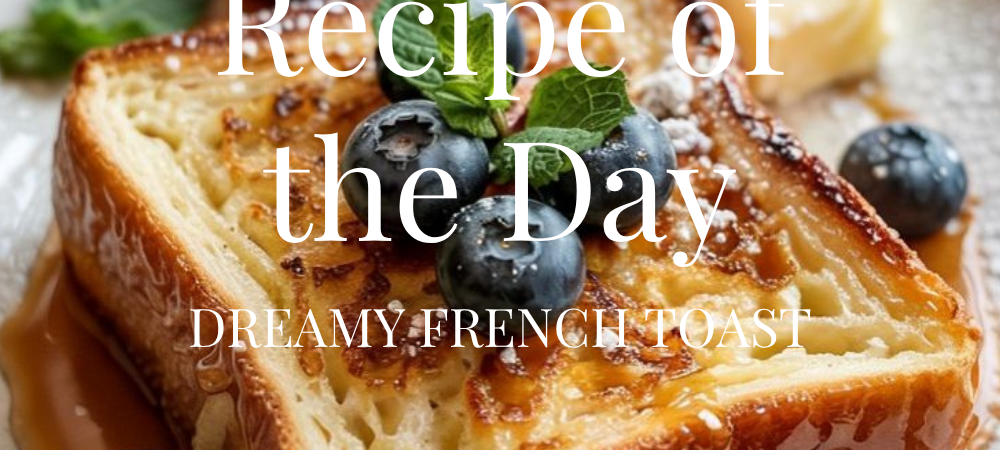
Most French toast promises crispy and custardy, then hands you something closer to wet bread with a tan. You know the texture — pale and bouncy in the middle, a little burnt at the corners, and somehow bland and eggy at the same time. This is the version that actually delivers on the promise. The outside turns deep golden and genuinely crisp, almost like the edge of a good grilled cheese, while the center stays soft and rich without ever going mushy.
The good news is there’s no secret ingredient hiding in here. It’s three basic things, done right: the bread, the custard ratio, and the heat. Get those dialed in and this french toast recipe becomes the kind of breakfast you make on a random Tuesday, not just for company.
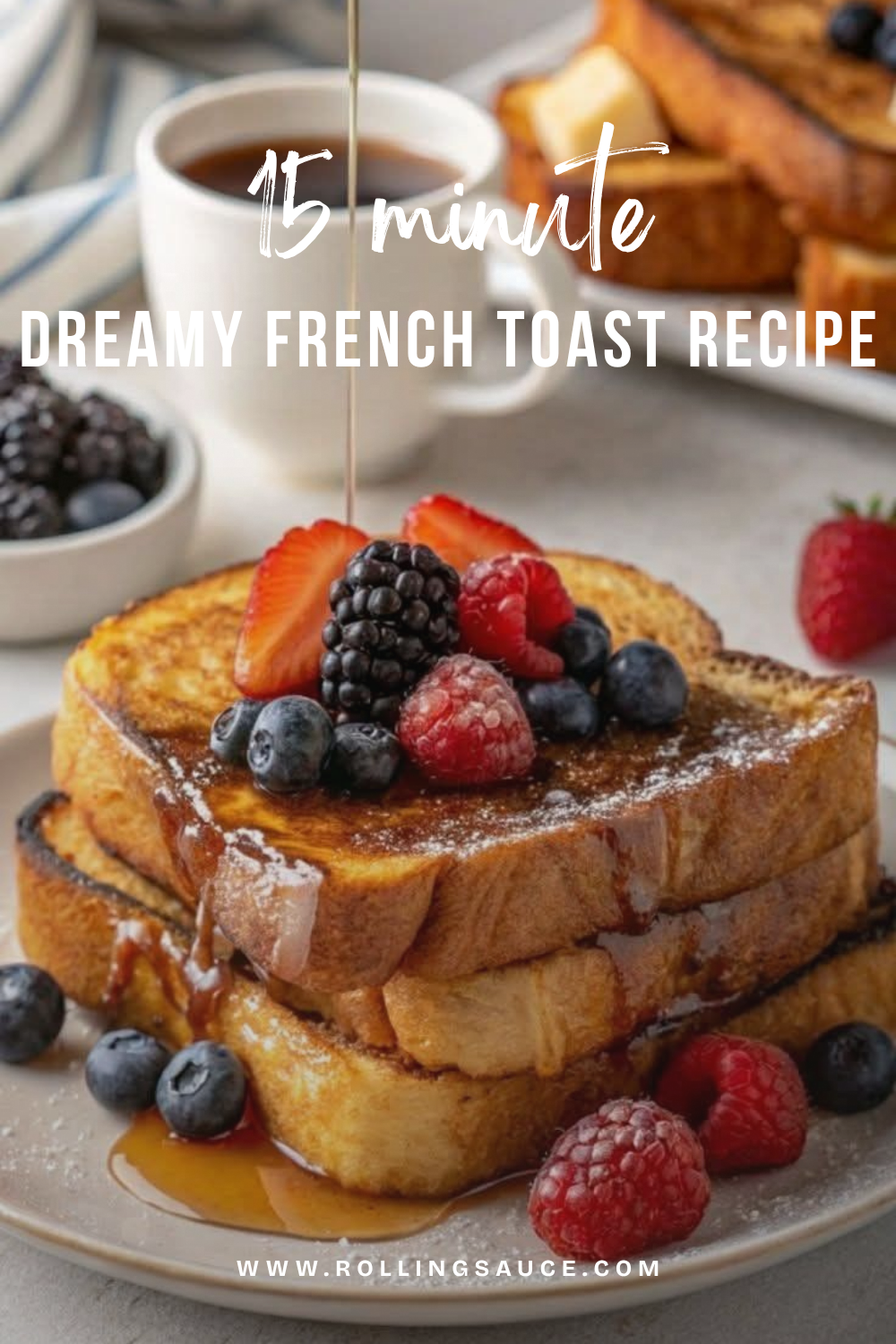
What Makes This Crispy Outside, Custardy Inside Texture Work
The texture fight in French toast comes down to how much liquid the bread soaks up versus how much heat it takes to set that liquid before the outside burns.
Slightly stale or lightly toasted bread is the first move. Fresh bread is full of moisture already, so it can’t absorb much custard before it falls apart — you end up with a slice that’s either dry on the inside or completely waterlogged. Bread that’s a day or two old, or bread you’ve toasted for a couple of minutes first, has room to soak up flavor without turning to mush.
The second piece is the custard itself. A lot of recipes go heavy on milk and light on eggs, which sounds rich but actually works against you — too much liquid and not enough egg protein means the custard never fully sets, even after the outside is browned. A ratio of two eggs to about half a cup of milk gives a custard that sets up properly without tasting like an omelet. That’s the ratio this recipe builds on, with a touch of sugar and cinnamon for flavor.
Finally, heat. Medium, not high. High heat browns the outside in under a minute, long before the custard inside has had time to cook through — that’s the “looks done, tastes raw in the middle” problem. A steady medium heat gives the inside time to firm up while the outside slowly turns deep gold and crisp.
The Ingredients You Need
This recipe keeps the ingredient list short on purpose — every item is doing a job.
- Thick-cut bread — brioche, challah, or a sturdy sourdough loaf, sliced ¾ to 1 inch thick. Thinner slices dry out before the center sets.
- Eggs — the backbone of the custard. They’re what gives you that soft, slightly set interior instead of soggy bread.
- Whole milk — rich enough to add flavor without making the custard too thin. Half-and-half works if you want something closer to bread pudding.
- Granulated sugar — just enough to help the crust caramelize and turn that deep golden color.
- Vanilla extract and ground cinnamon — the flavor base. Cinnamon especially helps the crust brown evenly.
- Salt — a small pinch balances the sweetness and makes the egg flavor taste rounder instead of flat.
- Butter (and a little oil, if you like) — butter for flavor, oil to keep it from burning if your pan runs hot.
If your bread is fresh from the bakery, lay the slices out on a wire rack for an hour or two before you start, or give them a quick pass in the toaster on the lowest setting. It sounds like an extra step, but it’s the single thing that makes the biggest difference between toast and actual French toast.
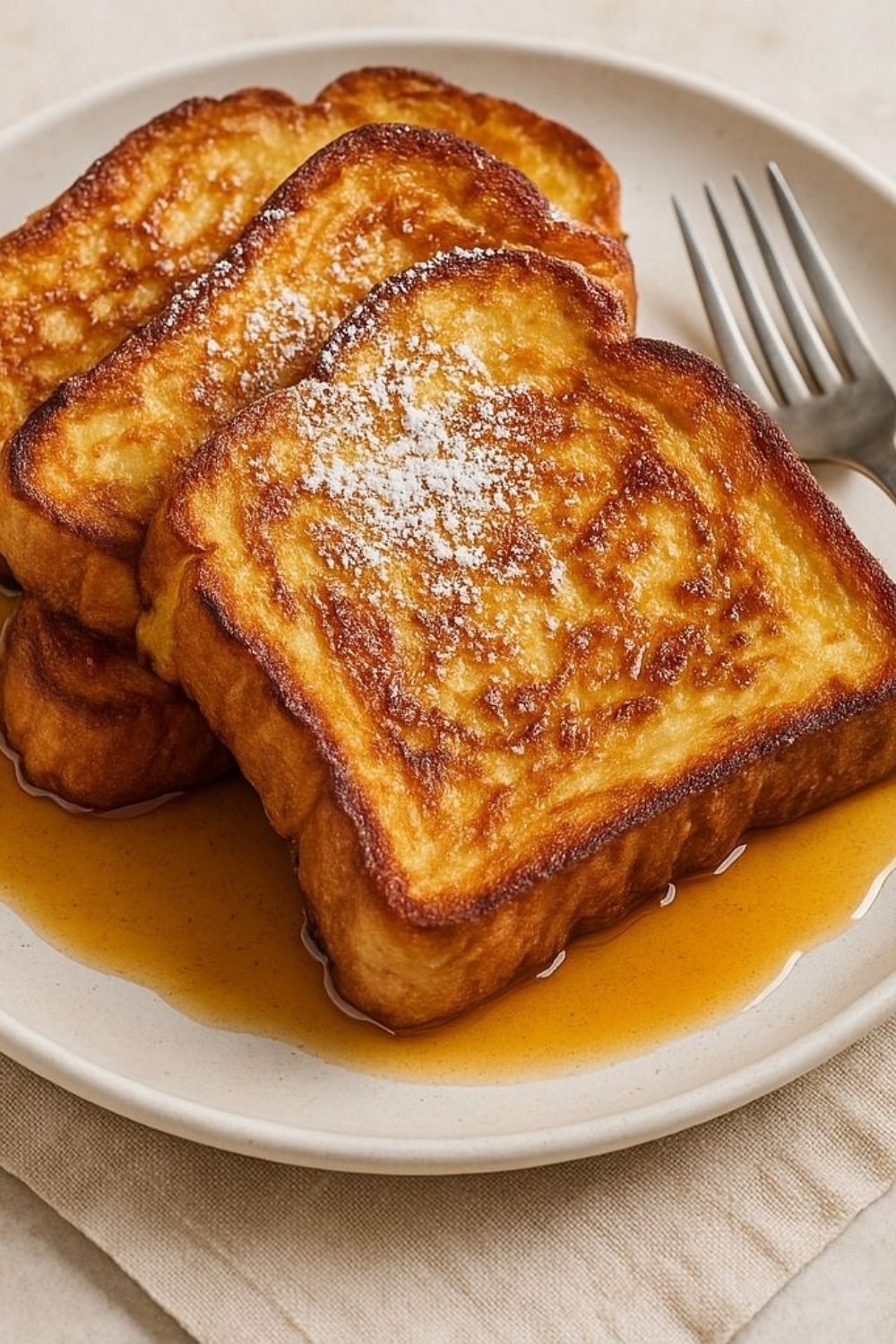

Crispy Outside, Custardy Inside French Toast
Ingredients
Method
- Whisk eggs, milk, sugar, vanilla, cinnamon, and salt in a wide shallow dish until completely smooth.
- Preheat a large skillet over medium heat for 1–2 minutes.
- Dip each bread slice in the custard for about 15 seconds per side — just enough to coat, not soak.
- Melt 1 tablespoon butter (plus a little oil if using) in the skillet. Add 2–3 slices without crowding.
- Cook 2–3 minutes per side until deep golden brown and crisp at the edges.
- Transfer cooked slices to a wire rack (not a stacked plate) while finishing remaining batches, adding more butter as needed.
- Optional: for extra-thick slices, finish in a 375°F oven for 5 minutes.
- Serve immediately with maple syrup, powdered sugar, and fresh berries.
Notes
- Storage: Leftovers keep in an airtight container in the fridge for up to 3 days.
- Make ahead: Custard can be whisked up to a day ahead and refrigerated.
- Swap: Use 2% milk or a thick non-dairy milk; texture will be slightly less rich.
How to Make Crispy Outside, Custardy Inside French Toast
Whisk the Custard
Crack your eggs into a wide, shallow dish — a pie plate or a baking dish works better than a bowl, since you want the bread to lie flat. Whisk in the milk, sugar, vanilla, cinnamon, and salt until the mixture is completely smooth, with no streaks of egg white left. This only takes about thirty seconds, but skipping it means you’ll end up with little scrambled bits stuck to your toast later.
Dip the Bread — Briefly
This is the step most people get wrong, and it’s the reason so much French toast turns out soggy. Lay a slice of bread in the custard, count to fifteen, flip it, and count to fifteen again. That’s it. You’re not soaking the bread like a sponge — you’re coating it and letting the surface absorb just enough custard to cook into a tender layer.
If your bread is very fresh and soft, cut that time down to ten seconds per side. If it’s properly stale and dry, you can go up to twenty without trouble.
Cook It Over Medium Heat
Melt about a tablespoon of butter in a large skillet over medium heat — give it a minute to get properly hot before the bread goes in, since a cold pan is how you end up with pale, greasy edges. Add two or three slices at a time, depending on the size of your pan, and don’t crowd them.
Cook for two to three minutes per side, until each slice is a deep golden brown with a crust you can actually hear when you tap it. Resist the urge to flip early — let the first side fully set before you move it.

Rest on a Rack, Not a Plate
As each batch finishes, move it to a wire rack instead of stacking the slices on a plate. Stacking traps steam underneath the bottom slice, and that steam is exactly what turns a crisp crust soft again within minutes. A rack lets air move underneath so every slice stays crisp until you’re ready to serve.
Optional: Finish in the Oven for Extra-Thick Slices
If you went with really thick bread — closer to an inch — and you want extra insurance on the crisp factor, slide the cooked slices onto a baking sheet and into a 375°F oven for five minutes while you finish the rest of the batch. It’s not required, but it’s a nice trick if you’re cooking for a crowd and want everything to come out at the same time.
Why French Toast Turns Out Soggy (And How to Fix Each One)

If your French toast has let you down before, it was almost always one of these four things — and each one has a simple fix.
The bread was too fresh. Soft, fresh bread is already saturated with moisture, so it has nowhere to put the custard. Fix: use day-old bread, or toast fresh slices lightly first to dry them out before dipping.
The bread was too thin. Sandwich-bread-thin slices soak through completely in seconds, leaving nothing but mush once they hit the pan. Fix: slice your loaf at least ¾ inch thick, ideally closer to an inch.
The custard sat on the bread too long. Even great bread turns to paste if it sits in custard for a minute or two. Fix: count to fifteen per side and move on — you can always dip it again briefly if it needs more flavor.
The heat was wrong in either direction. Too high and the outside scorches before the inside sets; too low and the custard never firms up at all, leaving a slimy center under a pale crust. Fix: medium heat, and give your pan a minute to preheat before the first batch goes in.
One trick that helps if your bread is fresher than you’d like is to lightly toast it on the lowest setting until it feels dried out and slightly golden before dipping — it gets you most of the way to “day-old” in just a couple of minutes.
French toast isn’t really a recipe problem. It’s a moisture-management problem wearing a recipe’s clothes.
Tips for French Toast That’s Crispy Every Time
- Pick your bread on purpose. Brioche and challah give you a rich, slightly sweet crumb that browns beautifully. A dense sourdough gives more chew and a sturdier crust. Either works — just match the bread to the mood you’re going for.
- Don’t drown the bread in custard. It’s tempting to make extra and really soak each slice, but more custard doesn’t mean more flavor — it means more time for the inside to firm up before the outside burns. Stick to the quick dip.
- Let your pan fully heat up before the first batch. The first slices you cook are the test run for your heat level. If they come out pale after three minutes, your pan wasn’t hot enough to start.
- Use butter for flavor, but don’t be afraid of a little oil. Butter alone can burn at the higher end of medium heat, especially in batch two or three. A teaspoon of neutral oil mixed in raises the smoke point without changing the taste much.
- Serve it the moment it’s ready. French toast is at its best in the first few minutes off the pan, when the crust is still audibly crisp. If you’re making a big batch, keep finished slices on a rack in a low oven (around 200°F) rather than letting them sit and steam on the counter.
Variations to Try
Once you’ve got the base method down, this recipe is easy to riff on:
- Cinnamon-sugar crust: Right after you flip each slice, sprinkle a little cinnamon sugar onto the cooked side. It caramelizes into a thin, crackly shell.
- Stuffed French toast: Use two thinner slices with a thin layer of cream cheese or mascarpone between them, then dip and cook as one “sandwich.” Cook a few extra minutes per side since it’s thicker.
- Dairy-free version: Swap the whole milk for a thick non-dairy milk like oat or cashew, and use a neutral oil instead of butter for cooking.
- Savory-leaning: Cut the sugar in half and skip the cinnamon for a French toast that pairs better with bacon and eggs than with syrup.
If you’ve got a loaf of homemade bread that’s gone a little stale, this is also one of the best ways to use it up — a slightly dense, slightly dry banana bread actually makes a fantastic, slightly sweeter twist on this recipe.

Frequently Asked Questions
What’s the best bread for French toast? Brioche and challah are the most popular choices because they’re rich, slightly sweet, and have a tight crumb that holds together well. Thick-cut sourdough or a sturdy sandwich loaf also work, as long as the slices are at least ¾ inch thick.
Can I make French toast ahead of time? You can mix the custard up to a day in advance and keep it covered in the fridge. For the bread itself, it’s best cooked fresh, but leftover cooked slices reheat well in a toaster oven or a dry skillet, which helps bring the crisp edges back.
Why does my French toast taste eggy? That usually means the custard has too many eggs relative to milk, or the slices sat in the custard too long. Stick to the ratio in this recipe and the quick dip method, and the egg flavor stays in the background where it belongs.
Can I freeze French toast? Yes — let cooked slices cool completely, then freeze them in a single layer before transferring to a bag. Reheat straight from frozen in a toaster or a 375°F oven until hot and crisp again.
If You’re Building a Brunch Spread
This French toast holds its own as the main event, but it also plays well with others. A bowl of overnight oats on the side covers anyone who wants something lighter, and a tray of blueberry muffins means there’s something to grab on the way out the door. If you’re hosting a bigger group, a make-ahead breakfast casserole can go in the oven at the same time this is on the stove, so everything lands on the table together.
Once you’ve made this a couple of times and have the dip-and-cook rhythm down, it stops feeling like a “special occasion” recipe and starts feeling like just… breakfast. Save this one, because you’ll be back for it more often than you’d think.