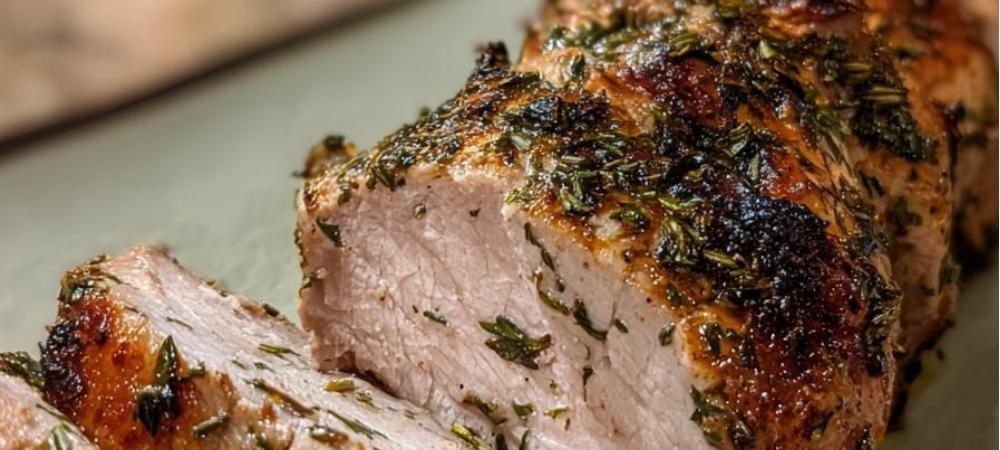
The version here fixes that with two decisions that apply to every pork tenderloin recipe, not just this one. First, you sear it in a blazing hot pan before it ever touches the oven — that crust locks in surface moisture and builds the flavor base for the glaze. Second, you pull it at exactly 145°F and let it rest under foil for five minutes before slicing. That rest is what lets the muscle fibers relax and reabsorb the juices that tightened up during cooking. Skip it and those juices run out on the cutting board instead of staying in the meat.
The honey mustard glaze wraps around all of this. It’s Dijon for sharpness, whole-grain mustard for texture, honey for sweetness that caramelizes into a sticky, deeply flavored crust, apple cider vinegar for the brightness that keeps it from being cloying, and garlic because garlic. The marinade doubles as the finishing sauce, so you’re not washing an extra pan.
Start to finish, this is a 45-minute dinner (less if you skip the marinade step, though an hour in the fridge makes a noticeable difference). It looks like the kind of thing you’d put on a dinner party table, but it fits any Tuesday. The whole recipe uses one skillet — you sear in it, you finish the roast in the oven in it, and you reduce the sauce in it after. One pan. Pork tenderloin is also one of the better-value protein buys at most grocery stores, particularly when compared to other tenderloin cuts — you get a genuinely elegant result without the price tag that usually comes with it.
Why Pork Tenderloin Dries Out — and How to Stop It
Pork tenderloin is an extremely lean muscle. It contains almost no intramuscular fat, which means it has very little natural insurance against overcooking. The window between “cooked through” and “dry and mealy” is narrower than most cuts, and the traditional advice of cooking pork to 160°F — the old USDA guideline, updated in 2011 — pushed home cooks straight past that window for decades.
The current USDA safe temperature for whole pork cuts is 145°F, followed by a three-minute rest. At that temperature, the center is pale pink with visible moisture at the cut surface — not raw, not gray. A lot of people who think they don’t like pork tenderloin have never actually eaten it cooked correctly.
The sear-then-roast method protects against overcooking in two ways. The initial high-heat sear creates a caramelized outer layer that slows moisture loss from the surface and gives you flavor that a baked-only tenderloin simply doesn’t develop. The oven finish uses lower, more consistent heat that brings the interior up to temperature without hammering the outside. Together, they produce meat that’s cooked through from edge to center without the outer layers going dry before the middle catches up.
A reliable instant-read thermometer is the single most important tool for this recipe. Not optional. The difference between 143°F and 155°F in a piece of pork tenderloin is the difference between juicy and dry, and you cannot eyeball it. Insert the thermometer into the thickest part of the meat, not through the end, for the most accurate reading. The Thermapen and similar instant-read probes give you a temperature in under three seconds and cost less than a restaurant dinner. If you cook meat regularly, it’s the most useful kitchen purchase you can make.

The Marinade: What Each Ingredient Does
This marinade is built around a specific balance of sweet, sharp, savory, and acidic — and each component is pulling weight.
Dijon mustard is the backbone. It’s sharp, slightly spicy, and emulsifies easily, which means it coats the meat evenly and helps the other ingredients adhere rather than sliding off. It also forms the base of the crust when the marinade caramelizes in the hot pan.
Whole-grain mustard adds texture and a slightly more rustic, fermented depth that plain Dijon alone doesn’t have. The visible mustard seeds give the finished glaze a more interesting appearance on the plate and add tiny pops of flavor.
Honey provides sweetness and — critically — sugar that caramelizes during the sear and roast, creating the dark, sticky, slightly charred edges that make the crust interesting. Use a neutral honey rather than something strongly flavored like buckwheat; the mustard and garlic have enough personality on their own.
Apple cider vinegar cuts through the richness and the sweetness. Without it, the glaze tastes flat despite all its ingredients. A tablespoon is enough; more tips it into sharp territory.
Garlic adds savory depth. Three cloves, minced fine or grated on a microplane so they don’t burn during searing.
Smoked paprika is the supporting character — a low, smoky undertone that reads as complexity without being identifiable as a distinct flavor. You can swap it for regular sweet paprika or skip it entirely if you don’t have it.
Optional: soy sauce. A tablespoon of soy sauce in the marinade adds a savory, umami depth that’s subtle but noticeable in the finished glaze. It doesn’t make the pork taste Asian-inspired in any obvious way — it just makes the whole thing taste more rounded and satisfying. Worth including if it’s in your pantry. Tamari works as a gluten-free alternative with an identical result.
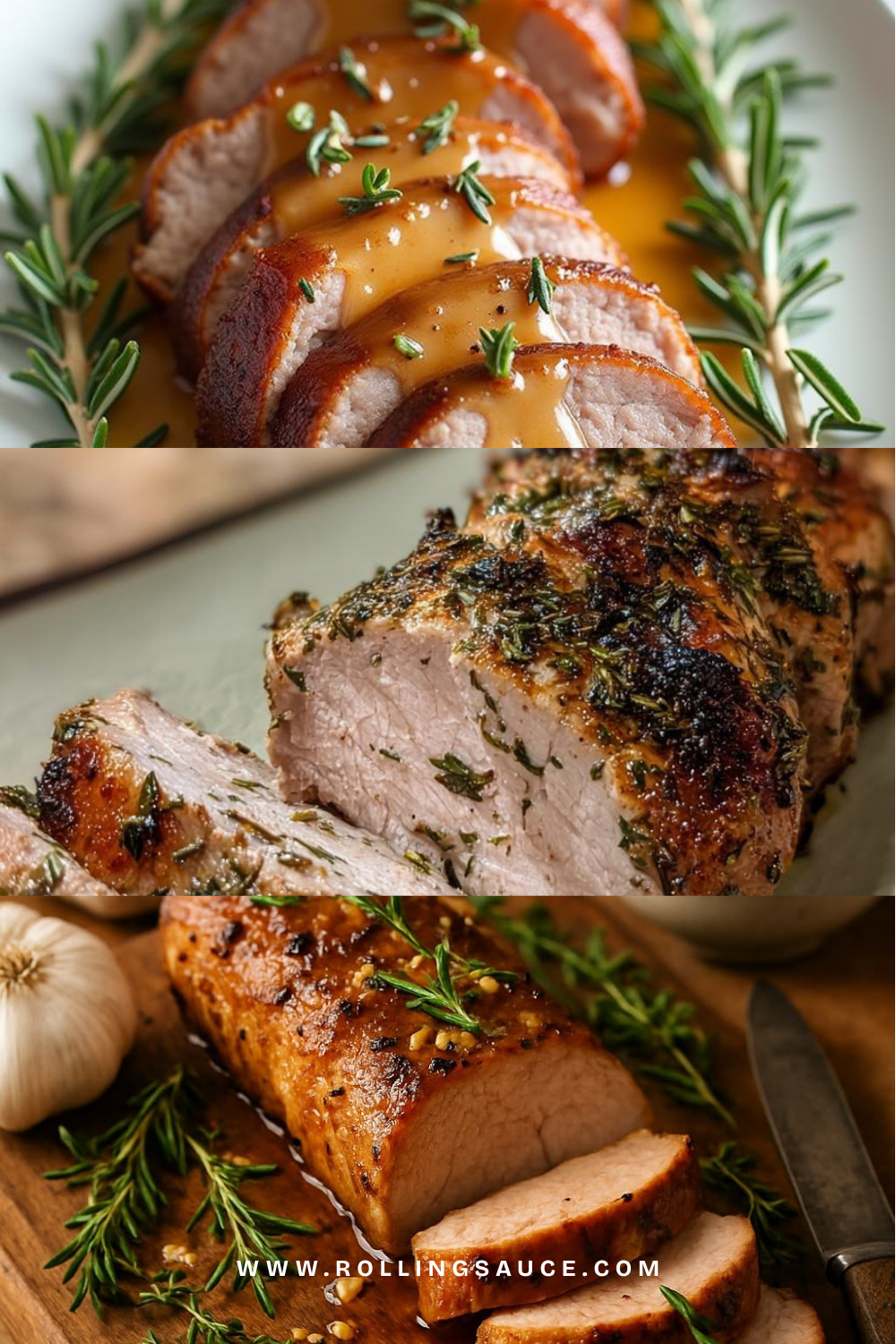
Ingredients and How to Make It
The recipe below covers both the marinade-then-cook approach (best flavor) and a same-night version with just a 30-minute rest. Both produce good results — the marinated version is deeper and more complex; the quick version is weeknight-practical.
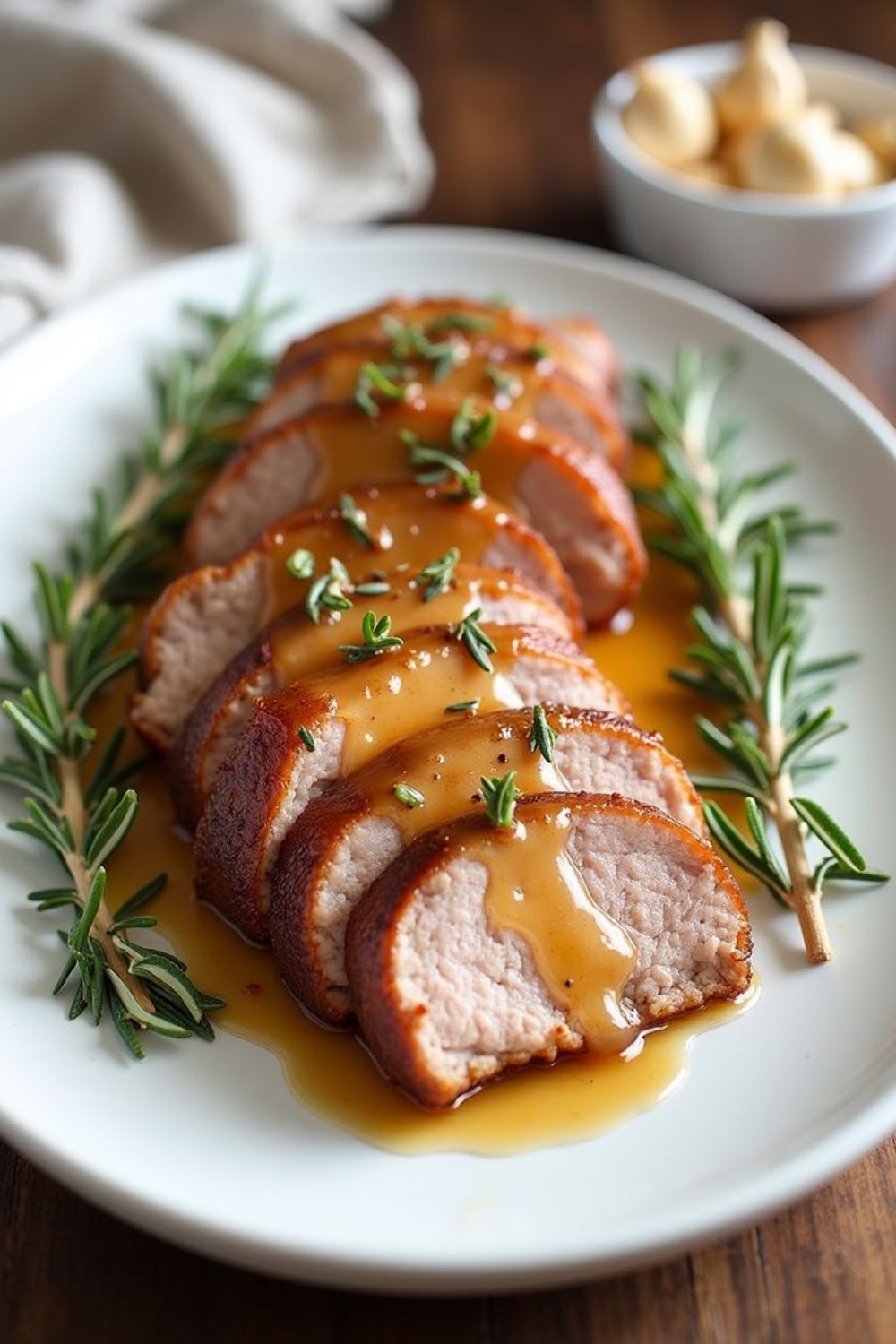

Honey Mustard Pork Tenderloin
Ingredients
Method
- Make the marinade: Whisk all marinade ingredients together in a bowl until smooth. Reserve ¼ cup in a separate small bowl (this becomes the finishing sauce and must not touch raw pork).
- Marinate: Pat pork dry with paper towels. Season lightly with salt and pepper. Coat generously with the remaining marinade. Place in a zip-lock bag or covered dish and refrigerate for at least 30 minutes, up to overnight. Longer = better flavor.
- Preheat oven to 400°F (200°C). Position rack in center.
- Pat dry: Remove pork from marinade. Pat the surface thoroughly dry with paper towels — this is essential for a proper sear.
- Sear: Heat olive oil in a large oven-safe cast iron or stainless steel skillet over medium-high heat until shimmering. Add pork and sear 2–3 minutes per side without moving, turning to brown all sides (about 8–10 minutes total). The pan should be hot enough that the meat sizzles assertively on contact.
- Roast: Transfer skillet to oven. Roast 14–18 minutes, flipping halfway, until an instant-read thermometer inserted into the thickest part reads 145°F. Start checking at 12 minutes.
- Rest: Transfer pork to a cutting board. Tent loosely with foil and rest 5–10 minutes. Do not skip this step.
- Sauce: Pour the reserved marinade into the hot skillet and heat over medium for 1–2 minutes, scraping up any browned bits, until slightly thickened. (Optional: stir in 1 tbsp cold butter off the heat for a glossier sauce.)
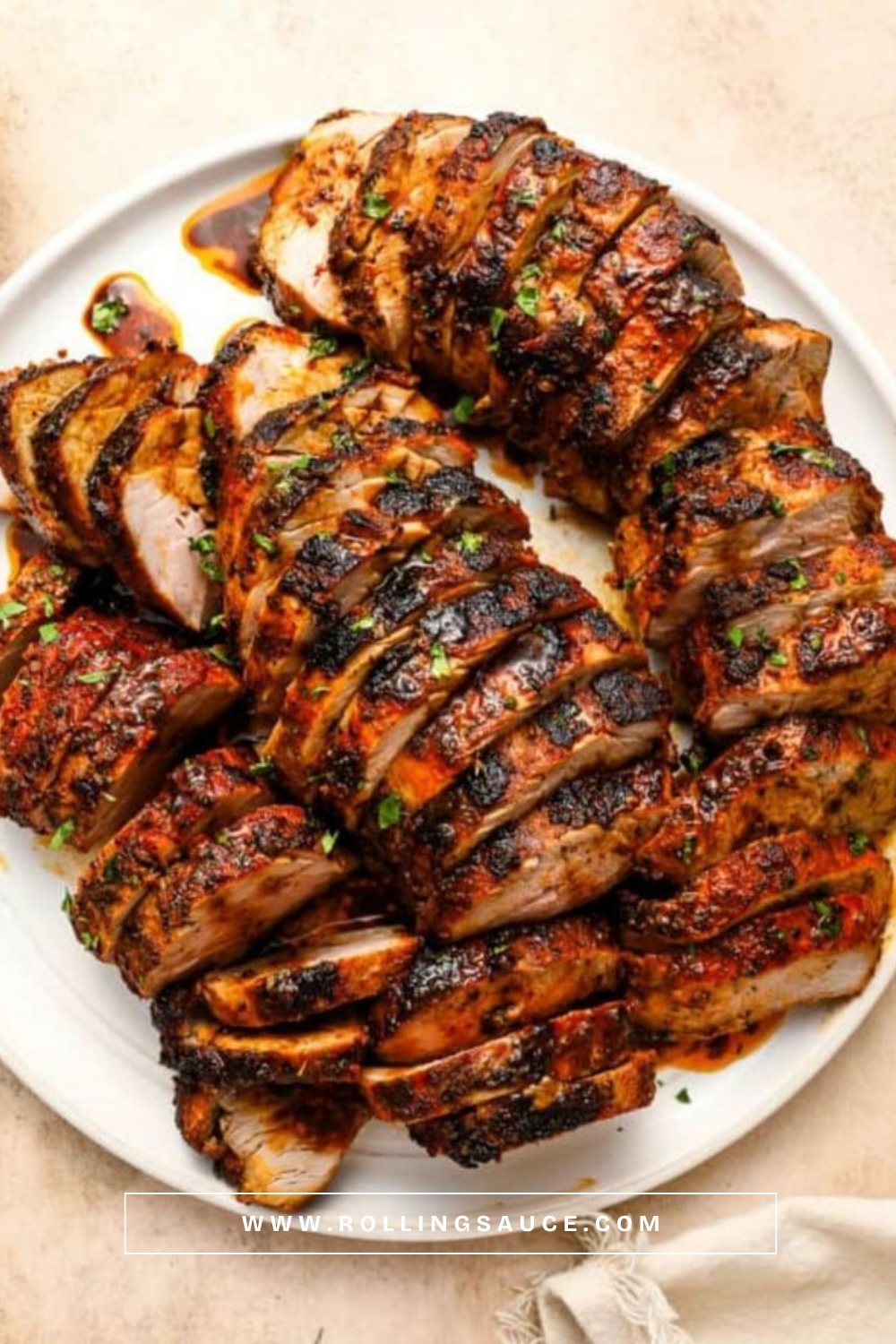
- Slice into ½-inch diagonal medallions. Drizzle with the pan sauce.
Notes
- Storage: Refrigerate in a sealed container for up to 4 days. To reheat
without drying: cover loosely with foil and warm at 300°F for
10 minutes. - Make ahead: Marinate up to 24 hours in advance.
- Swap: Swap apple cider vinegar for lemon juice. Use maple syrup
instead of honey for a slightly earthier sweetness. Add a
teaspoon of fresh thyme or rosemary to the marinade for an
herby variation. - Silver skin: Use the tip of a sharp knife to remove the thin silvery
membrane before marinating — it contracts in the heat and causes
the tenderloin to curl and cook unevenly.
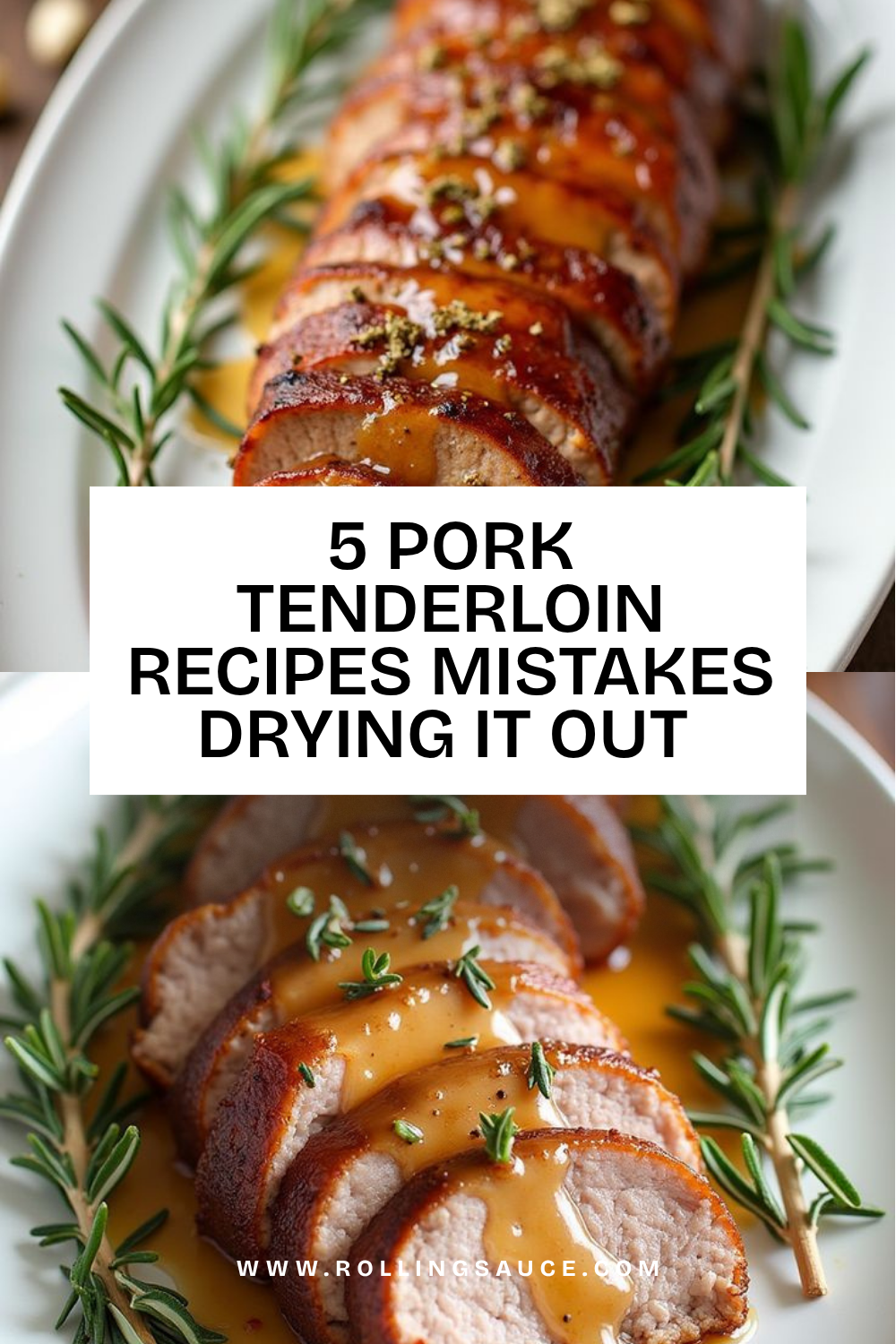
The Sear: Why It Matters More Than You Think
The sear is where most home cooks take a shortcut that costs them texture and flavor. A few things that need to be true for it to work properly.
The pan needs to be genuinely hot. Medium-high heat on most home ranges takes three to four minutes to reach the right temperature. Don’t add the meat until a drop of water evaporates immediately on contact with the pan surface. A cast iron skillet or heavy stainless steel pan holds heat better than nonstick and gives you a better crust. Nonstick pans are not designed for this kind of high-heat searing.
The pork needs to be dry. Pat the marinated tenderloin thoroughly with paper towels before it goes in the pan. Wet meat steams rather than sears, and steam produces a pale, soft exterior instead of a caramelized one. This feels counterintuitive when you’ve just spent time applying a marinade, but it’s how you get the crust. The flavor from the marinade has already absorbed into the meat; what’s on the surface just needs to be removed so it doesn’t steam.
Don’t move the meat. Once it’s in the pan, leave it for two to three minutes per side. Moving it prematurely tears the forming crust and leaves it behind in the pan. The meat will release naturally when a proper sear has developed — if it sticks, it needs more time.
Reserve some marinade before applying it to raw meat. Keep back a quarter cup before coating the pork. This becomes the finishing sauce spooned over the sliced tenderloin at serving. You cannot safely use marinade that has been in contact with raw pork as a finishing sauce unless you boil it for several minutes first — setting some aside before it touches the raw meat is the easier solution.
What to Serve With It — and What to Do With Leftovers
Honey mustard pork tenderloin is one of those proteins that plays well with almost any side. The sweet-savory glaze leans slightly rich, so it benefits from something fresh or starchy alongside it.
My fluffy mashed potatoes are the most obvious pairing — the glaze pools into the potatoes and the whole plate comes together. Roasted vegetables work well too: broccoli, Brussels sprouts, or asparagus all hold up to the oven temperature required for the pork and can roast on a separate sheet pan at the same time. For something lighter, my easy cucumber salad provides a cool, acidic counterpoint to the warm glaze and takes ten minutes to put together while the pork rests. If you’re building a holiday dinner around this, a make-ahead sweet potato casserole handles the oven time gracefully alongside the tenderloin.
For leftovers — and leftover pork tenderloin is genuinely one of the better cold cuts available — slice thin and serve on sandwiches with extra whole-grain mustard and arugula. It also works well sliced over a rice bowl with whatever roasted vegetables are in the fridge, or chopped and added to a quick grain salad with feta and cucumber. The glaze firms up when cold and has enough flavor to carry slices eaten straight from the container without any additional sauce. Store in a sealed container in the refrigerator for up to four days. To reheat without drying it out, cover the slices loosely with foil and warm in a 300°F oven for about ten minutes — low and slow, just like cooking it the first time.
Frequently Asked Questions
What’s the difference between pork tenderloin and pork loin? These are two different cuts and they cook very differently. Pork tenderloin is a long, narrow muscle from the area beneath the spine — it’s small (usually 1 to 1.5 pounds), extremely lean, and cooks in under 30 minutes. Pork loin is a much larger, wider cut that takes an hour or more to roast. Substituting one for the other without adjusting cook time is the source of a lot of dried-out dinners. This recipe is specifically for pork tenderloin.
Do I have to marinate it? Can I cook it right away? You can cook it without marinating. Season the tenderloin with salt, pepper, and garlic powder, then brush the honey mustard glaze on right before searing. The result is good — you’ll get the flavor on the surface and in the crust. What marinating adds is penetration: the acid in the vinegar and the salt work their way into the meat and season it from the inside out. Even thirty minutes makes a difference; overnight is the most flavor you’ll get.
What internal temperature should pork tenderloin reach? Pull it at 145°F and rest for five minutes. The USDA updated pork temperature guidelines in 2011 to reflect this — 145°F for whole muscle cuts is safe and produces significantly better texture than the old 160°F standard. At 145°F, the center will be slightly pink with visible moisture. That’s correct and intentional.
Why does my pork tenderloin curl up in the pan? There’s a strip of silverskin — a thin, silvery-white connective tissue — running along one side of most tenderloins. It doesn’t dissolve during cooking (unlike collagen in braised cuts), so it contracts in the heat and pulls the tenderloin into a curve. Remove it before cooking: slide the tip of a sharp knife under the silverskin, angle the blade slightly upward, and work it off in strips. This takes about a minute and prevents uneven cooking.
Can I make this in an air fryer? Yes. Sear the tenderloin in a skillet first to develop the crust (the air fryer doesn’t replicate that step well), then transfer to the air fryer basket and cook at 400°F for 10 to 12 minutes, checking internal temperature at 10 minutes. Rest as directed. The air fryer version cooks faster than the oven, so start checking early.
Lean, fast, and genuinely forgiving once you understand the temperature — pork tenderloin is the weeknight protein that punches far above what most people expect from it. This honey mustard version is the one worth saving.
If it earns a spot in your regular rotation, save this post or share it with whoever needs a better weeknight dinner in their life.