
There’s a specific kind of disappointment that comes from biting into a homemade muffin and finding it dry, dense, and somehow both bland and too sweet at the same time — especially when what you were picturing was something closer to a bakery case. These blueberry muffins are the other kind. Soft, genuinely moist crumb, bursts of blueberry in nearly every bite, and a crackly, sugar-crusted top that gives way the second your fork touches it.
The base comes from a quick, fuss-free European-style muffin batter — the kind that comes together in one bowl with a wooden spoon, no mixer required — adapted here with blueberries and a simple sugared top that turns it into something that looks like it came from a bakery counter.
What makes this version worth bookmarking is how forgiving it is. There’s no creaming technique that has to go perfectly, no finicky folding sequence, and the batter itself is rich enough — thanks to a generous amount of sour cream — that small mixing mistakes don’t show up the way they would in a leaner recipe. It’s the kind of muffin you can make on a weekday morning before the coffee’s even finished brewing.

The Ingredients You Need
This recipe makes 12 muffins and uses ingredients you likely already have, in proportions that lean slightly richer than a lot of American muffin recipes — which is part of why the texture stays so moist.
- Butter, softened — creamed with the sugars at the start, butter gives these muffins a richer flavor and softer crumb than recipes built on oil.
- Brown sugar and granulated sugar — using both adds a little depth from the brown sugar’s molasses note, while the granulated sugar keeps the crumb from turning too dark or dense.
- Eggs — for structure and richness.
- Sour cream — the ingredient doing the most work here. It adds tang, fat, and moisture all at once, which is a big part of why this batter doesn’t dry out in the oven the way leaner recipes can.
- Flour, baking powder, and a pinch of salt — the dry base. Spoon and level the flour rather than scooping directly from the bag, since packed flour is one of the most common reasons muffins turn out dense.
- Milk — loosens the batter to the right consistency.
- Blueberries — fresh or frozen both work; if using frozen, don’t thaw them first, or they’ll bleed color through the whole batter.
- Coarse or turbinado sugar, for topping — this is what gives the muffins their sugar-crusted top. Sprinkled on just before baking, it forms a crackly, slightly caramelized layer as the muffins bake.
If you don’t have coarse sugar on hand, regular granulated sugar sprinkled a little more generously will still give you a thin, crisp top — it just won’t have quite the same crunchy, sparkly texture as turbinado or sanding sugar. Either way, the sugar goes on right before the muffins go into the oven, never mixed into the batter.
How to Make Moist and Tender Blueberry Muffins
- Cream the butter and sugars together. In a large bowl, beat the softened butter with the brown sugar and granulated sugar until light and fluffy, about 1-2 minutes with a hand mixer or a couple of minutes of vigorous whisking by hand. This step matters more than it seems — it’s what gives the muffins a bit of lift, even without a stand mixer.
- Add the eggs and sour cream. Beat in the eggs one at a time, then mix in the sour cream until the mixture looks smooth and slightly glossy.
- Fold in the dry ingredients — gently. Add the flour, baking powder, and salt to the bowl, then pour in the milk. Using a spatula, fold everything together just until the dry streaks disappear. The batter should still look a little lumpy and thick; that’s exactly right.
- Fold in the blueberries. Add the blueberries last, folding with just a few strokes to distribute them through the batter without crushing them or turning the whole batter blue. If you’re worried about sinking, tossing the berries in a tablespoon of flour first helps them stay suspended.
- Divide and top. Spoon the batter into a paper-lined muffin tin, filling each cup most of the way — these muffins are meant to rise into generous, slightly domed tops. Sprinkle a pinch of coarse sugar over each one.
- Bake until golden. Bake at 350°F (180°C) for 20-25 minutes, until the tops are golden and a toothpick inserted into the center comes out clean or with just a few moist crumbs. Let the muffins cool in the tin for 5 minutes before moving them to a wire rack.
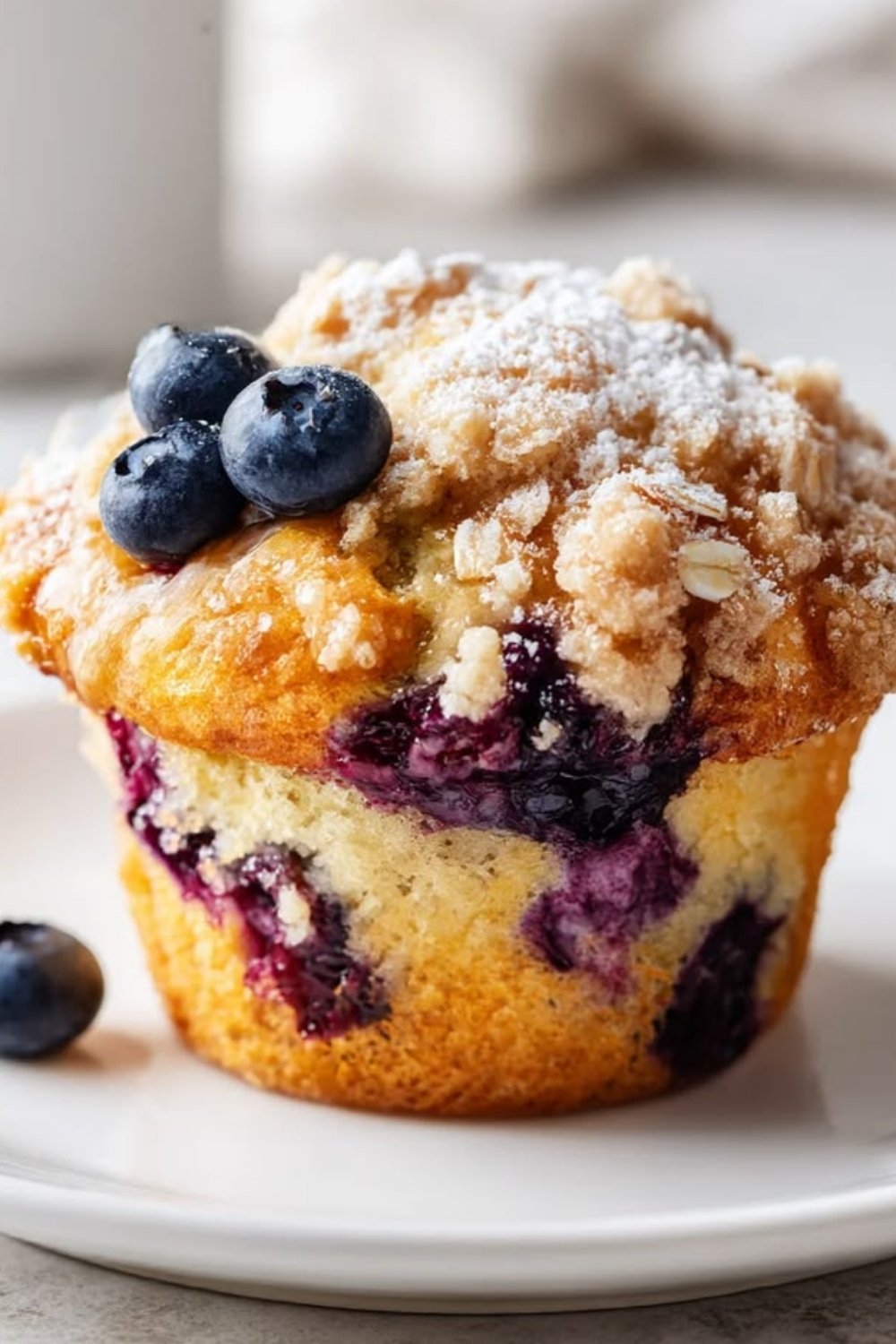

Moist and Tender Blueberry Muffins With a Sugar-Crusted Top
Ingredients
Method
- Preheat the oven to 350°F (180°C) and line a 12-cup muffin tin with paper liners.
- In a large bowl, beat the softened butter with the brown sugar and granulated sugar until light and fluffy, 1-2 minutes.
- Beat in the eggs one at a time, then mix in the sour cream until smooth.
- Add the flour, baking powder, and salt, then pour in the milk. Fold gently with a spatula just until the dry streaks disappear; the batter should still look slightly lumpy.
- Fold in the blueberries with a few gentle strokes (toss frozen berries in 1 tablespoon flour first if desired).
- Divide the batter among the muffin cups, filling each about three-quarters full. Sprinkle the tops with coarse sugar.
- Bake for 20-25 minutes, until golden and a toothpick inserted in the center comes out clean or with a few moist crumbs.
- Cool in the tin for 5 minutes, then transfer to a wire rack to cool completely.
Notes
- Storage: Keeps in an airtight container at room temperature for 2 days, or in the fridge for up to 5 days.
- Freezing: Wrap individually and freeze for up to 2 months; thaw at room temperature or warm gently in the oven.
- Swap: Diced cherries, raspberries, or chopped peaches can replace the blueberries in the same quantity.
Why These Muffins Stay Moist and Tender (And Don’t Turn Tough)
The single biggest factor separating a tender muffin from a tough, chewy one is how much the batter gets mixed once the flour goes in. Flour contains gluten-forming proteins, and the more a batter is stirred after liquid hits flour, the more those proteins link together into a stretchy network. A little of that network gives muffins their structure; too much, and you get the dense, springy texture that’s the hallmark of an overmixed muffin.
That’s why the folding step in this recipe specifically calls for stopping as soon as the streaks of flour disappear, even if the batter still looks a bit lumpy. According to bakers who’ve studied this closely, a batter with a few small lumps produces a far more tender crumb than one mixed until perfectly smooth — smoothness in muffin batter is actually a warning sign, not a goal.
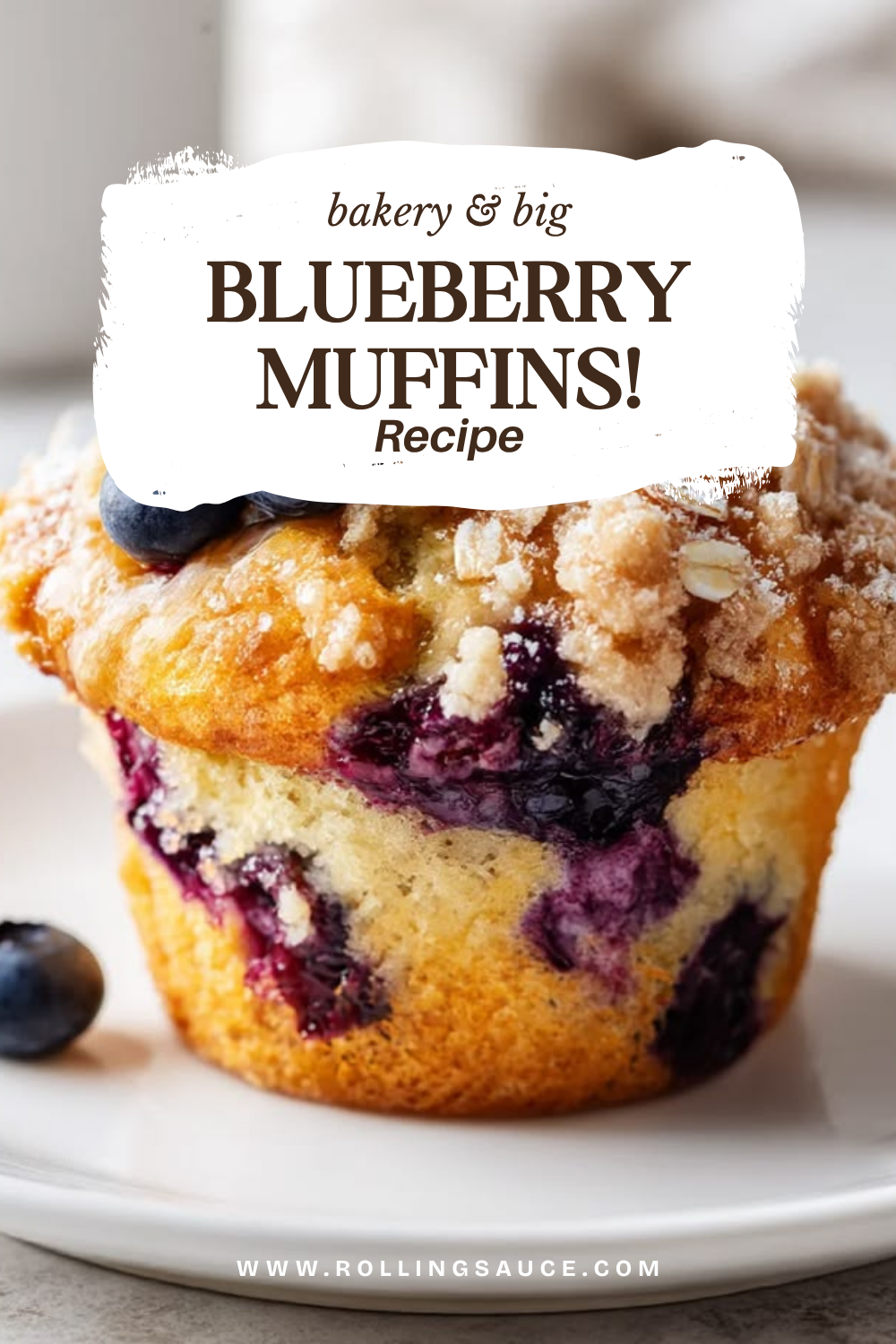
Sour cream plays a role here too. Because it’s higher in fat than milk alone, it coats some of the flour’s proteins and physically limits how much gluten can form, even with a bit of extra mixing. That’s part of why this batter is more forgiving than a leaner, all-milk version — there’s a small built-in buffer against overmixing.
The domed, sugar-crusted top comes down to two things: filling the muffin cups generously (more batter per cup means more rise above the rim) and the coarse sugar on top, which partially melts and re-hardens as the muffins bake, forming that crackly shell.
There’s also a reason this batter specifically calls for room-temperature butter and eggs rather than cold ones straight from the fridge. Cold ingredients don’t blend smoothly, which means they need more mixing to come together — and more mixing, as covered above, means more gluten development. Letting your butter and eggs sit out for twenty or thirty minutes before you start isn’t just a nice-to-have; it’s part of what keeps the total mixing time short enough to protect the crumb.
Tips for Bakery-Style Muffins Every Time
Measure your flour by spooning it into the measuring cup and leveling it off, rather than scooping directly from the bag. Scooping can pack in significantly more flour than a recipe calls for, which is one of the most common reasons muffins turn out dry and dense without anyone changing a single ingredient.
Don’t skip creaming the butter and sugar, even though it’s tempting to just dump everything into one bowl. This step incorporates small air bubbles into the batter that help the muffins rise with a better texture, especially since this recipe doesn’t rely on a stand mixer’s extra power elsewhere.
If you’re using frozen blueberries, add them straight from the freezer rather than letting them thaw on the counter. Thawed berries release juice that can turn the surrounding batter gray-purple and make the crumb gummy in spots.
Fill the muffin cups generously — about three-quarters full. Muffins that don’t get enough batter per cup tend to bake flatter and drier, since there’s less batter insulating the center from the heat.
Let the muffins cool for at least five minutes in the tin before removing them. They’re fragile straight out of the oven, and a few minutes of cooling firms up the crumb enough that they come out cleanly instead of falling apart at the edges.
Resist opening the oven door for the first fifteen minutes of baking. A sudden drop in oven temperature while the muffins are still rising can cause the centers to sink slightly once they come out, even if they still taste fine.

Frequently Asked Questions
Can I use frozen blueberries? Yes — add them frozen, straight from the freezer, without thawing. This prevents the berries from bleeding color and excess moisture into the batter.
Why did my muffins turn out flat instead of domed? This usually means the muffin cups weren’t filled generously enough, or the oven wasn’t fully preheated before the muffins went in. A hot oven from the start helps the tops rise quickly before the structure sets.
Can I make these ahead of time? Yes. They keep well at room temperature in an airtight container for 2 days, or in the fridge for up to 5. They also freeze well — wrap individually and freeze for up to 2 months, then thaw at room temperature or warm gently in the oven.
Can I substitute the blueberries with another fruit? This batter is forgiving — diced cherries, raspberries, or chopped peaches all work in roughly the same quantity. Just avoid anything very watery, like fresh peaches with a lot of juice, without patting it dry first.
Can I double this recipe? Yes, the batter doubles cleanly — just be careful not to over-mix when working with a larger volume, since it’s easy to stir longer without realizing it when there’s more batter in the bowl. Bake in batches if your oven can’t comfortably fit more than one 12-cup tin at a time, since crowding the oven can lead to uneven baking.
A Good One to Have on Repeat
Once you’ve made these a couple of times, they become the kind of recipe you can make almost without thinking — one bowl, a wooden spoon, and twenty-five minutes in the oven for something that genuinely looks and tastes like it came from a bakery. They’re an easy thing to have on hand for a slow weekend morning alongside a batch of French toast if you’re feeding a crowd, or just on their own with coffee on a regular Tuesday.
Save this one — between the short ingredient list and the one-bowl method, it’s the kind of recipe that’s just as easy to make from memory as it is to look up, which is exactly what you want from a muffin recipe you’ll actually return to. And if baking from scratch has been on your mind lately, this is a good, low-stakes place to start — the same room-temperature-ingredients and gentle-mixing habits that make these muffins work are the foundation for most other baked goods too, from quick breads to a classic cheesecake.