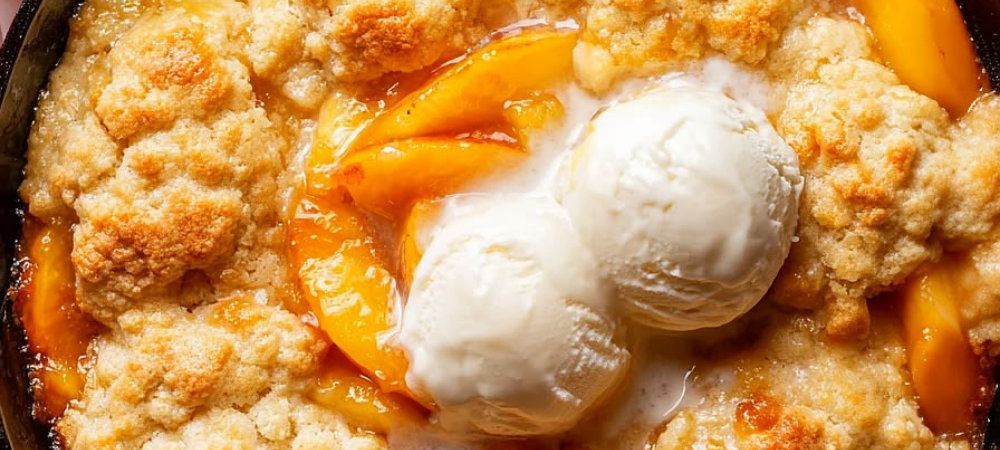
Southern peach cobbler has one of those techniques that feels completely wrong the first time you do it. You melt butter in the pan, pour batter over it, then spoon sweetened peaches on top of the batter — and you don’t stir any of it. You just slide the whole thing into the oven and wait.
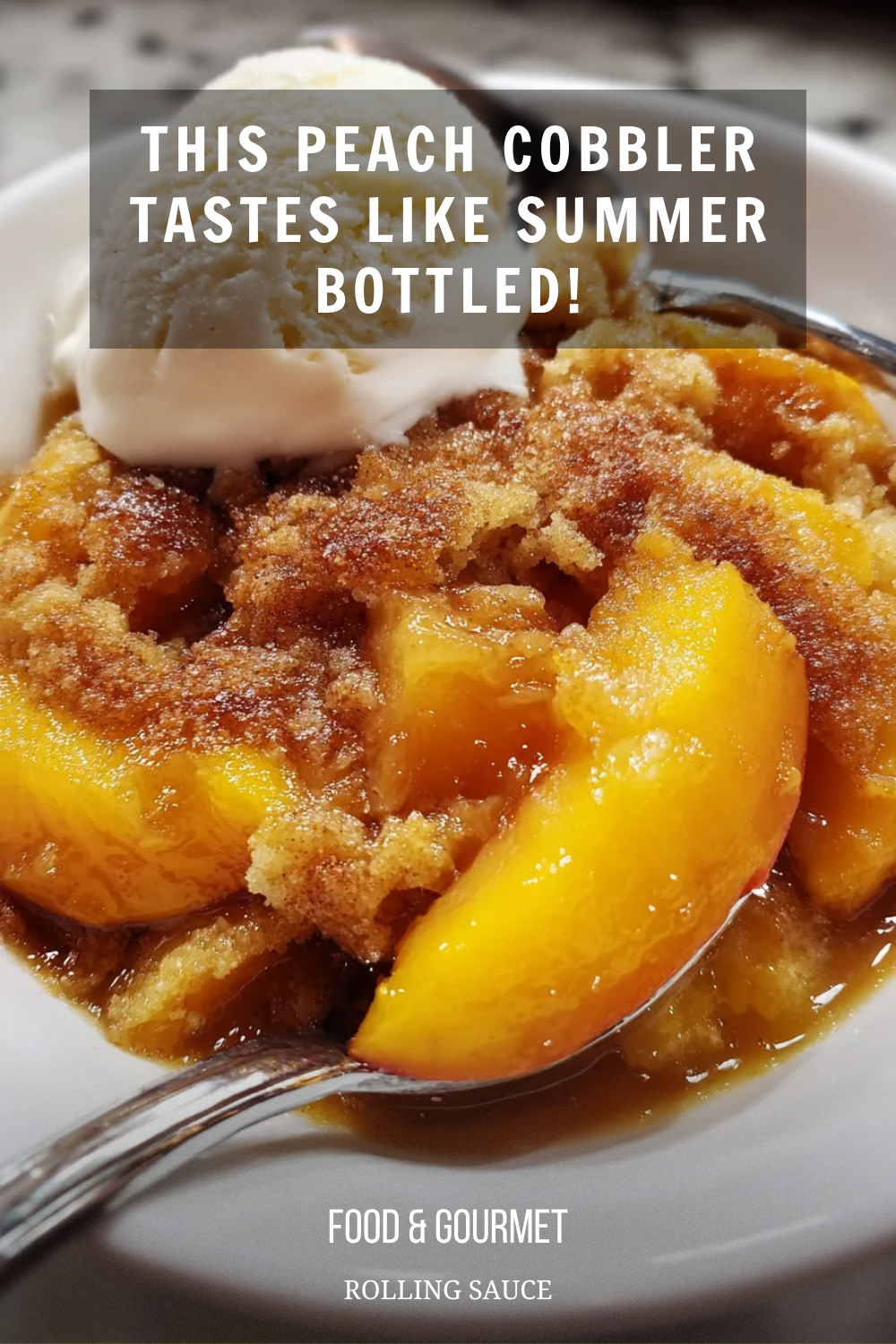
What happens next is one of the better things baking can do. The batter rises up through the peaches. It puffs and bubbles and sets into a golden, cakey crust with peach syrup seeping in from above and butter crisping it from below. The edges get crackled and golden. The center stays tender. And underneath everything are those jammy, cinnamon-sweet peaches that started the whole process.
That’s this cobbler. The Southern style, the original style — not a crumble topping, not a drop biscuit — just a poured batter and a simple trust that the oven will handle the rest. It uses pantry staples, takes about 15 minutes of actual work, and comes out of the oven looking like it required considerably more effort than it did. This is the version worth knowing by heart.
What Makes the Southern Style Different
There are several ways to make a cobbler, and the Southern version is its own thing.
The biscuit cobbler — common across the mid-Atlantic and Midwest — uses drop biscuit dough scattered across the fruit before baking. You get separate fluffy biscuit tops sitting on top of fruit. Good, but different in character.
The crumble or crisp — more British in origin — uses a streusel of butter, flour, oats, and sugar that bakes up sandy and crunchy. Also great, but it’s not a cobbler in the traditional Southern sense.
The Southern poured-batter cobbler starts with a thin, pourable batter that goes directly over melted butter in the pan. The sweetened fruit goes on top of the batter, not underneath it. During baking, the batter rises up through and around the fruit, creating a top layer that’s part golden cake, part crisp-edged crust — all of it saturated with the juice the peaches released as they macerated with sugar.
The do-not-stir rule is what makes or breaks this style. The layers need to stay separate for the batter to do its job.
The Magic Technique Behind the Cakey Crust
Understanding why the technique works makes it easier to trust when it feels counterintuitive.
The melted butter in the pan is not just for greasing. It forms a fat barrier between the batter and the dish, which allows the bottom of the batter to fry slightly as the dish heats — creating a light, crispy base — while the top remains soft and cakey. Without this barrier, the batter sticks and burns before it has time to rise.
The layered assembly — butter first, then batter, then peaches — means the heavy fruit layer sits on top of the lighter batter. As the baking powder activates in the heat, it generates gas that pushes the batter upward and outward. The peaches, which are dense and releasing liquid, sink slightly as the batter rises around them. This is exactly the cobbled, uneven texture you’re after. As King Arthur Baking explains in their baking fundamentals, baking powder creates rapid lift through a gas reaction triggered by liquid and heat — and that lift is precisely what drives the batter up through the fruit layer to form the signature golden crust.
The cinnamon-sugar sprinkled across the top before baking caramelizes on the exposed batter peaks and produces the crackled, amber surface that’s the visual hallmark of this style.
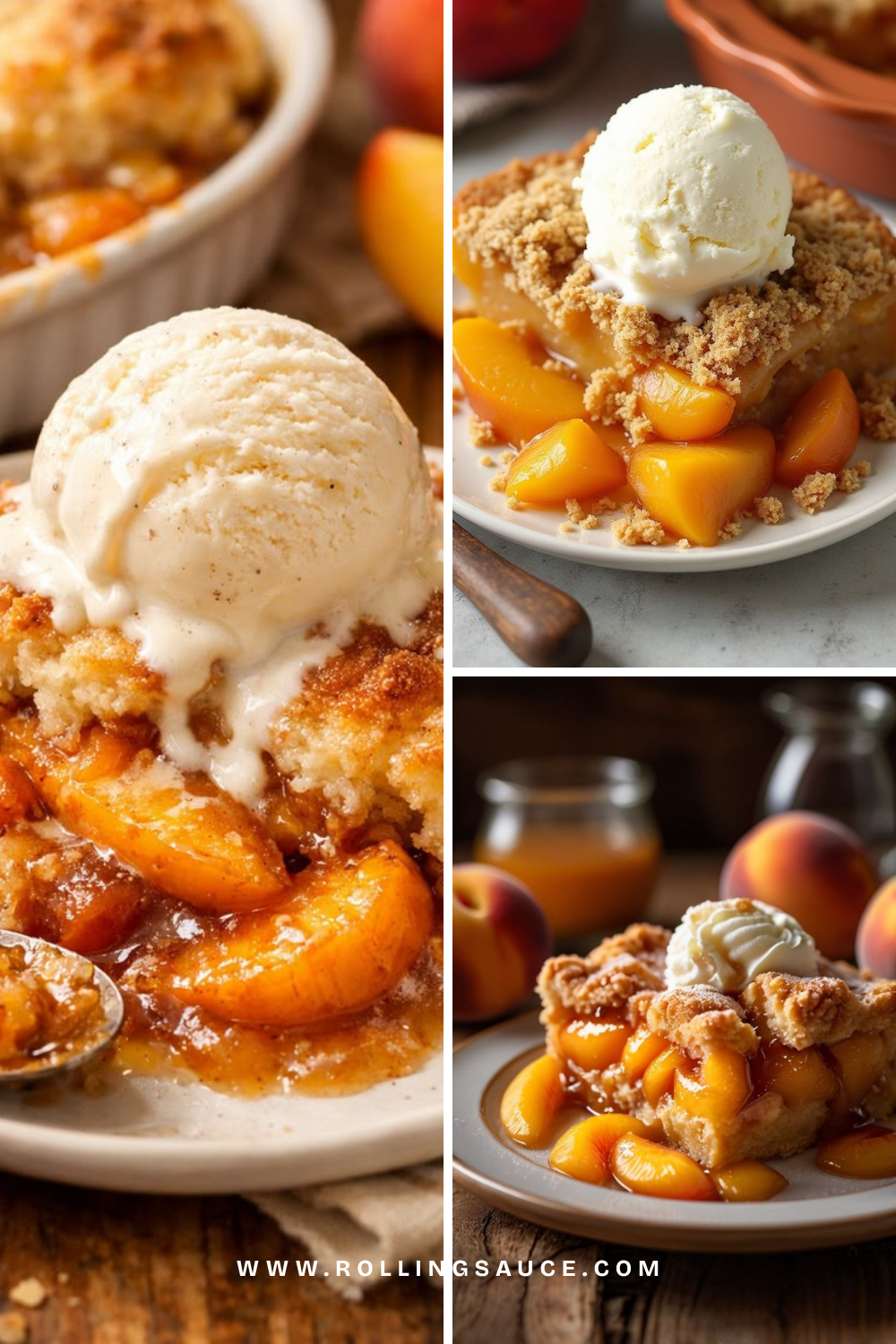
Fresh vs. Canned Peaches: What You Should Know
Both work. Neither will wreck the cobbler. But there are differences worth understanding.
Fresh peaches in season — late June through August — are why this dessert became a Southern institution. When properly ripe, they’re sweet, floral, and juicy in a way that nothing processed matches. Look for peaches that yield slightly to gentle pressure and smell like peaches from across the room. To peel them: score an X at the bottom, blanch in boiling water for 30–45 seconds, then drop into ice water. The skin peels away cleanly in seconds.
Canned peaches in juice (not heavy syrup) are a reliable year-round option that produce a genuinely good cobbler. The flavor is softer and less complex than peak-season fresh, but the texture after baking is excellent. Drain them thoroughly before using. Canned peaches in heavy syrup should be avoided — the extra sugar makes the cobbler sickly sweet and hides the peach flavor rather than amplifying it.
Frozen peaches work if fully thawed and drained of their liquid. They tend to release more moisture than fresh, so add 1 teaspoon of cornstarch to the peach mixture when using frozen to keep the sauce from going thin.
If this cobbler makes it onto your summer dessert rotation, it pairs perfectly with a lineup of quick summer dinners that leave you enough bandwidth to focus on dessert.
What You’ll Need
One 9×13-inch baking dish, two bowls, and a whisk. Here’s everything else for eight servings.
For the peach filling:
- 6 medium ripe peaches, peeled and sliced ½ inch thick (about 5 cups), or 2 cans (29 oz each) sliced peaches in juice, well drained
- ¼ cup granulated sugar
- ¼ cup light brown sugar, packed
- ½ teaspoon ground cinnamon
- ¼ teaspoon ground nutmeg
- 1 teaspoon fresh lemon juice
- 1 teaspoon pure vanilla extract
For the batter:
- ½ cup (1 stick) unsalted butter
- 1 cup all-purpose flour
- 1 cup granulated sugar
- 1 tablespoon baking powder
- ¼ teaspoon fine salt
- 1 cup whole milk or buttermilk
- 1 teaspoon pure vanilla extract
For the cinnamon-sugar top:
- 1 tablespoon granulated sugar mixed with ½ teaspoon ground cinnamon
The equal volumes of flour and sugar in the batter — one cup each — is the classic ratio for this style and gives you the right balance of structure and sweetness. Buttermilk adds a light tang and produces a slightly more tender crumb than whole milk; either works.
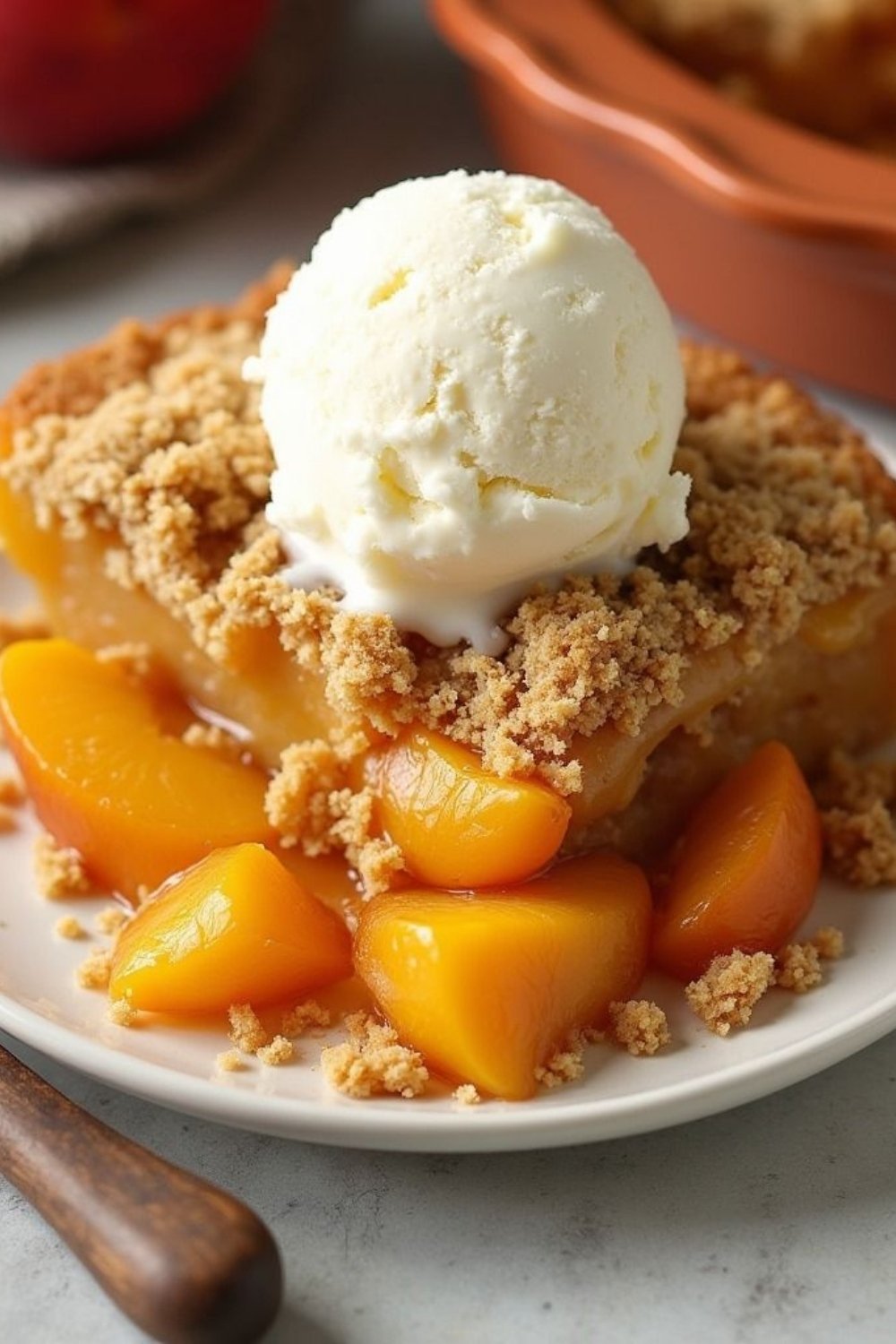

Southern Peach Cobbler With a Cakey Golden Crust
Ingredients
Method
- Toss peaches with both sugars, cinnamon, nutmeg, lemon juice, and vanilla. Set aside for 10 minutes to macerate.
- Place butter in a 9×13-inch baking dish and slide into the oven as it preheats to 375°F. Remove as soon as butter is fully melted, about 3–4 minutes.
- Whisk together flour, sugar, baking powder, and salt. Add milk and vanilla; whisk until smooth.
- Pour batter directly over the melted butter. Do NOT stir. Spoon peaches and all their juice over the batter. Do NOT stir. Mix the cinnamon-sugar and sprinkle across the top.
- Bake at 375°F for 40–45 minutes until the top is deep golden, the edges are bubbling, and the batter has risen up through the peaches.
- Rest 10–15 minutes before serving. Serve warm with vanilla ice cream.
Notes
- Storage: Refrigerate covered for up to 3 days. Reheat covered at 350°F for 15–20 minutes.
- Frozen peaches: Thaw and drain completely. Add 1 tsp cornstarch to the filling to prevent excess liquid.
- Canned peaches: Use peaches in juice, not heavy syrup. Drain well.
- Swap: Replace ½ cup peaches with blueberries. Or substitute nectarines, plums, or apricots at the same quantity.
How to Make It
Step 1: Macerate the Peaches
In a medium bowl, toss the sliced peaches with granulated sugar, brown sugar, cinnamon, nutmeg, lemon juice, and vanilla. Stir to coat and let sit for 10 minutes while you prepare the batter. The sugar draws juice from the peaches — that liquid becomes the sauce that soaks into the batter from above during baking. Don’t skip this step.
Step 2: Melt the Butter
Place the butter, cut into pieces, in a 9×13-inch baking dish and slide it into the oven as it preheats to 375°F. Keep an eye on it. As soon as the butter is fully melted and shimmering — 3 to 4 minutes — remove the dish. You want liquid gold in the pan, not browned or burned butter.
Step 3: Mix the Batter
Whisk together the flour, sugar, baking powder, and salt in a medium bowl. Add the milk (or buttermilk) and vanilla and whisk until smooth. A few small lumps are fine. Don’t overwork it — stir just until combined.
Step 4: Layer and Don’t Touch
Pour the batter directly over the melted butter in the pan. Do not stir. The batter will spread to the edges on its own. Spoon the peaches and every drop of their collected juice over the batter. Do not stir. The layers from the bottom of the pan are: butter → batter → peaches. Mixing any of them prevents the batter from rising. Sprinkle the cinnamon-sugar evenly across the top.
Step 5: Bake and Rest
Bake at 375°F for 40–45 minutes, until the top is deep golden brown and the edges are visibly bubbling. The batter will have risen up through and around the peaches. Let the cobbler rest for 10–15 minutes before serving — the filling is loose and boiling straight from the oven, and it needs time to thicken into a scoopable sauce.
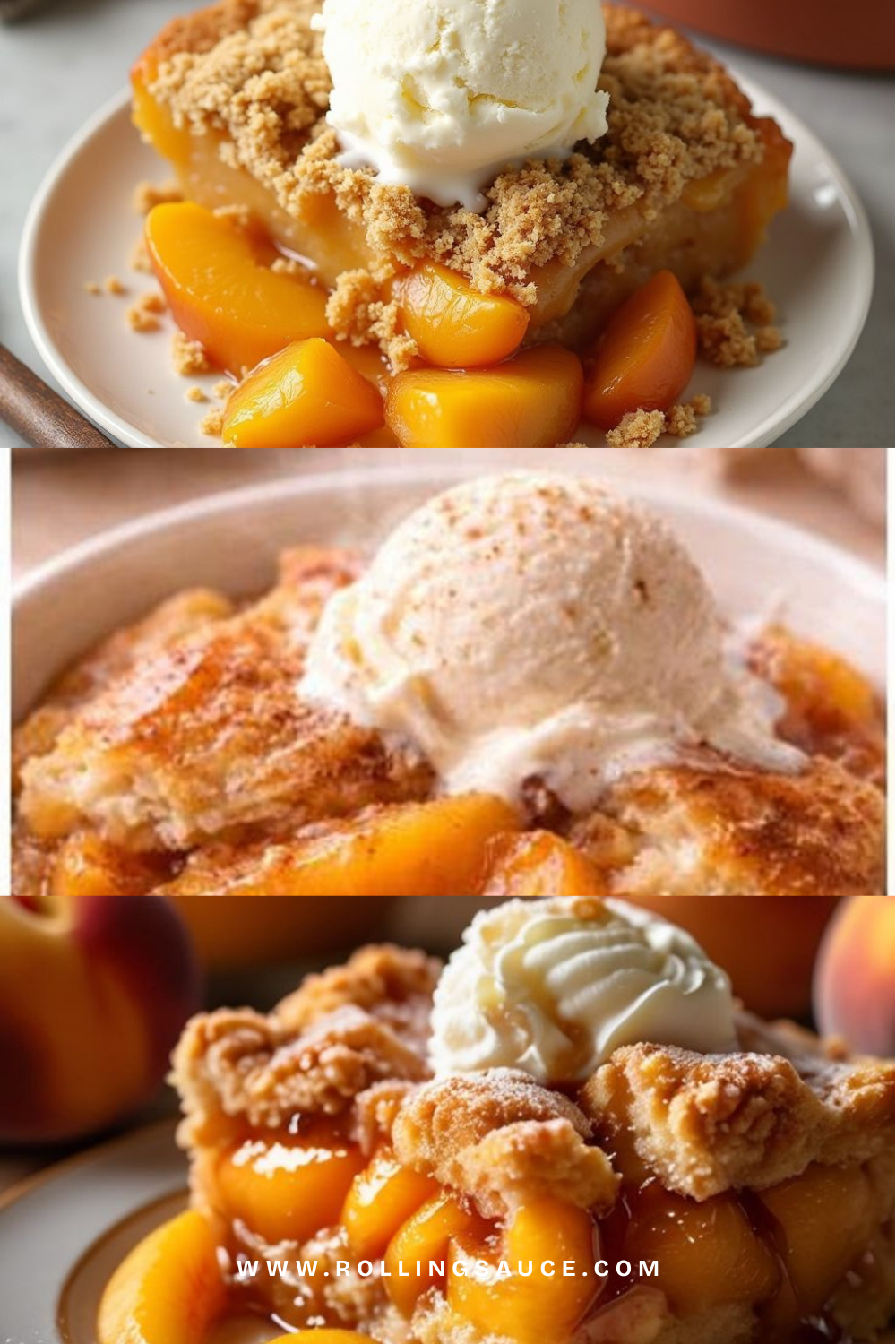
Tips for the Golden Crust Every Time
- Do not stir — at any point. The layers are doing separate jobs, and combining them destroys the rising mechanism. Pour, spoon, sprinkle, and walk away.
- Let the peaches macerate. Ten minutes with the sugar pulls enough juice to create the sauce. Less time means a drier filling and a less flavorful cobbler.
- Use a wide, shallow dish. A 9×13 gives you more surface area, which means more crust relative to filling. A smaller, deeper dish gives you more soft center and fewer caramelized edges.
- Sprinkle the cinnamon-sugar. It creates the crackled, amber surface that defines this cobbler visually and adds a lightly caramelized top note to the crust flavor. It’s optional in the sense that you can skip it, but you shouldn’t.
- Wait for deep golden, not just pale. The cakey interior means it’s easy to underbake. Look for amber-gold color across the top and active bubbling at all four edges of the pan.
- Rest it. Cutting in immediately gives you peach soup. Ten minutes of rest makes it scoopable.

Common Mistakes That Sink the Crust
Stirring the layers. The most common mistake, every time. Once the batter and peaches are in the dish, the spoon stays out. Stirring prevents the batter from rising and you end up with a dense, gummy layer instead of a golden crust.
Using syrup-packed canned peaches. Heavy syrup adds sugar the recipe doesn’t account for. The cobbler bakes up cloying and the natural peach flavor gets buried. Juice-packed canned peaches or fresh are the only right choices.
Not draining canned or frozen peaches. Excess liquid from poorly drained canned or frozen peaches makes the batter waterlogged and prevents the crust from forming. Drain thoroughly, and for frozen peaches, press lightly with a towel.
Opening the oven before 35 minutes. The batter’s lift depends on sustained heat activating the baking powder. Opening the door early drops the temperature, collapses the rise, and produces a flat, dense top.
Cutting and serving immediately. The cobbler is still boiling internally when it comes out of the oven. Give it 10–15 minutes and the difference in texture is significant.
Variations and Ways to Make It Your Own
This recipe has a flexible base:
- Peach and blueberry. Replace 1 cup of peaches with fresh or frozen blueberries. The tartness from the blueberries plays beautifully against the sweet peach filling, and the color contrast is striking.
- Add almond extract. Swap ½ teaspoon of the vanilla extract in the batter for almond extract. Almond and peach is a classic pairing that comes through subtly and makes the whole cobbler more complex.
- Spiced version. Add ¼ teaspoon of cardamom and increase the cinnamon in the filling to 1 teaspoon. This works particularly well in early fall when late-season peaches are in abundance.
- Nectarines, plums, or apricots. Any stone fruit works in this recipe at the same quantity. Nectarines are the most direct swap; plums produce a darker, more tart filling; apricots are intensely flavorful and slightly drier.
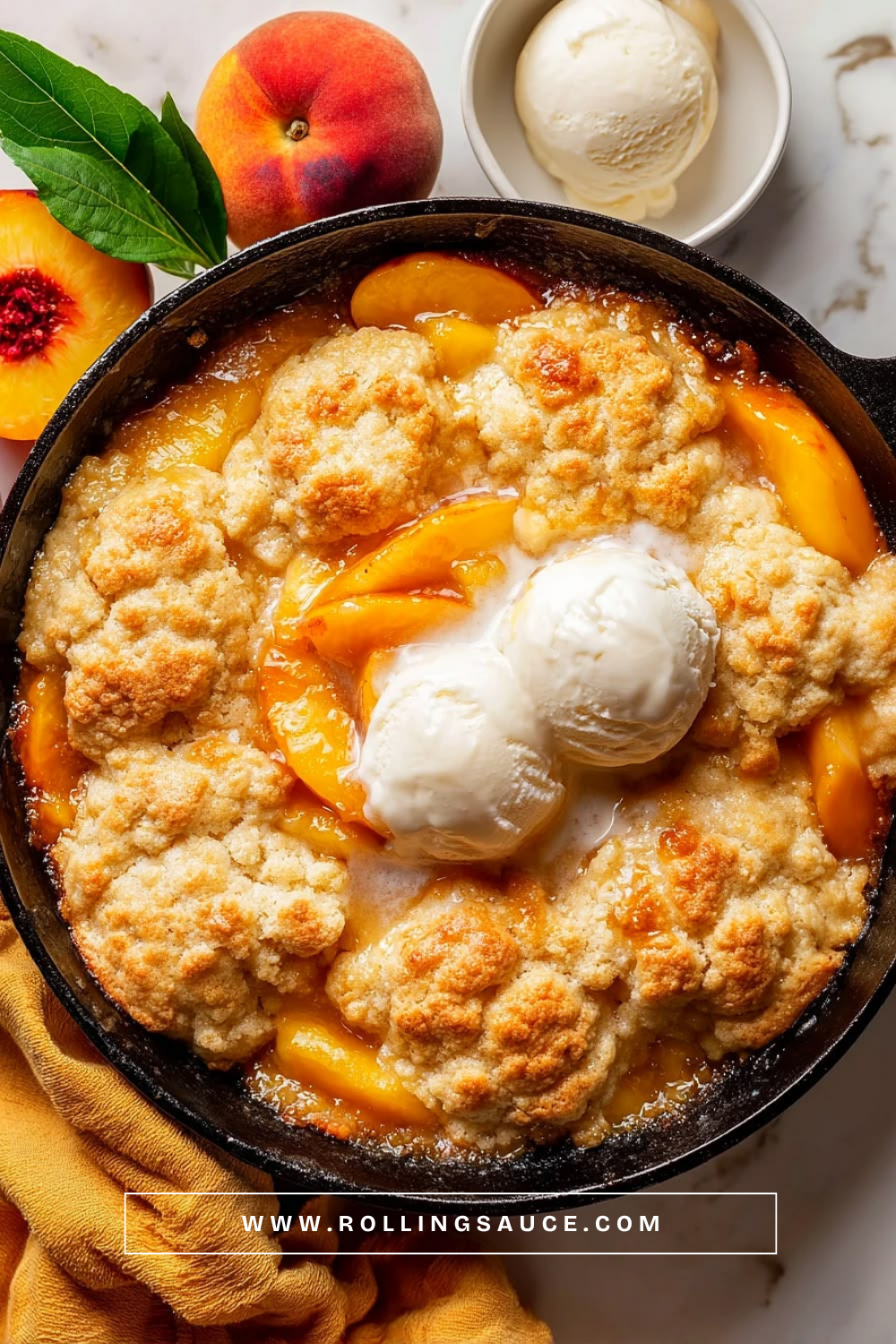
- Cast iron skillet version. A 12-inch cast iron skillet works perfectly and produces crispier edges and a more rustic look, since it retains heat more efficiently.
For other simple, satisfying bakes that use the same minimal-equipment approach, one-bowl banana bread is worth having next to this one.
Frequently Asked Questions
Can I use self-rising flour? Yes. Omit the baking powder entirely and reduce the salt to a pinch. Self-rising flour already contains both leaveners and salt.
Can I make it ahead of time? Prepare the peach filling up to 24 hours ahead and refrigerate. Make the batter fresh just before baking — letting it sit causes the baking powder to partially activate, and the crust won’t rise as high. Assemble and bake when ready.
Why is my cobbler runny? Either it was served before it rested, or the peaches released more liquid than expected. Always rest for at least 10 minutes. For frozen peaches or particularly juicy fresh peaches, add 1 teaspoon of cornstarch to the filling before layering.
Can I bake this in a cast iron skillet? Yes — a 12-inch skillet is ideal. The cast iron’s heat retention produces crispier edges and a more browned bottom layer. Watch the bake time; cast iron retains heat more aggressively and the cobbler may be done 3–5 minutes earlier.
What’s the best way to reheat leftovers? Cover with foil and warm in a 350°F oven for 15–20 minutes. Individual portions can be microwaved, though the crust won’t be as crisp. A brief uncovered blast at the end of the oven reheat revives the surface.
Storing and Serving
Cover leftovers and refrigerate for up to 3 days. The crust softens as it sits but the flavors deepen overnight — leftover cobbler is genuinely good the next day.
Serve warm with a generous scoop of vanilla ice cream. It melts into the golden crust and the peach sauce and makes every bite the definition of the right dessert at the right moment. Whipped cream, a pour of cold heavy cream, or a spoonful of crème fraîche all work too.
This cobbler is the dessert end of a summer table built around quick weeknight summer dinners — easy enough to make any night of the week, special enough to make people ask for the recipe.