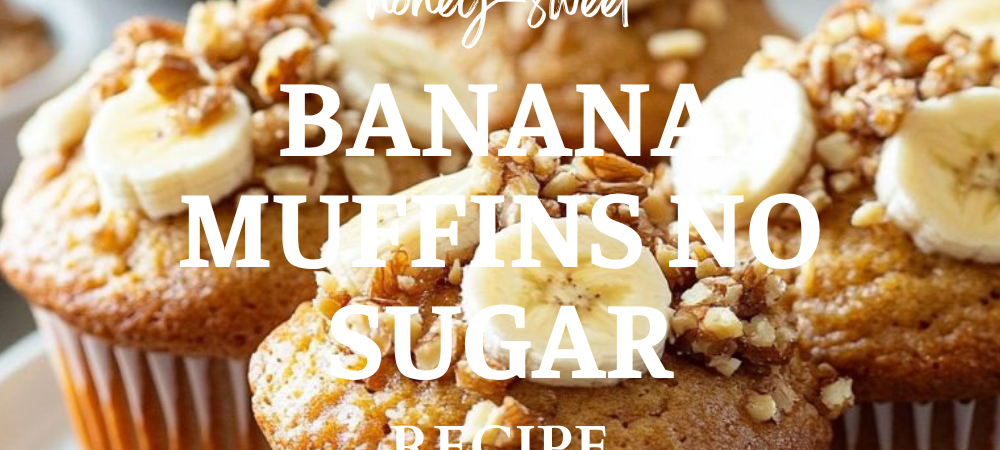
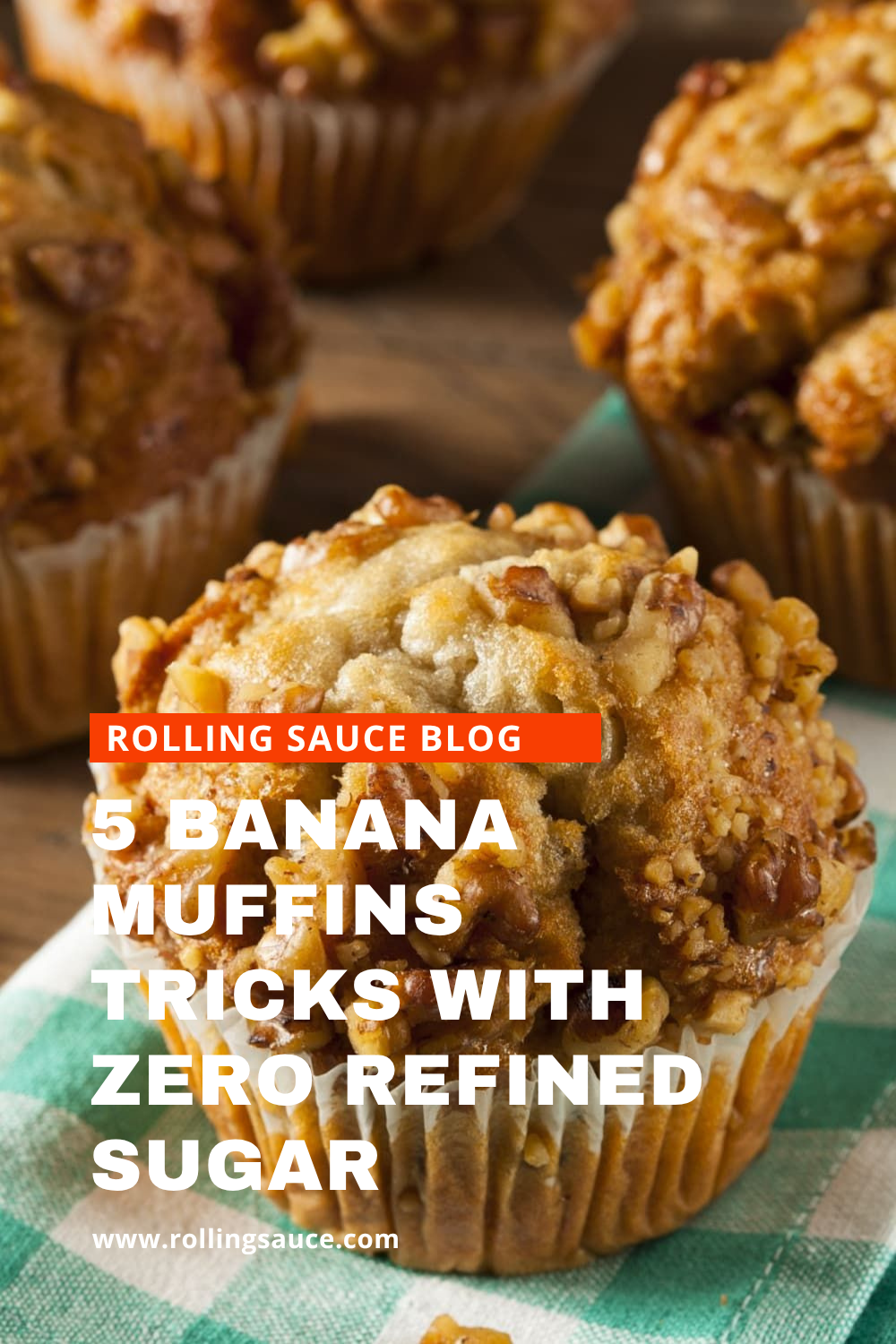
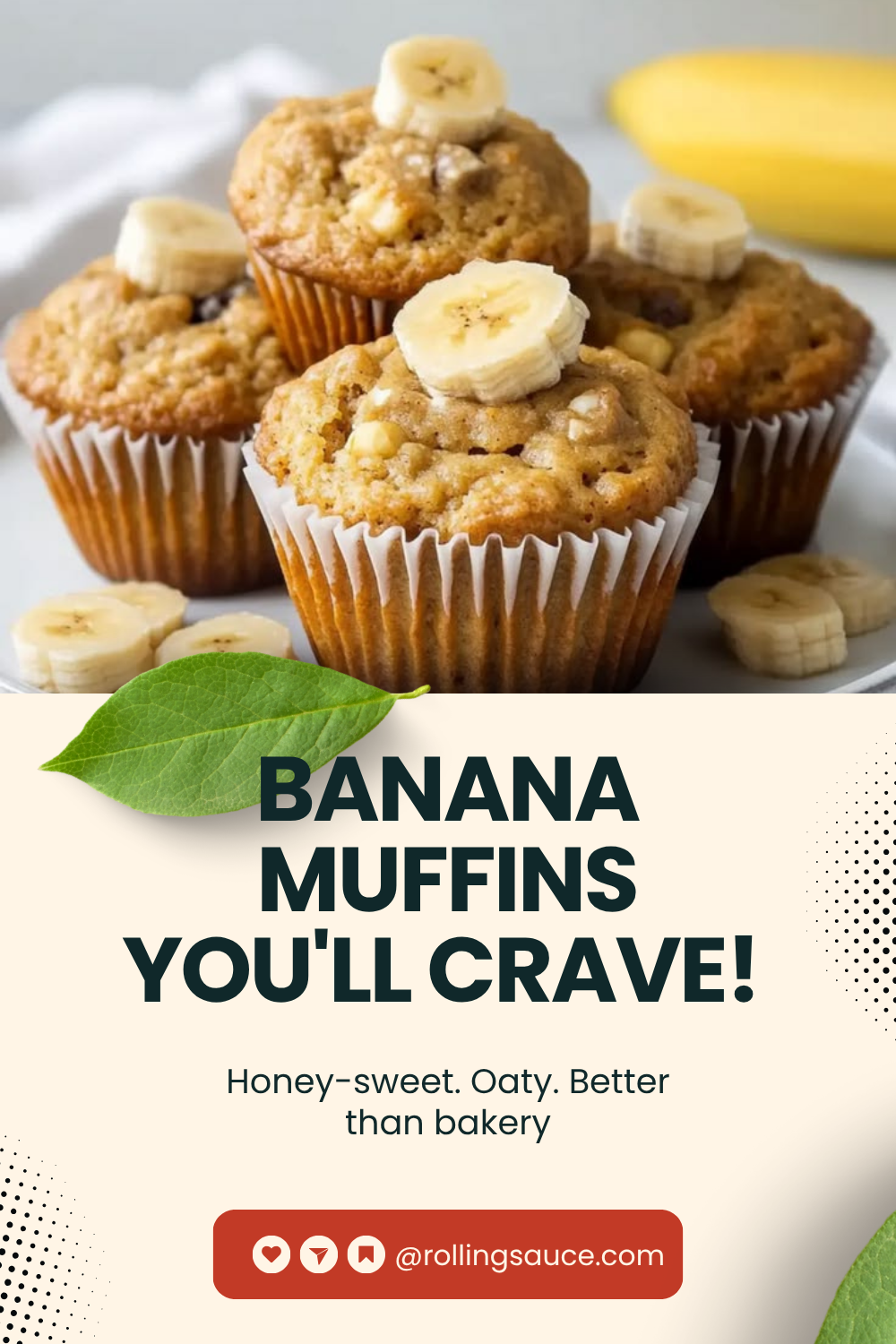
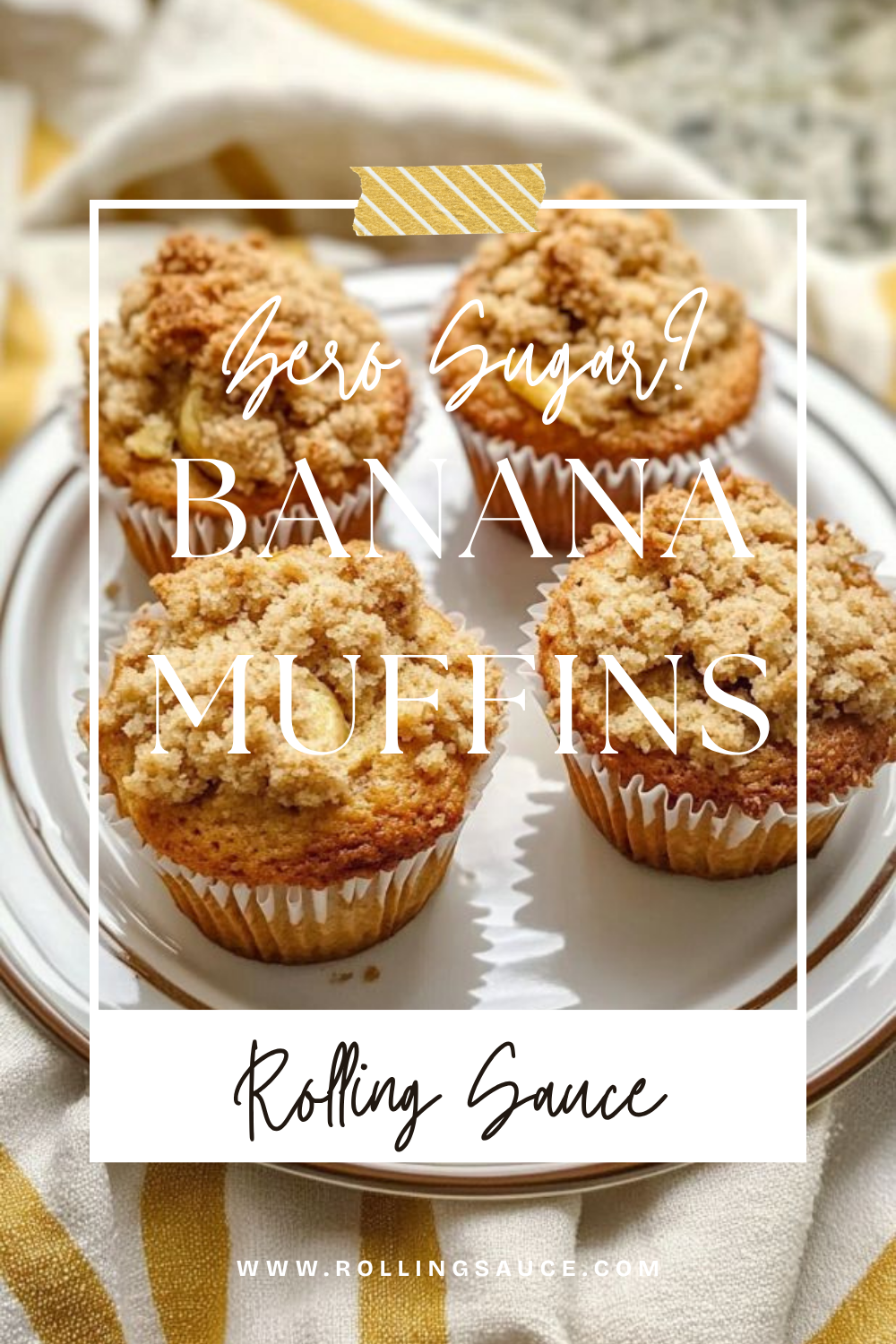
There’s something slightly magical about a banana muffin that tastes exactly like the good kind of bakery version — tender, moist, domed, with that warm banana-honey smell filling the kitchen — while containing zero refined sugar. Not because something has been stripped out, but because it doesn’t need it.
Ripe bananas are already sweet. Good honey is floral and rich and brings a depth that granulated sugar never delivers. Rolled oats add heartiness without making the crumb heavy. Greek yogurt keeps everything moist while adding just enough protein to make these feel like more than a treat. Put it all together with whole wheat flour and cinnamon and you have banana muffins that hold up against anything you’d pull from a coffee counter display — and probably taste better.
These come together in about 35 minutes, start to finish. One bowl for dry, one bowl for wet, fold them together carefully, bake. The most important rule — which gets its own section — is not to overmix. That’s it. Everything else is fairly forgiving.
A batch of these on Sunday means breakfast is handled for most of the week. They stay moist and soft for three days at room temperature and freeze beautifully for longer than that.
Why Honey Instead of Sugar Makes Sense Here
Honey does a few specific things in muffins that refined sugar doesn’t.
First, it’s hygroscopic — it attracts and holds moisture from the air — which is a big part of why these banana muffins stay soft even on day three. Granulated sugar doesn’t have this property. A muffin sweetened with refined sugar starts going stale faster than one made with a liquid sweetener like honey.
Second, honey has its own flavor. Depending on the variety, it can be floral, lightly fruity, mildly malty, or warm and rounded. Granulated sugar adds sweetness and nothing else. In a muffin where the main flavors are banana, cinnamon, and oat, honey’s background warmth fits naturally into the profile rather than just cranking up the sweetness dial.
Third — and this is practical — the natural sugars in very ripe bananas do a lot of the sweetening work here. You’re adding honey to support and extend what the bananas are already doing, not to compensate for removing a full cup of refined sugar. The result is a muffin that tastes genuinely sweet without tasting one-dimensional.
What Rolled Oats Do for These Muffins
Old-fashioned rolled oats serve two purposes here.
In the batter, they add body and gentle chew — something that makes each bite feel more substantial than a straight flour muffin without making the crumb dense. Oats absorb moisture from the bananas and yogurt as the batter bakes, which also helps keep the interior from going gummy.
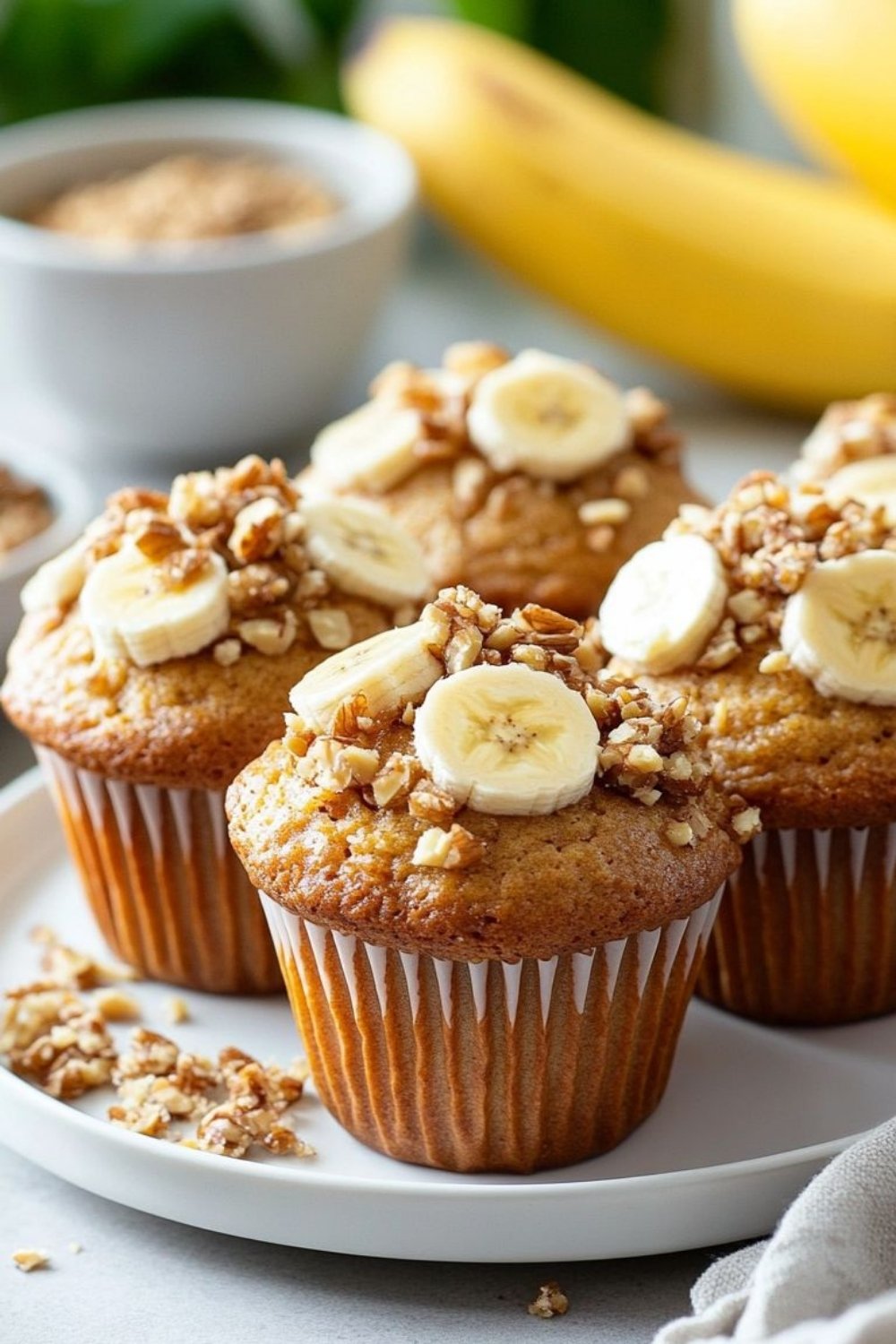
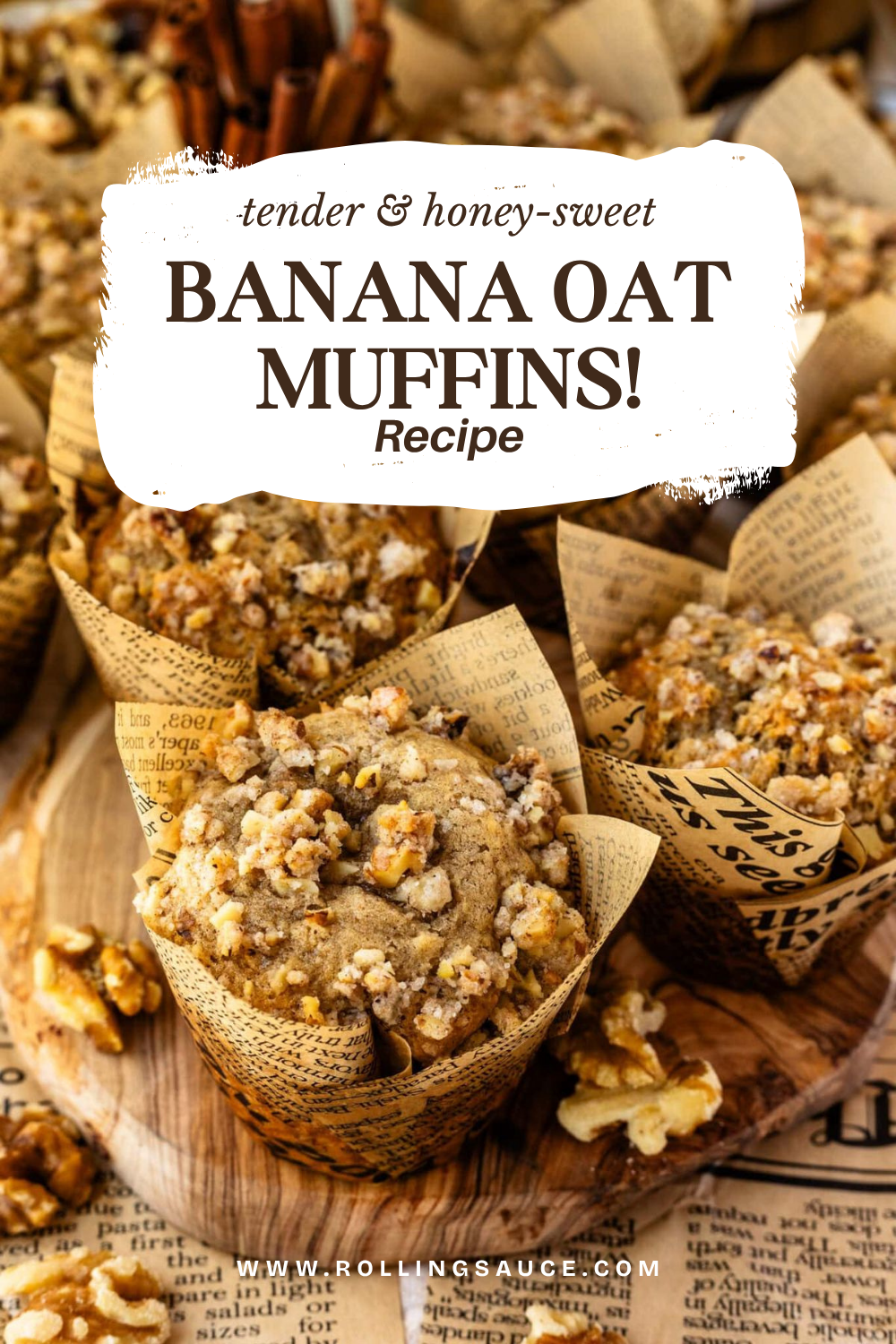
On top, a pinch of oats (plus chopped walnuts if you use them) creates a simple rustic topping with light textural contrast. It bakes up with a satisfying crunch and looks intentional without adding any complexity to the process.
Variety matters: old-fashioned rolled oats are what you want. Quick oats are too fine and produce a uniform texture that blurs into the crumb. Steel-cut oats don’t soften enough during the short bake time and can end up crunchy in the center — the opposite of what this muffin is going for.
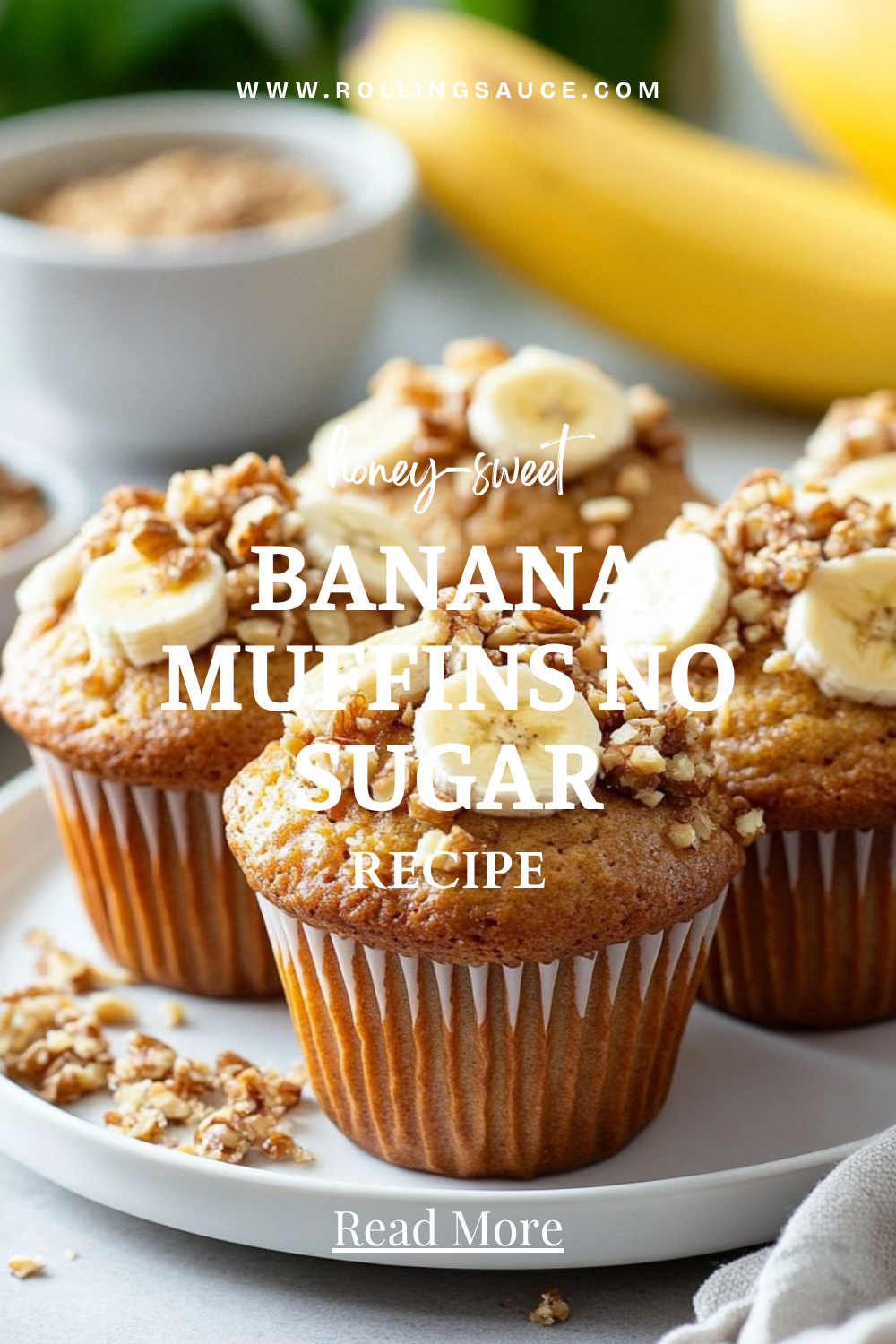
The Banana: Why the Riper, the Better
The ripeness of the banana matters more in this recipe than in almost any other banana baking situation, because honey is the only added sweetener. The bananas need to pull their full weight on flavor.
A lightly spotted, mostly yellow banana gives mild banana flavor and moderate sweetness. It works, but it won’t make you think twice. A deeply brown, nearly black banana is what you want — at that point, the starches have converted almost entirely to sugar, the flavor is concentrated and intensely banana-forward, and the flesh is soft enough to mash smooth in about 30 seconds. That’s the version that makes these muffins taste like something worth coming back for.
If your bananas aren’t ripe yet and you can’t wait: peel them, lay them on a parchment-lined baking sheet, and bake at 300°F for 15–20 minutes until the flesh is completely soft and the skin has gone fully black. This accelerates the ripening and concentrates the sugars almost as effectively as waiting. They’ll be slightly wetter than naturally ripened bananas, so give them a minute to cool and drain before mashing.
You need about 1¼ cups of mashed banana, which is typically 3 medium very ripe bananas.
What You’ll Need
Here’s everything for 12 muffins.
Dry ingredients:
- 1½ cups whole wheat flour
- 1 cup old-fashioned rolled oats, plus extra for topping
- 1½ teaspoons baking powder
- ½ teaspoon baking soda
- 1½ teaspoons ground cinnamon
- ¼ teaspoon ground nutmeg
- ½ teaspoon kosher salt
Wet ingredients:
- 3 medium very ripe bananas, mashed (about 1¼ cups)
- ⅓ cup honey, plus extra for drizzling on top
- 2 large eggs, at room temperature
- ⅓ cup coconut oil, melted and cooled to room temperature (or any neutral oil)
- ½ cup plain Greek yogurt, full-fat or 2%, at room temperature
- 1½ teaspoons pure vanilla extract
Optional topping:
- ½ cup roughly chopped walnuts or pecans
- Extra rolled oats
Two important notes: The Greek yogurt needs to be at room temperature, same as the eggs. Cold dairy hits the melted coconut oil and causes it to seize into small white lumps that don’t blend back out. If you forgot to set things out, run the egg under warm water for a minute and give the yogurt a few seconds in the microwave on the lowest setting.
Coconut oil should be melted but not hot. If it’s too warm when it goes into the batter with the eggs, it’ll start cooking them.

Banana Oat Muffins With Honey
Ingredients
Method
- Preheat oven to 375°F. Line a 12-cup muffin tin with paper liners or grease well.
- In a large bowl, whisk together the flour, oats, baking powder, baking soda, cinnamon, nutmeg, and salt.
- In a medium bowl, mash the bananas until smooth. Add the honey, eggs, melted coconut oil, Greek yogurt, and vanilla. Whisk until just combined.
- Pour the wet ingredients into the dry ingredients. Fold gently with a rubber spatula until no large dry pockets remain — about 20–30 folds. Do NOT overmix. The batter should look thick and slightly rough.
- Divide batter evenly among muffin cups, filling each about ¾ full. Top with chopped walnuts, a pinch of rolled oats, and a thin drizzle of honey.
- Bake for 20–23 minutes until the tops are deeply golden and a toothpick inserted into the center comes out clean or with a dry crumb.
- Cool in the pan for 5 minutes, then transfer to a wire rack.
Notes
- Storage: Airtight container at room temperature up to 3 days; fridge up to 5 days; freezer up to 3 months. Microwave from frozen 20–30 seconds.
- Banana tip: Use very ripe (brown-spotted or black) bananas. For a shortcut, bake unpeeled bananas at 300°F for 15–20 min until fully black and soft, then cool and mash.
- Gluten-free: Use certified GF oats + 1:1 GF flour blend.
- Dairy-free: Replace Greek yogurt with plain coconut yogurt.
- Swap: Replace honey 1:1 with maple syrup.
How to Make Them
Step 1: Mix the Dry Ingredients
Preheat your oven to 375°F. Line a standard 12-cup muffin tin with paper liners or grease each cup well. In a large bowl, whisk together the whole wheat flour, rolled oats, baking powder, baking soda, cinnamon, nutmeg, and salt. Whisk thoroughly so the leaveners are evenly distributed throughout the flour — uneven distribution leads to uneven rise.
Step 2: Mix the Wet Ingredients
In a medium bowl, mash the ripe bananas thoroughly with a fork. Get them as smooth as you can — a few small lumps are fine, but larger pieces won’t distribute their sweetness evenly through the batter. Add the honey, eggs, melted and cooled coconut oil, Greek yogurt, and vanilla. Whisk until the mixture is uniform.
Step 3: Combine the Batter
Pour the wet ingredients into the dry ingredients. Use a rubber spatula to fold them together with a light hand — scoop from the bottom of the bowl upward, rotating the bowl as you go. Stop the moment no large dry pockets remain. The batter will look thick and slightly rough, possibly with a small streak of flour here and there. That’s exactly right. Resist every impulse to keep stirring.
Step 4: Fill, Top, and Bake
Scoop the batter into the prepared muffin cups, filling each about ¾ of the way. A ¼-cup ice cream scoop makes this fast and even. Sprinkle each muffin with a few chopped walnuts and a pinch of rolled oats. Drizzle a thin thread of honey over each top if you want a more golden, slightly caramelized surface crust. Bake for 20–23 minutes, until the tops are deep golden and a toothpick inserted into the center of a muffin comes out clean or with just a dry crumb or two.
Cool in the pan for 5 minutes, then transfer to a wire rack. They’re excellent warm but best once cooled to room temperature and the crumb has fully set.
The One Technique Tip That Makes or Breaks These Muffins
It’s overmixing — and it’s the reason most homemade muffins come out dense and tough instead of tender and soft.
When you stir muffin batter too aggressively, you develop the gluten in the flour. Gluten is exactly what you want in bread, where structure and chew are the point. In a muffin, it produces a rubbery crumb with those characteristic vertical tunnels running through the inside — a sign the gluten was overworked and trapped CO2 in long streaks rather than in small, even bubbles. As King Arthur Baking explains in their muffin technique guides, overmixing is the single most common reason home-baked muffins disappoint.
The fix is simple: fold rather than stir, use a spatula instead of a whisk, and stop as soon as the batter looks just barely combined. Twenty to thirty folds is usually enough. The batter should look rough and thick, not smooth and glossy. If it looks smooth and glossy, you’ve gone too far — but there’s no recovering at that point, so bake what you have and know for next time.
Whole wheat flour is also more sensitive to overmixing than white flour, so the window here is slightly smaller than with an all-purpose batter.
Tips for Muffins That Rise High and Taste Great
- Spoon flour into the measuring cup, don’t scoop. Scooping compacts the flour and you can end up with 25–30% more than the recipe calls for. That extra flour makes the batter stiff and the muffins dense. Spoon it in, then level off.
- Room-temperature wet ingredients every time. Cold eggs and cold yogurt are the top reason coconut oil seizes in the batter. A lump-free batter is a better batter.
- Fill cups ¾ full. More than that and they overflow; less and they bake up flat-capped instead of properly domed. A cookie scoop makes portioning take about 60 seconds.
- Don’t open the oven door in the first 15 minutes. The rapid rise of the muffin (from the baking powder and soda activating in the heat) is happening in that window. Opening the door drops the temperature and can collapse the dome before it sets.
- Cool in the pan for exactly 5 minutes, then move to the rack. Too long in the pan and the bottom edges steam and soften. Too short and the muffin falls apart when you try to lift it.
Variations and Mix-Ins Worth Trying
The base recipe holds together well with a lot of additions:
- Dark chocolate chips. Fold in ½ cup before filling the cups. Bittersweet chocolate against honey-banana is one of the better combinations in baking.
- Blueberries. A cup of fresh or frozen berries (no need to thaw) folded into the batter. They burst slightly during baking and create pockets of jammy fruit throughout.
- Peanut butter swirl. Drop a heaping teaspoon of natural peanut butter on top of each filled cup and swirl it in lightly with a toothpick before baking.
- Maple syrup instead of honey. Direct 1:1 swap. Maple has a darker, more caramel-forward sweetness that works especially well in fall.
- More spice. Increase the cinnamon to 2 teaspoons, or add a pinch of cardamom. Both bring a warmer, more complex spice note without overpowering the banana.
- Gluten-free. Use certified gluten-free oats and swap a 1:1 gluten-free flour blend for the whole wheat flour. The texture is slightly more tender and a little less chewy than the standard version.
If you’re already making quick homemade granola bars as a grab-and-go snack, these muffins fit into exactly the same routine — naturally sweetened, oat-based, and done in under an hour.
Frequently Asked Questions
Can I use all-purpose flour instead of whole wheat? Yes. The muffins will be lighter in color with a slightly softer texture and milder flavor. Whole wheat adds a nuttiness that pairs well with oats and banana, but all-purpose works fine.
Why are my muffins gummy in the center? Either underbaked, or the bananas weren’t ripe enough. Very ripe bananas are sweeter and more concentrated — underripe ones add more water to the batter without adding proportional sweetness. Check doneness with a toothpick rather than the clock, and let the muffins cool fully before cutting in.
Can I use maple syrup instead of honey? Yes, 1:1. Maple behaves identically in this batter. The flavor shifts slightly — more caramel, less floral — but the muffins bake to the same structure and texture.
Can I make these without Greek yogurt? Sour cream is a direct substitute. For dairy-free, use plain coconut yogurt or ½ cup canned full-fat coconut milk plus 1 teaspoon apple cider vinegar to mimic the acidity that activates the baking soda.
Storing, Freezing, and Getting Ahead
Room temperature in an airtight container keeps these banana muffins moist and good for 3 days. After that, move them to the fridge where they’ll keep for up to 5 days — the texture is slightly more compact cold, but a 15-second microwave warm brings them back.
For freezing: cool completely, then seal in a zip-lock freezer bag with the air pressed out. They freeze for up to 3 months. Microwave individual muffins for 20–30 seconds straight from frozen, or let them thaw at room temperature for about an hour.
Making a double batch takes almost no extra time — same bowls, just double the quantities — and means you have half a batch in the freezer and half on the counter. That’s the same make-ahead logic that makes a breakfast casserole worth making once for the whole week. And if you’ve got another overripe banana sitting there, one-bowl banana bread is the same no-fuss approach in loaf form.