For years, I made meatballs that were technically fine and somehow also completely forgettable. They were cooked through, they were in sauce, they were round. That’s about all they had going for them. The texture was dense, the flavor was flat, and no amount of jarred marinara could rescue them.
Then I made two changes: I switched from pure ground beef to a half-beef, half-Italian-sausage blend, and I started soaking my breadcrumbs in milk before adding them to the mixture. Those two things alone completely changed what I was making. The sausage adds fat, seasoning, and fennel-forward porkiness that ground beef alone can’t replicate. The milk-soaked breadcrumbs — called a panade in classical cooking — keep the mixture from seizing up and drying out during cooking.
This recipe is the result of those two changes, plus a few years of refining the marinara that goes with them. It’s a proper Sunday dinner: not complicated, but not fast either. Plan on about an hour and a half from start to finish. The payoff is a pot of meatballs that smell like someone’s grandmother’s kitchen, even if your grandmother never made Italian food a day in her life.
What Makes These Meatballs Different
Most home-cooked meatball recipes fall into one of two failure modes: too dense and dry (overworked meat, no binder fat) or too soft and falling apart (too much filler, not enough structure). Getting to the middle requires understanding what each ingredient actually does.
The two-meat blend is the most important decision. Ground beef provides structure and the savory, beefy backbone. Italian sausage — mild sweet or spicy, your call — adds fat, fennel, and aromatics that are already built in. You’re essentially getting seasoned, flavored meat without having to do the work yourself. The fat content of sausage also keeps the meatballs moist through the long simmer in sauce.
The milk-soaked breadcrumbs are the second key. Fresh breadcrumbs soaked in whole milk for five minutes form a paste that gets worked into the meat mixture. During cooking, this paste creates pockets of moisture throughout the meatball, preventing the proteins from squeezing dry. It’s the reason restaurant-quality meatballs are tender and home versions often aren’t. Serious Eats has a thorough breakdown of the panade technique if you want to understand the food science behind it.
Browning in the pan first matters too. Dropping raw meatballs directly into sauce results in soft, pale, somewhat sad meatballs. A quick sear in olive oil — two to three minutes per side until a dark crust forms — adds flavor through the Maillard reaction and gives the exterior enough structure to hold together through the simmer.
What You’ll Need
For the meatballs, the key ingredients beyond the two-meat blend: Pecorino Romano (or Parmesan) grated fresh, fresh flat-leaf parsley (not dried), fresh garlic (not powder), and one whole egg plus one yolk for binding. The extra yolk adds richness without making the mixture overly eggy.
For the marinara: whole San Marzano tomatoes are worth seeking out for this recipe. San Marzanos have lower acidity, thicker flesh, and fewer seeds than standard canned tomatoes, and when hand-crushed into the pan they make a sauce with better body and a naturally sweet depth. If you can’t find them, any whole peeled tomatoes work — crush them by hand over the pot before they go in to control the texture.
The other marinara ingredients are minimal on purpose. Good olive oil, lots of garlic, a pinch of red pepper flakes, salt, and fresh basil at the end. Don’t add onion, don’t add wine, don’t add sugar unless the tomatoes are genuinely acidic. The goal is a sauce that tastes like tomatoes and garlic, not a jar of prepared sauce with ten mystery ingredients.
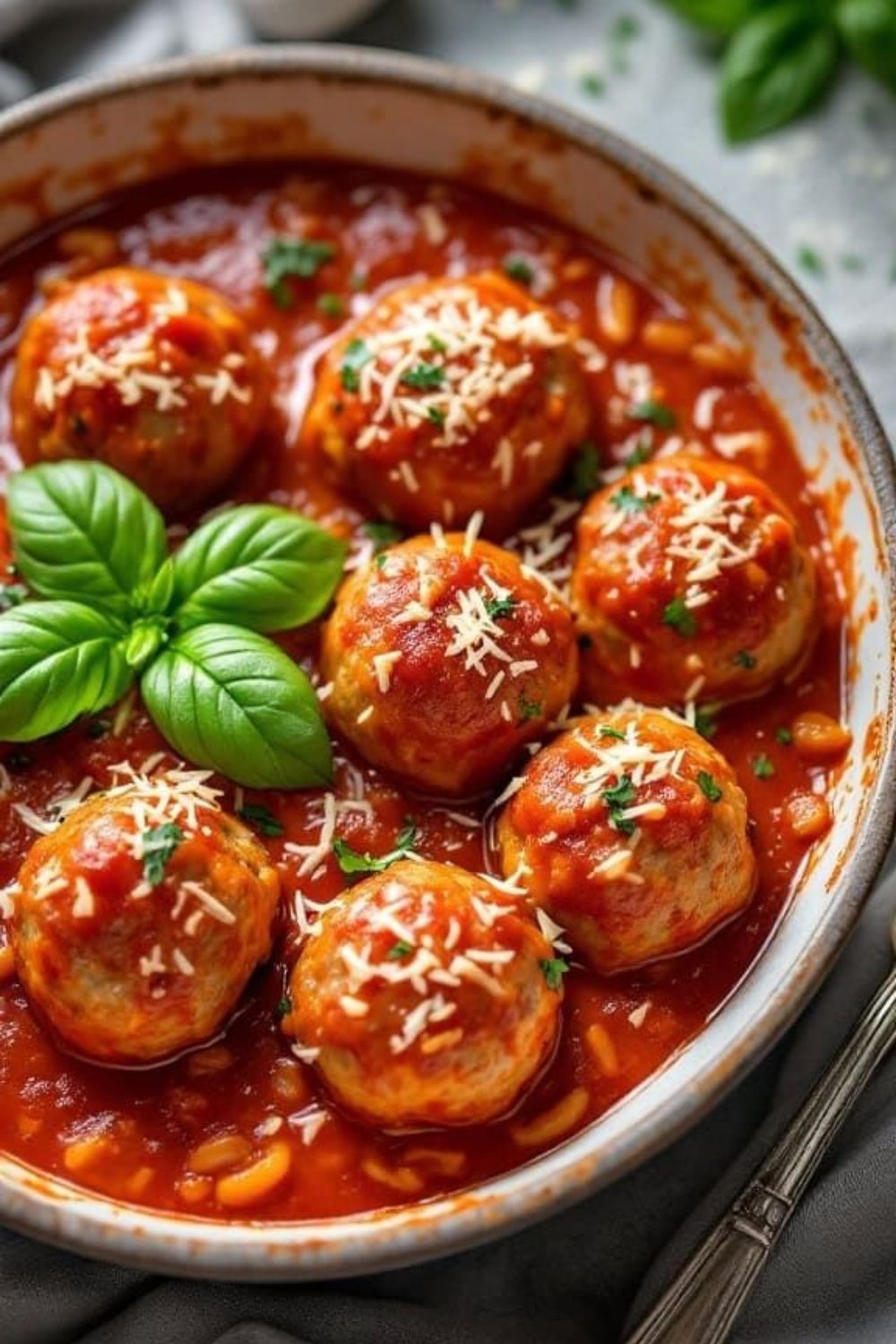

Italian-Style Meatballs in Homemade Marinara
Ingredients
Method
- Make the panade: Place torn bread in a small bowl. Pour the milk over and let soak 5 minutes. Mash together with a fork into a rough paste.
- Combine the meatball mixture: In a large bowl, add ground beef, sausage, soaked breadcrumb paste, egg and yolk, cheese, garlic, parsley, Italian seasoning, salt, and pepper. Mix with your hands until just combined — do not overwork. Test by cooking a small piece in a hot pan; taste and adjust seasoning in the raw mixture before rolling.
- Roll the meatballs: With damp palms, roll mixture into balls about 1½ inches across. You should get 24–28 meatballs.
- Sear: Heat olive oil in a large heavy-bottomed pot or Dutch oven over medium-high. Working in batches, brown the meatballs on 2–3 sides, about 2 minutes per side, until a dark crust forms. Do not crowd the pan. Transfer to a plate — they don't need to be cooked through yet.
- Make the marinara: In the same pot, reduce heat to medium-low. Add olive oil, minced garlic, and red pepper flakes. Cook, stirring, for 90 seconds until fragrant. Add the hand-crushed tomatoes and all their juices. Stir and season with salt. Raise heat to medium and simmer uncovered for 15–20 minutes, until the sauce thickens and deepens in color.
- Simmer together: Nestle the browned meatballs into the sauce, spooning sauce over each one. Reduce heat to low, cover, and simmer 20–25 minutes until meatballs are cooked through.
- Finish and serve: Tear fresh basil over the top. Serve over pasta with grated Parmesan, or with crusty bread for a simpler presentation.
Notes
- Storage: Refrigerate meatballs in sauce for up to 4 days. Freeze cooked
meatballs (without sauce, on a sheet pan first) for up to 3 months. - Make ahead: Full recipe can be made 1–2 days ahead; flavor improves overnight.
Reheat gently over medium-low with a splash of water. - Swap: Swap mild sausage for spicy Italian for more heat. Use ground pork
in place of sausage + add ½ tsp fennel seeds to the meat mixture.
For a meatball parm version: transfer finished meatballs to a baking
dish, layer fresh mozzarella on top, broil 5 min until bubbling.
How to Make the Meatballs
Step 1: Make the panade. Tear two slices of sturdy white bread (crusts removed) into rough pieces and put them in a small bowl. Pour 1/4 cup of whole milk over them and let them soak for five minutes. They should absorb the milk and become soft and paste-like. Mash them together with a fork into a rough paste before adding to the meat.
Step 2: Combine. In a large bowl, combine ground beef, sausage (removed from casing if using links), the soaked breadcrumb paste, two eggs, grated cheese, garlic, parsley, salt, pepper, and Italian seasoning. Mix with your hands until just combined. The key word is just — overworking the mixture compresses the proteins and leads to rubbery meatballs. Stop mixing the moment everything is incorporated.
Step 3: Test one. Roll a small piece into a ball and cook it in a hot pan. Taste it. Adjust salt and seasoning in the raw mixture before rolling all of them. This step takes thirty seconds and saves you from a bland pot of meatballs.
Step 4: Roll. Use a 1.5-tablespoon cookie scoop or roll by hand to form meatballs about 1.5 inches across. You should get 24 to 28. Wet your palms slightly — it keeps the meat from sticking and helps you roll them smooth.
Step 5: Sear in batches. Heat olive oil in a large, heavy skillet (or your widest pot) over medium-high. Working in batches, brown the meatballs on two or three sides, about 2 minutes per side. Don’t crowd the pan or they’ll steam instead of sear. Transfer to a plate. They don’t need to be cooked through — they’ll finish in the sauce.
How to Make the Marinara
In the same pot you’ll use to simmer everything, warm olive oil over medium-low heat. Add six minced garlic cloves and a pinch of red pepper flakes. Cook, stirring frequently, for about 90 seconds — the garlic should turn fragrant and barely golden at the edges. Don’t let it brown. Burnt garlic is bitter, and there’s no recovering from it in a simple sauce.
Open two 28-ounce cans of whole San Marzano tomatoes. Crush each tomato by hand as you add it to the pot, squeezing it until it collapses. Add all the juices from the can. Stir everything together and raise the heat to medium. Season with salt and a pinch of sugar if needed.
Let the sauce simmer uncovered for 15 to 20 minutes before adding the meatballs. This gives the raw tomato flavor time to cook down and the sauce time to concentrate slightly. You want it to look like a proper sauce — thickened, glossy, deep red — not watery. If it’s still thin after 20 minutes, give it more time uncovered.

Bringing It All Together
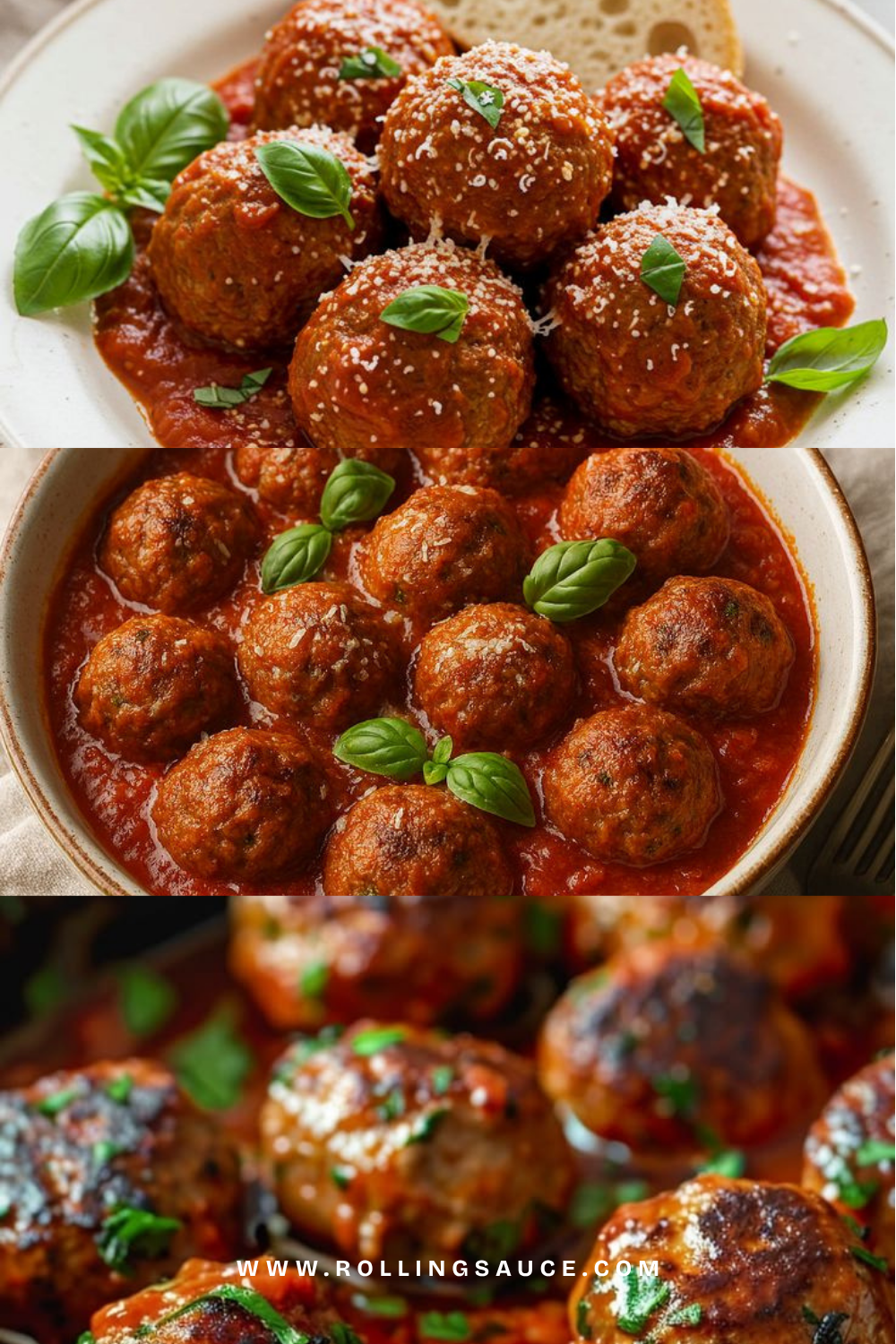
Once the sauce has simmered down, nestle the browned meatballs into the pot in a single layer. Spoon some sauce over each one. Reduce heat to low, cover the pot, and let everything simmer together for 20 to 25 minutes. The meatballs finish cooking in the sauce, absorbing it as they go, and the drippings from the sear enrich the marinara in return.
When they’re done, the meatballs will be firm but not hard, and a quick cut through the center should show no pink. Tear a generous amount of fresh basil over the top, drizzle with a little olive oil, and serve immediately.
What to Serve With Them
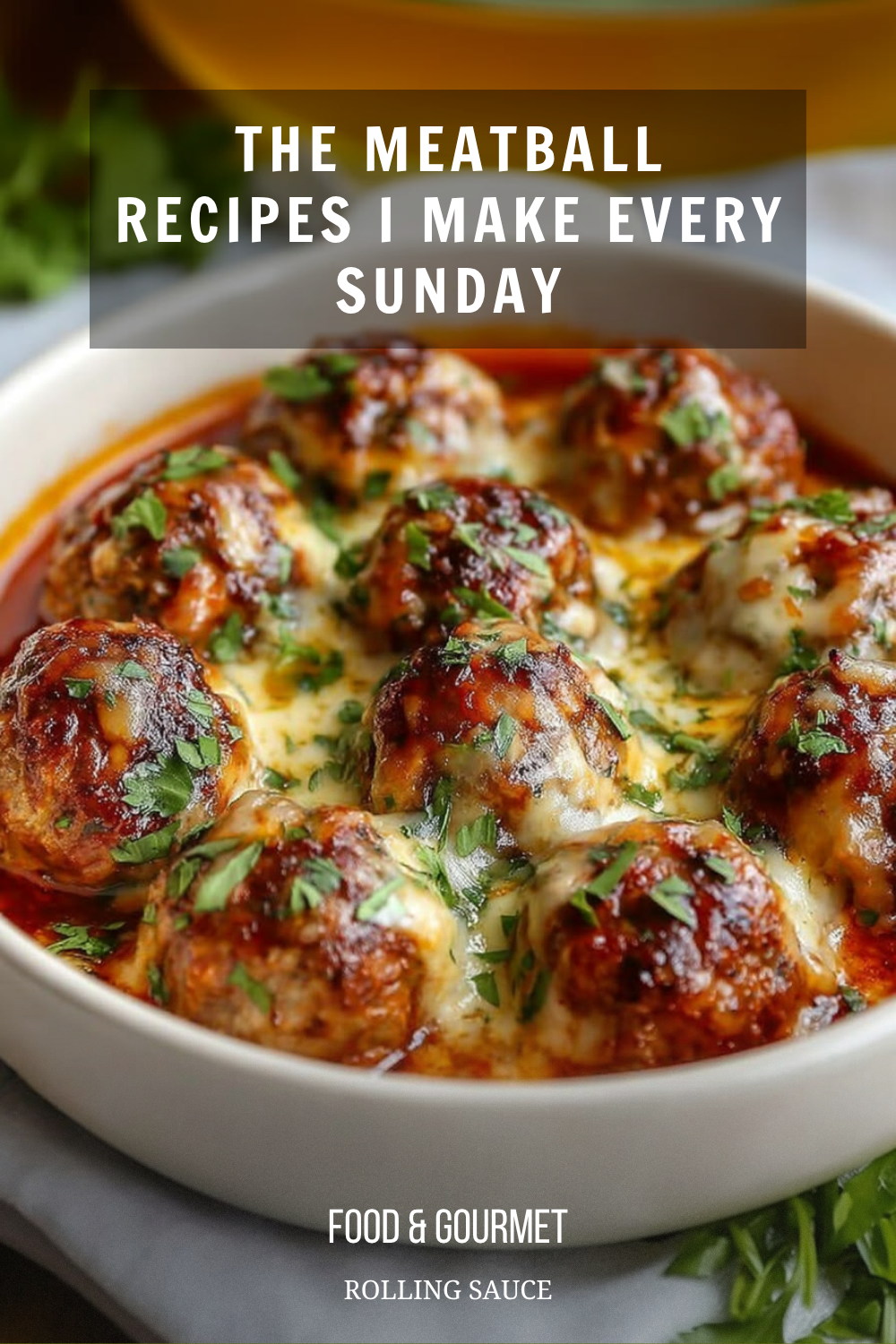
The classic move is spaghetti — pile the meatballs and sauce over a nest of pasta, scatter Parmesan and torn basil on top, and that’s the whole meal. If you want to branch out, rigatoni or pappardelle both hold this sauce exceptionally well.
For a full spread, a good side salad pulls the richness into balance. My easy broccoli salad with bacon might sound like an unusual pairing with Italian food, but the tangy dressing cuts the fat beautifully. An Italian pasta salad works if you’re serving a crowd and want a cold side that holds up.
Garlic bread is essentially mandatory. You can also skip the pasta entirely and serve the meatballs in a bowl with crusty bread for dipping — that version works just as well for a Sunday dinner that feels a little more casual.
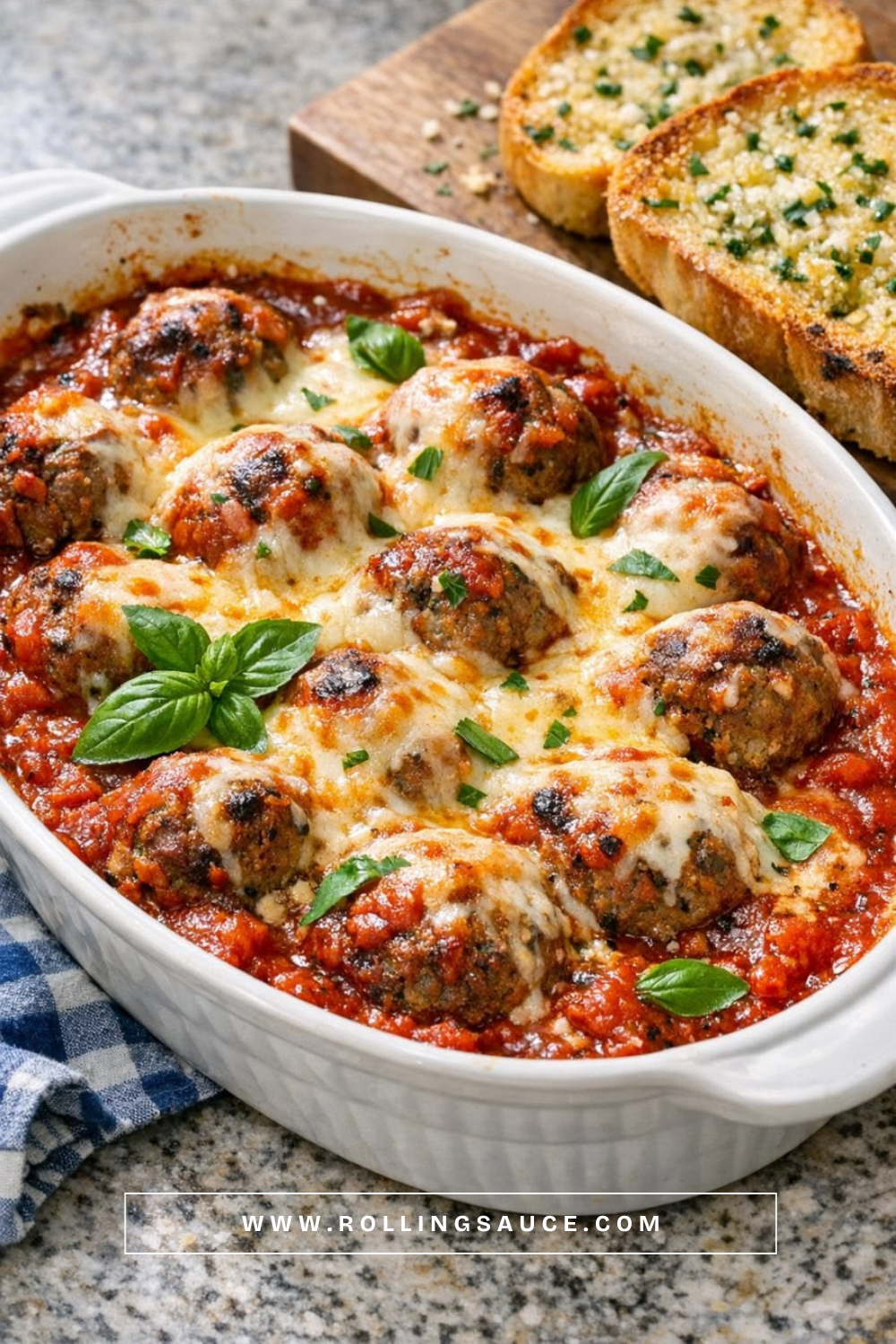
For something even more indulgent, transfer the cooked meatballs and sauce to a baking dish, layer fresh mozzarella over the top, and broil for 5 minutes until the cheese bubbles and browns. That’s meatball parm territory, and it requires zero extra work beyond moving the pan.
Tips for Getting It Right
- Don’t skip the browning. It takes an extra ten minutes and makes a significant difference in flavor and texture. The sear forms the outer crust that keeps the meatballs from breaking apart in the sauce.
- Use fresh breadcrumbs when possible. Dried breadcrumbs in cans absorb moisture differently and produce a slightly drier meatball. If you only have dried, reduce the amount to 1/3 cup and increase the milk slightly.
- Make a bigger batch. Meatballs freeze extremely well — place them on a sheet pan in a single layer, freeze until solid, then transfer to a zip-lock bag. They keep for up to three months and reheat directly in simmering sauce from frozen.
- Taste and adjust. The single best thing you can do for any meatball recipe is cook a small test ball before rolling the whole batch. Raw pork is safe to taste in small quantities once briefly cooked, and thirty seconds on the skillet tells you exactly what you’re working with before you commit.
- The sauce stays useful. Any leftover marinara from the pot is one of the better things to have in your fridge — use it the next day for a quick weeknight pasta or freeze it in a jar.
Frequently Asked Questions
Can I bake the meatballs instead of frying them first? Yes. Line a sheet pan with foil, place the meatballs in a single layer, and bake at 425°F for 20 to 22 minutes until browned on the outside. The results are slightly less flavorful than pan-searing — you lose the direct caramelization of the cast iron — but the baked version is genuinely good and saves time and oil splatter. After baking, transfer them to the marinara for the final simmer.
What’s the difference between Italian sausage and regular pork sausage? Italian sausage is seasoned specifically with fennel seeds, garlic, and sometimes paprika or anise. That fennel-forward profile is part of what gives Italian-style meatballs their characteristic flavor. Regular breakfast sausage or plain ground pork doesn’t have those aromatics built in, so the final meatball will taste different. If you can only find plain ground pork, add 1/2 teaspoon fennel seeds and a pinch of anise to your meatball mixture to approximate it.
Why are my meatballs falling apart in the sauce? Usually one of three things: not enough binder (not enough egg or breadcrumbs relative to meat), overly wet mixture (too much milk or liquid in the breadcrumbs), or skipping the browning step. The sear creates a crust that holds the meatball together during the simmer. Without it, especially in a vigorously simmering sauce, the meatballs can soften and break. Make sure to simmer gently, not boil, once the meatballs go in.
How do I store and reheat leftovers? Meatballs in sauce keep in the refrigerator for up to four days. Reheat gently in a covered saucepan over medium-low, adding a splash of water if the sauce has thickened too much. For a quick weeknight dinner using the leftovers, serve them over my creamy tomato tortellini soup — stir the sauce in as a base and you have a completely different dinner in under fifteen minutes.
Can I make these ahead of time? Yes, and they’re arguably better the next day. The meatballs absorb the sauce as they rest and get deeper in flavor overnight. Make the full recipe, let it cool, and refrigerate the whole pot. Reheat gently before serving.
Sunday dinners have a logic to them — you want something that takes time but doesn’t require your constant attention, something that rewards the house with a smell that makes everyone drift toward the kitchen. These meatballs do exactly that.
If you make them, save this recipe for later. It’s the kind of thing worth coming back to every couple of weeks.