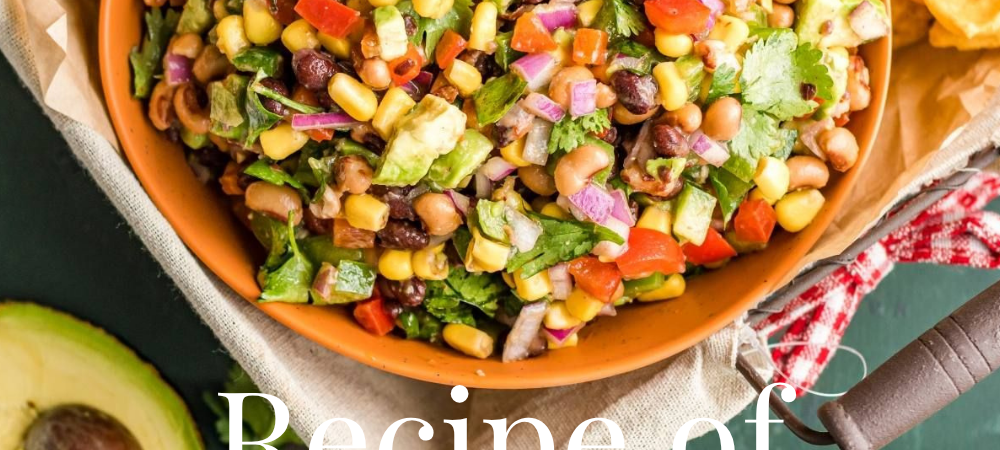
Cowboy caviar checks every single one of those boxes, and it does it without asking anything complicated of you in the kitchen. There’s no cooking, no timing, no technique beyond chopping and whisking. You combine black beans, black-eyed peas, corn, crisp vegetables, and a bright lime-cumin vinaigrette, let it rest long enough to let the flavors develop, and walk in the door with something that will be gone before you make it back from setting your bag down. This is the version I’ve settled on — a homemade dressing instead of the store-bought Italian dressing shortcut, avocado folded in at the last minute, everything diced small enough to actually fit on a chip.
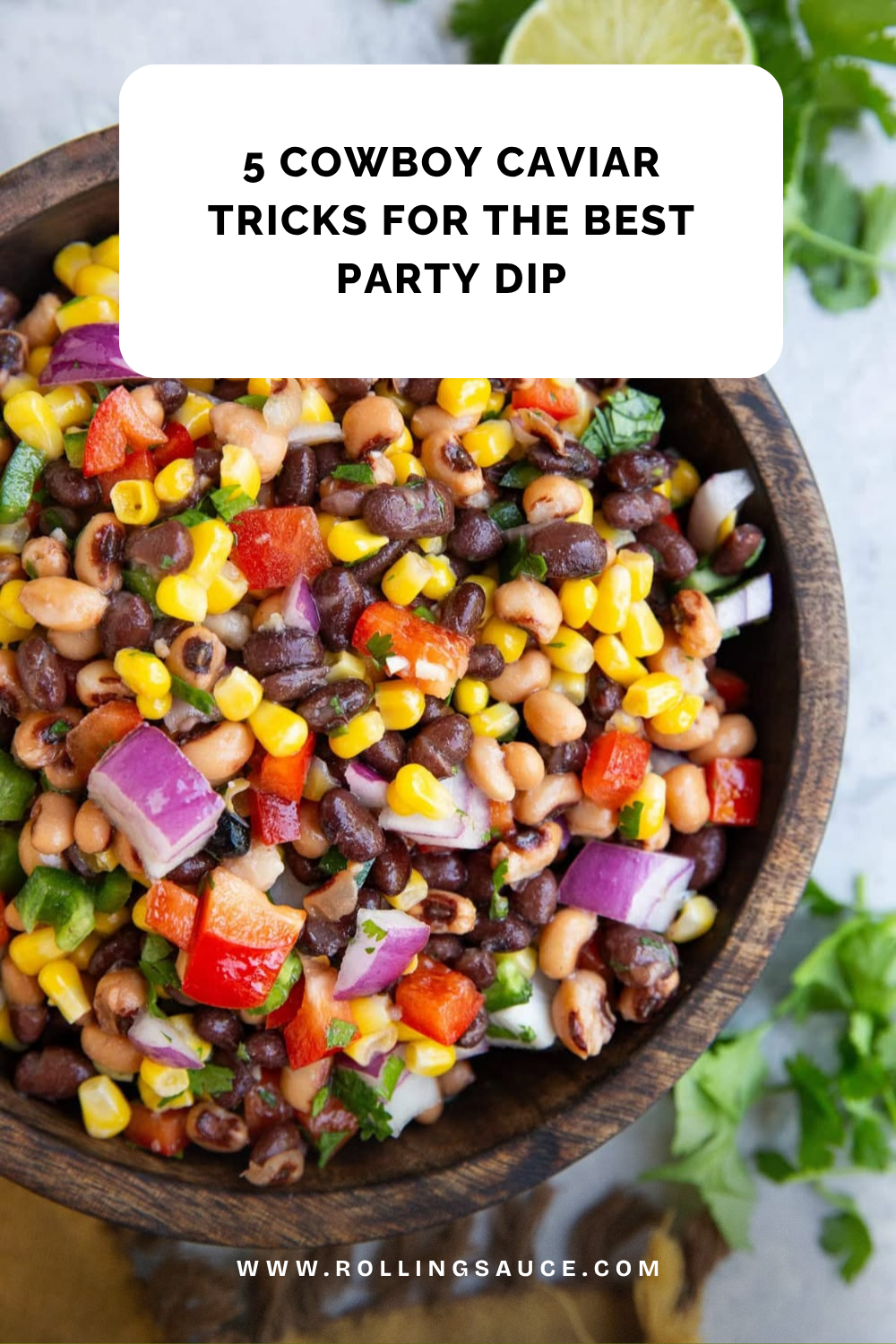
What Is Cowboy Caviar?
Cowboy caviar goes by a few names — Texas caviar, Mexican caviar, black-eyed pea dip — but they all describe the same thing: a bean-and-vegetable mixture tossed in a tangy vinaigrette, served with tortilla chips as a dip or used as a topping or side. The original version was developed in Austin, Texas in the 1940s by dietitian Helen Corbitt, who served black-eyed peas with a vinaigrette at the Houston Country Club as a playful, ironic riff on the luxury of caviar.
The name stuck, and over the decades the recipe evolved from that simple vinaigrette-dressed pea dish into the colorful, crowd-feeding version most people know today — multiple bean varieties, sweet corn, fresh bell peppers, jalapeño heat, and a cumin-lime dressing that makes the whole thing taste distinctly Southwestern.
What makes cowboy caviar work as a party food is the structure of it. Beans and vegetables in an acid-based dressing don’t wilt — they actually get better as they sit, absorbing the dressing and letting the flavors deepen and merge. Unlike a hot dip that needs to stay at temperature or a cream-based dip that can look unappetizing after an hour on the table, cowboy caviar is served cold or at room temperature, travels in a sealed bowl without issue, and tastes just as good three hours into a party as it did when you first set it out. It’s the anti-stress party dish.
What You’ll Need
The dip
- 1 can (15 oz) black beans, drained and rinsed
- 1 can (15 oz) black-eyed peas, drained and rinsed
- 1½ cups corn kernels (canned/drained, frozen/thawed, or fresh off the cob)
- 1 red bell pepper, finely diced
- 1 jalapeño, seeded and minced (leave seeds in for more heat)
- ½ medium red onion, finely diced
- 2 Roma tomatoes, diced
- ½ cup fresh cilantro, roughly chopped
- 1 large avocado, diced (added last)
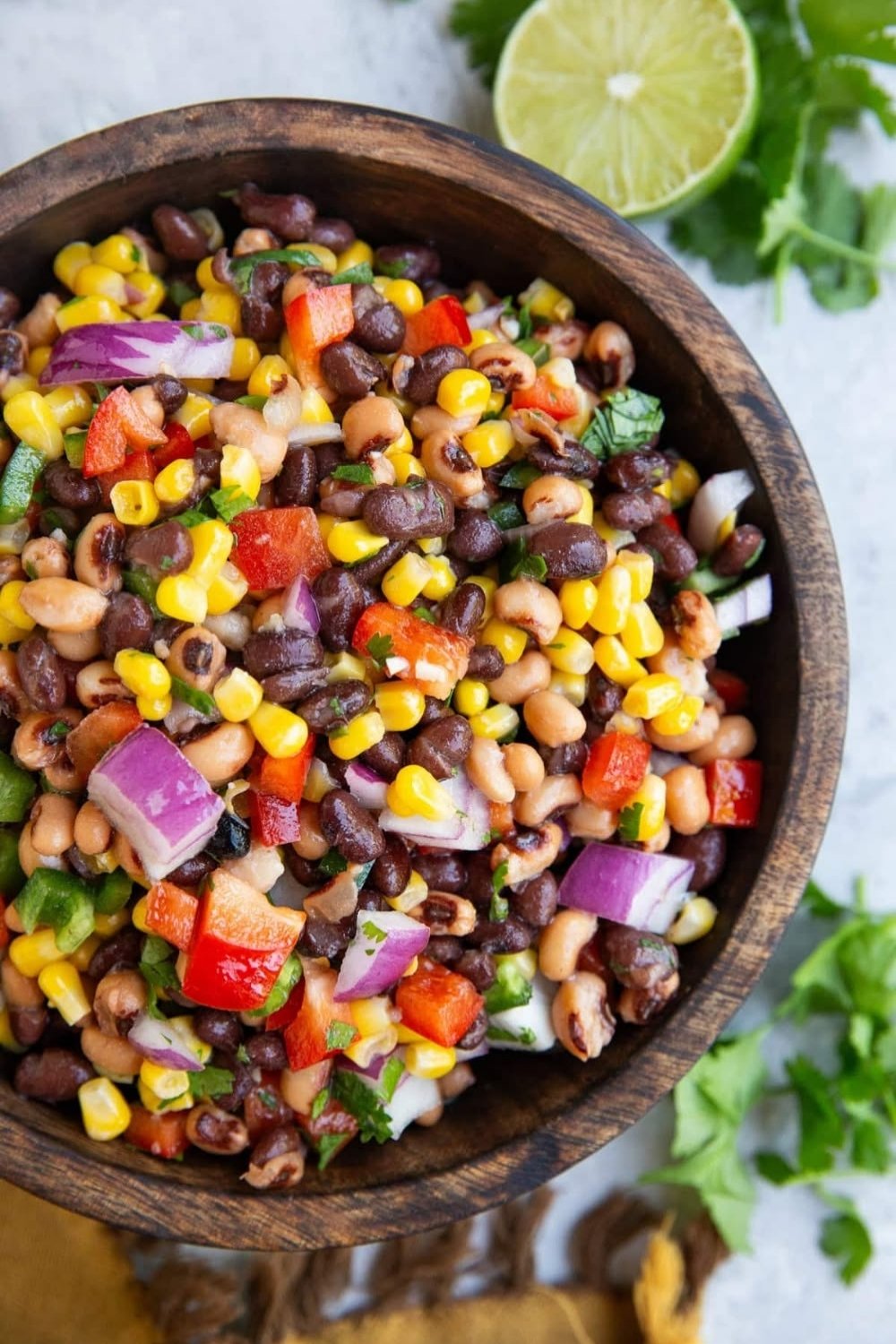
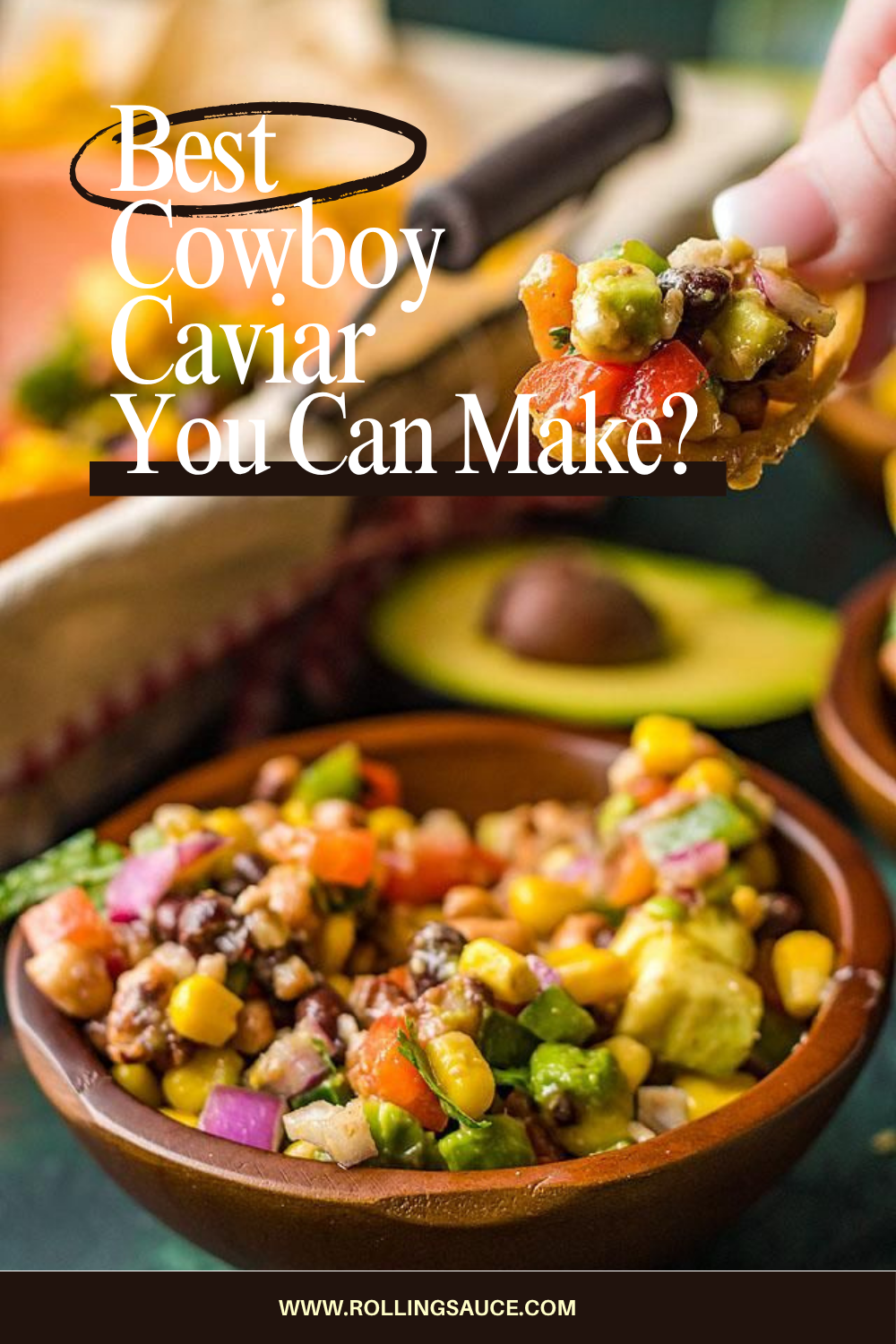
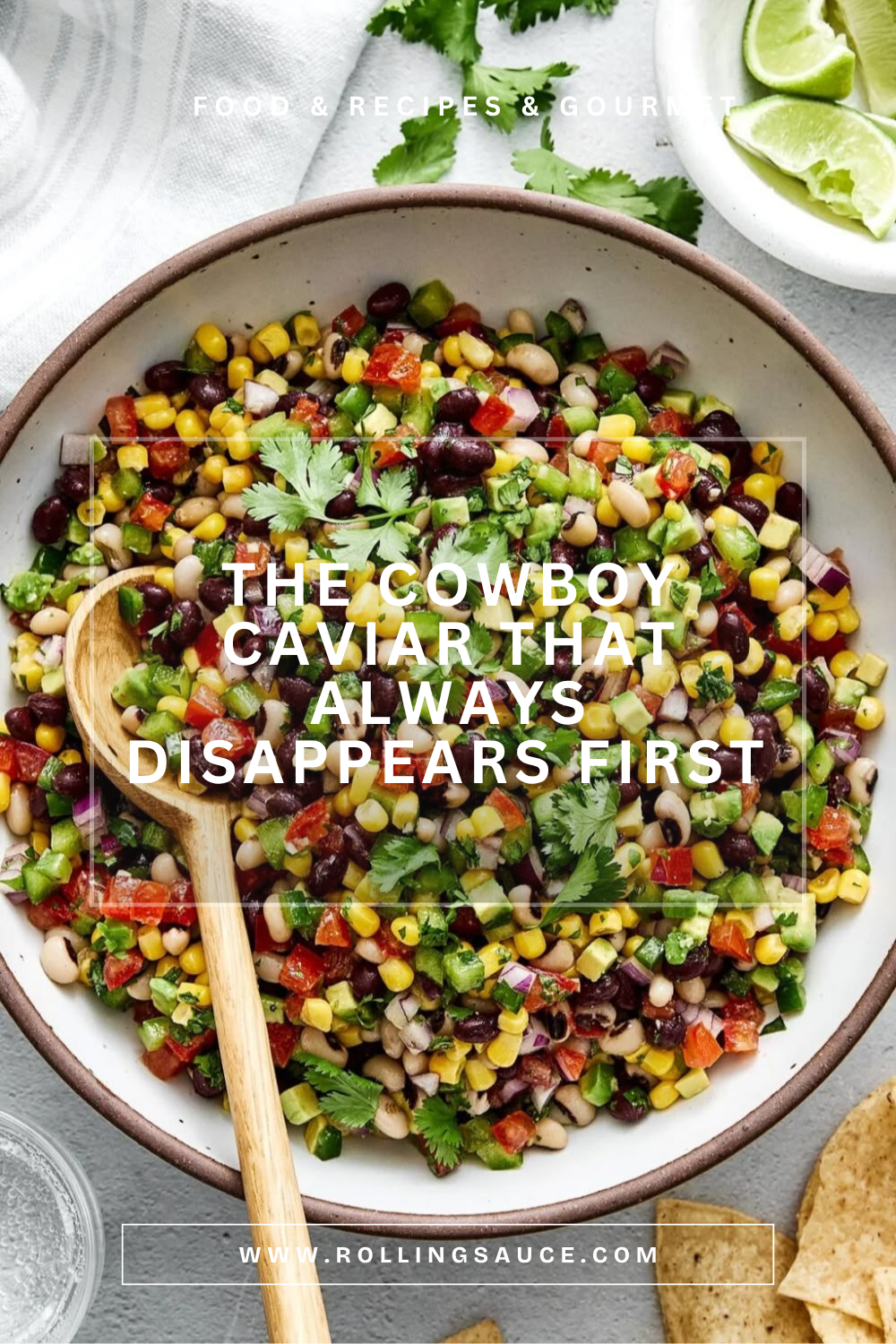
The single most important prep note for cowboy caviar: dice everything small. Pieces should be roughly the same size as a bean so the dip scoops cleanly onto a chip. Large chunks of bell pepper or tomato fall off and leave you chasing vegetables around the bowl.
The dressing
- 3 tablespoons olive oil
- 3 tablespoons fresh lime juice (about 2 limes)
- 2 tablespoons red wine vinegar
- 1 teaspoon honey or sugar
- 1 teaspoon ground cumin
- ½ teaspoon chili powder
- ½ teaspoon garlic powder
- ½ tsp salt
- ¼ teaspoon black pepper
Full quantities are in the recipe card below.

Cowboy Caviar
Ingredients
Method
- Make the dressing: In a small bowl, whisk together the olive oil, lime juice, red wine vinegar, honey, cumin, chili powder, garlic powder, salt, and pepper. Taste and adjust seasoning.
- In a large bowl, combine the black beans, black-eyed peas, corn, bell pepper, jalapeño, red onion, tomatoes, and cilantro.
- Pour the dressing over the bowl and toss to coat evenly.
- Cover and refrigerate for at least 1 hour (up to 3 hours) to let the flavors develop.
- Right before serving, fold in the diced avocado gently to keep it from breaking up.
- Taste and adjust with extra salt or a squeeze of lime if needed. Serve with tortilla chips.
Notes
- Storage: Store without the avocado in an airtight container for up to 4 days. Stir and taste before serving leftovers; add a fresh squeeze of lime to freshen the flavor.
- Make ahead: Mix everything except the avocado up to 3 hours before serving. Add avocado immediately before serving.
- Swap: Replace one can of black-eyed peas with pinto beans for a slightly different texture. Add a second jalapeño (with seeds) for significant heat. Substitute mango for one tomato for a sweeter, tropical variation.
How to Make It
1. Make the dressing first
In a small bowl, whisk together the olive oil, lime juice, red wine vinegar, honey, cumin, chili powder, garlic powder, salt, and pepper until fully combined. Taste it — this is the moment to adjust. Want more tang? Add a splash more vinegar. Brighter and fresher? More lime juice. Sweeter? Another small drizzle of honey. The dressing should taste boldly seasoned on its own because it’s about to carry a whole bowl of relatively mild beans and vegetables.
2. Combine the dip
Drain and rinse the black beans and black-eyed peas well — lingering bean liquid makes the dip starchy and flat. Add them to a large bowl along with the corn, bell pepper, jalapeño, red onion, tomatoes, and cilantro. Pour the dressing over everything and toss to coat evenly.
3. Rest before serving
Cover the bowl and refrigerate for at least 30 minutes before serving. One hour is better. The rest period does two things: the beans and vegetables absorb the dressing so every bite is well-seasoned rather than just the ones with dressing pooled at the bottom, and the jalapeño heat mellows slightly and distributes through the whole bowl.
4. Add the avocado last
Right before serving, fold in the diced avocado. Adding it earlier causes it to break down under the acid of the dressing and creates a mushy green layer throughout the dip. Kept separate until the last moment, it holds its shape and stays bright green. If you’re making this more than two hours ahead, skip the avocado entirely and add a separate bowl of diced avocado at serving time so guests can add it themselves.
Why the Rest Time Changes the Whole Dish
Most recipes mention the rest period as a suggestion, but it’s genuinely not optional if you want the best version of this dip. Raw red onion is sharp and sulfurous right after cutting — give it twenty minutes in the acidic dressing and it loses most of that edge and becomes sweet and briny instead. The jalapeño heat distributes evenly rather than hitting in concentrated pockets. The lime juice tenderizes the bean skins slightly, which changes the bite from chalky to smooth.
An hour in the fridge is the minimum that delivers a noticeably better dip. Two to three hours is the sweet spot. Overnight is too long — by the next morning the vegetables are slightly waterlogged and the cilantro loses its bright green color. If you’re making this ahead, aim for the two-to-three-hour window: prep it in the afternoon, refrigerate, serve in the evening. If you’re in a rush, even 20 minutes makes a difference — rest it as long as you can.
Tips for Getting It Right
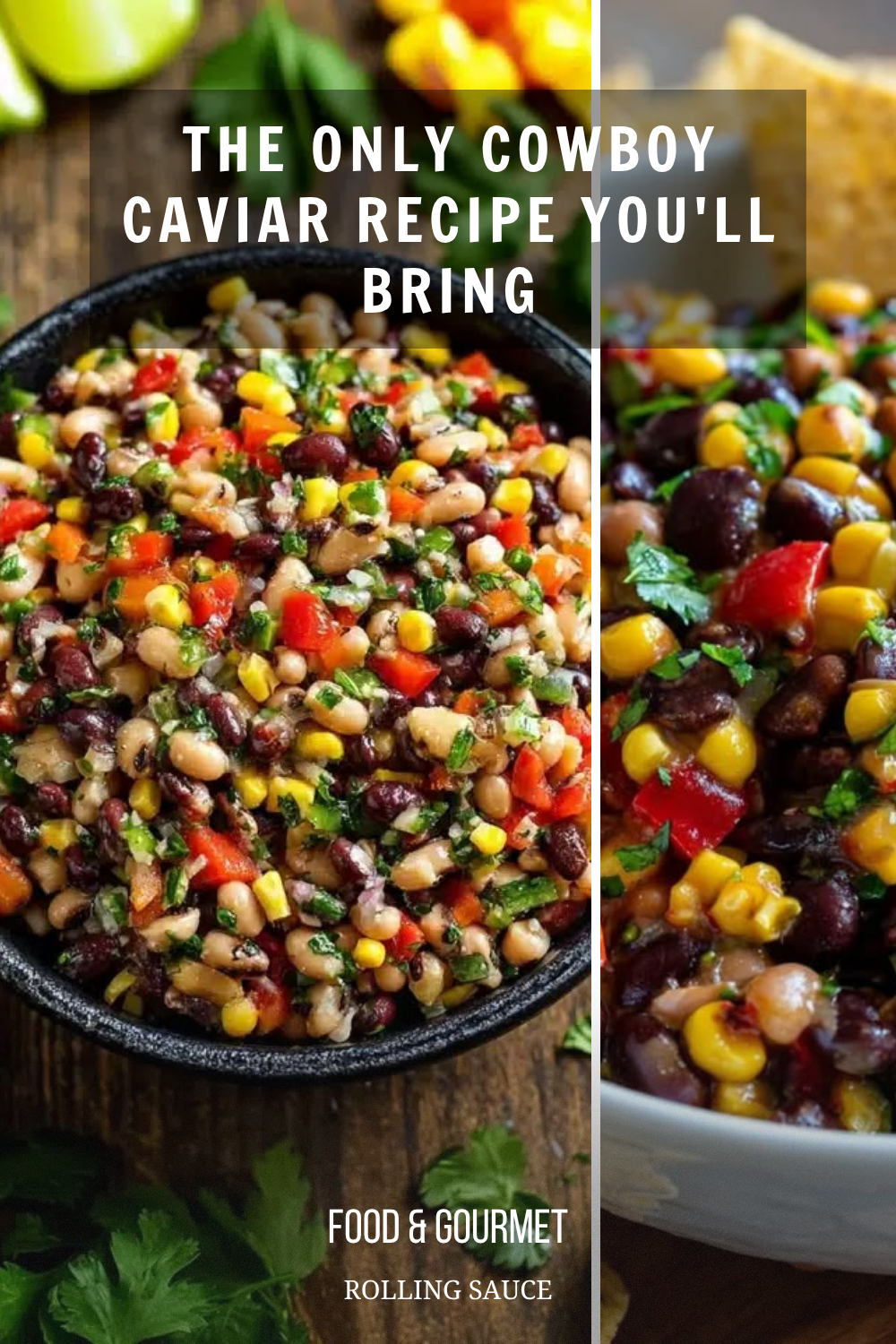
The dressing ratio is the most important variable. Cowboy caviar made with store-bought Italian dressing tends to be too oily and too sweet because the dressing proportions are designed for salad greens, not thick beans. A homemade dressing made with olive oil, lime juice, and vinegar in roughly equal parts hits the right balance — enough fat to carry the flavors, enough acid to keep everything bright. Taste the dressing before you add it and adjust; you can always add more but you can’t take it out.
Rinsing the beans thoroughly is underrated. Canned beans come packed in a thick, starchy liquid that will cloud the dressing and add a tinny aftertaste. A good rinse under cold water for thirty seconds makes a visible difference in how clean the final dip tastes.
Dice size matters more than most recipes admit. Every piece of vegetable should be small enough that a chip can scoop it without things falling off. This isn’t just aesthetics — when everything is roughly the same size as a bean, the dip distributes itself evenly on a chip and you get every ingredient in every bite. Large chunks create uneven scoops where you might get all bell pepper and no bean.
Make It Your Own
Add avocado: Already in the recipe above, added at the last moment. If you know you won’t finish the bowl in one sitting, serve the avocado on the side or only add it to the portion being served immediately.
Swap in mango: Diced fresh or frozen mango in place of one of the tomatoes brings sweetness and a tropical note. It works especially well in summer.
Add a second jalapeño: For heat lovers, a second seeded jalapeño (or one unseeded) raises the heat significantly. The rest period mellows some of the sharpness, but two unseeded jalapeños will still be clearly spicy.
Use all black-eyed peas: Some people prefer the original single-bean version. Replace the black beans with another can of black-eyed peas for a slightly more traditional take with a softer, more uniform texture.
Make it creamy: Stir in two tablespoons of sour cream or plain Greek yogurt to the dressing for a slightly creamy version. This makes it less party-transportable but excellent as a side dish.
Beyond the Chip Dip
Cowboy caviar does more than sit next to a basket of chips at a party.
Spooned over grilled chicken or fish, it functions as a fresh relish — the acid and herbs brighten proteins the way a chimichurri or salsa verde would. Tacos topped with a spoonful instead of pico de gallo get an upgrade in both substance and flavor. Mixed into a grain bowl alongside rice or farro, it becomes a protein-packed lunch that holds up in the fridge all week. Folded into scrambled eggs on a weekend morning, it turns a basic plate into something worth lingering over.
It sits naturally in the same party lineup as something like the Buffalo chicken dip — one gives you richness and heat, the other gives you brightness and crunch. They work well together on a table. For a summer cookout where you want quick, no-cook sides, easy cucumber salad and cowboy caviar together take less than thirty minutes of active prep and cover the fresh-side needs for a full spread.
Frequently Asked Questions
How long does cowboy caviar keep? Up to four days in an airtight container in the fridge. The vegetables release liquid as they sit, so give it a good stir and taste for seasoning before serving leftovers — a fresh squeeze of lime and a pinch of salt usually brings it back. Remove any avocado before storing, or it will oxidize and turn gray.
Can I make it without cilantro? Yes — substitute flat-leaf parsley or just leave it out entirely. The flavor profile shifts from Tex-Mex to something more neutral, but it still works. A teaspoon of lime zest can help bridge the gap if you’re omitting cilantro.
Is this the same as Texas caviar? Essentially yes. Texas caviar typically refers to the original Helen Corbitt version made only with black-eyed peas and Italian dressing. Cowboy caviar is the evolved, multi-ingredient version with multiple beans, fresh vegetables, and a homemade dressing. The names are used interchangeably in most kitchens.
Can I use dried beans instead of canned? Yes — cook them fully first and let them cool completely before mixing. Warm beans will slightly cook the raw vegetables and wilt the cilantro. The texture with dried and cooked beans is slightly firmer and less starchy than canned, and many people prefer it.
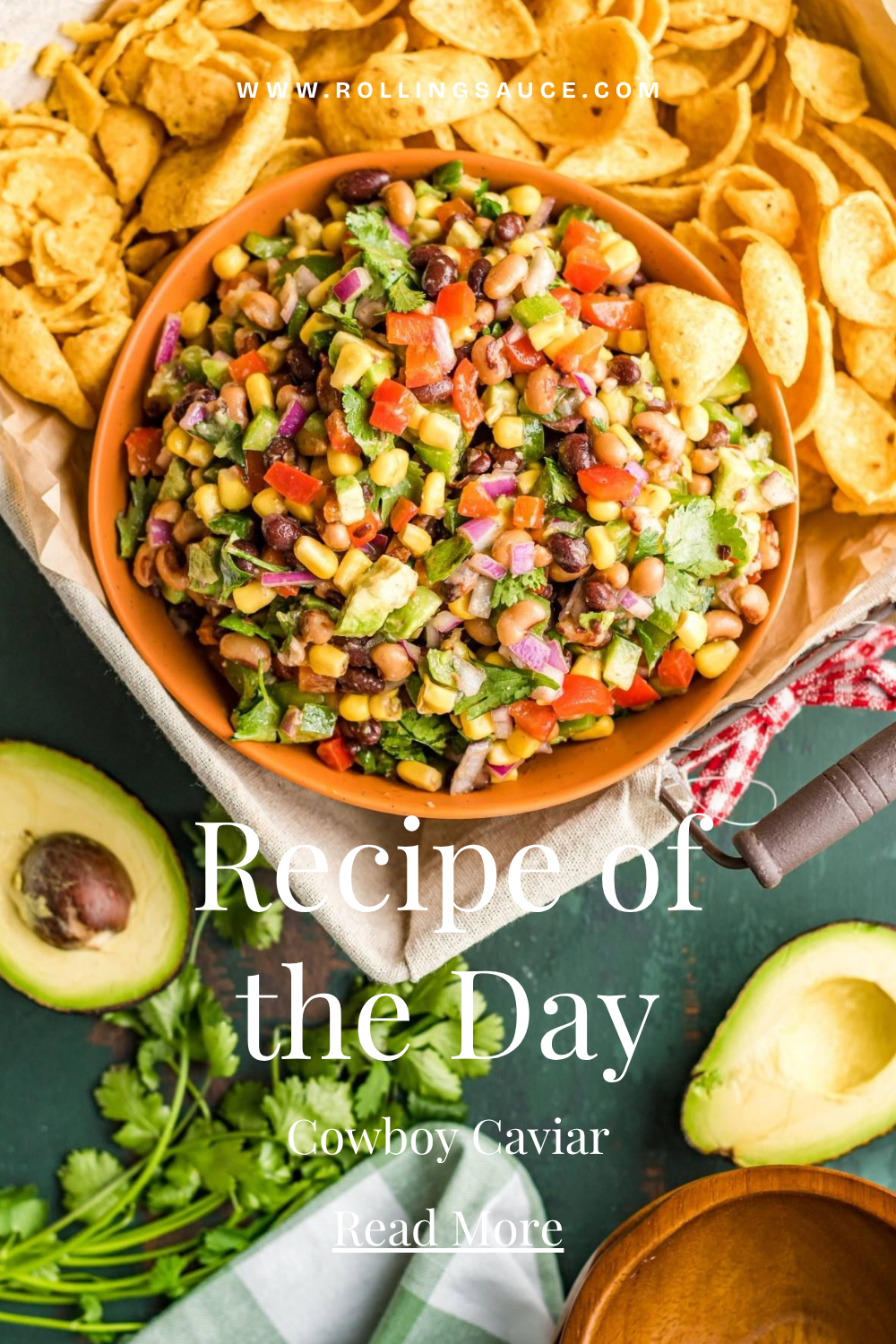
What chips work best? Classic corn tortilla chips are the standard. For something sturdier that holds up better as scoops fill up and get heavier, Fritos Scoops or any scoop-shaped corn chip lets you load more onto each chip without it bending.
Can I double the dressing? Yes, and if you’re making a large batch for a crowd I’d recommend it. The dip absorbs dressing as it rests and can taste slightly under-dressed by serving time. Starting with extra dressing, or keeping a small reserve to add right before serving, ensures every chip’s worth of dip has good coverage. Taste it after the rest period and add reserved dressing if needed.
Double It
This recipe feeds about eight to ten people comfortably. For a larger crowd or a long afternoon of snacking, double it — the recipe scales directly and everything keeps at the same ratio. A double batch fits comfortably in a large mixing bowl and serves twenty without running out. If you’re building a full no-fuss party spread, cowboy caviar alongside the deviled eggs that disappear first at every potluck and a broccoli salad covers every guest who wants something fresh, something creamy, and something hearty — all without anything that needs to come out of an oven. It’s the kind of spread you put together in under an hour and that feels genuinely well thought out.